Pet Adoption Form
18 Min Read
Make pet adoption easier by collecting applicant details, pet preferences, and essential information through a simple adoption form.

Finding a home for a pet is easy. Finding the right home is the real challenge. Animal shelters and rescue groups need to make sure pets are going to people who can care for them properly for years to come.
That is why a Pet adoption form is an important part of the process, especially for shelters using digital form builder products to manage applications. It helps shelters collect important details about the adopter, understand their lifestyle, and make better adoption decisions for the safety and well-being of the pet.
Why Pet Adoption Forms Are Important
Many people apply to adopt pets, but not every home is the right fit for every animal. Before approving an adoption, shelters and rescue groups need to learn more about the person applying. They need details about the home, daily routine, and past experience with pets to make better adoption decisions.
A Pet adoption form helps collect all this information properly and keeps the process easier for the staff to handle.
Without a proper form system, shelters often face problems like these:
Common Issue | Result |
Missing information from applicants | Delays in adoption approvals |
Using paper applications | Difficult record management |
Different screening methods | Wrong pet-home matching |
Manual follow-ups with adopters | Extra work for staff |
Lost paperwork | Confusion in daily tasks |
As the number of applications grows, these problems become harder to manage. Digital forms help shelters keep records organized and make the adoption process smoother.
What Information Should a Pet Adoption Form Collect?

To make sure the shelter understands the applicant's lifestyle and ability to care for a pet, the pet adoption form needs to have enough information to do so. The form should also be straightforward with no complicated questions or requirements.
Shelters and rescues typically request the following information:
Name and Contact Information of Applicant
Address and Housing Status
Other Pets Are Present at the Home
Veterinarian Reference(s)
Work Schedule and Daily Routine
Family Information
Preferred Type of Pet to Adopt
Emergency Contact Information
Permission and Agreement
This information provides the shelter with enough data to make an informed judgement of the applicant so that the shelter or rescue is a safe choice for placing a companion animal in an appropriate home.
Personal Information Section
Numerous people would like to apply for pet adoptions but not all homes are a suitable place for all types of animals. Shelters and rescue groups need to gather additional information regarding applicants prior to approving an adoption application. They need data concerning the applicant's home, daily routine, and prior pet ownership / experiences in order to assist them in making the best pet adoption decision.
To assist shelters with effective organization of all of this information as well as reduce the workload for their staff, a pet adoption form should be used. Keeping accurate records of all applicants will lessen the applicant's wait time for their adoption application approval.
The section generally includes:
Field | Purpose |
Full Name | Applicant identification |
Email Address | Communication updates |
Phone Number | Quick contact |
Residential Address | Home verification |
Occupation | Lifestyle understanding |
Emergency Contact | Backup communication |
This section should remain straightforward. Asking unnecessary questions at the beginning can discourage applicants from continuing the form.
Housing and Living Situation

Housing information plays a major role in pet adoption approvals. Different pets require different living conditions, and shelters need to understand whether the environment is suitable.
Instead of directly jumping into questions, shelters usually explain why this information matters. This creates transparency and helps applicants answer honestly.
Some important questions include:
Do you rent or own your home?
Does your landlord allow pets?
Is the property fenced?
How many people live in the home?
Are there children in the house?
Will the pet stay indoors or outdoors?
These questions help organizations avoid future adoption issues, especially in rental properties where pet restrictions may apply.
Existing Pets and Pet Care History
A person’s experience with previous pets can help shelters understand their level of responsibility and pet care knowledge. This section should not feel like an interrogation. It should simply help rescue teams understand the applicant’s history with animals.
Here is an example of how shelters evaluate pet ownership details:
Question Type | Why It Matters |
Current pets in the home | Understand compatibility |
Vaccination records | Check responsible care |
Spaying or neutering history | Evaluate pet management |
Previous surrendered pets | Identify possible concerns |
Veterinary reference | Verify pet care history |
Many shelters also ask whether existing pets are friendly with other animals. This becomes especially important for dog and cat adoptions.
Lifestyle Questions Help Shelters Make Better Decisions
Every pet has different care requirements. Some animals need regular exercise, while others need quiet and calm environments.
Lifestyle questions help shelters understand whether the applicant’s routine matches the pet’s needs.
Instead of creating long complicated sections, organizations usually ask practical questions such as:
How many hours will the pet stay alone?
Who will care for the pet during travel?
Where will the pet sleep?
How often will the pet exercise?
Are all family members comfortable with adoption?
These questions may look simple, but they help reduce failed adoptions later.
A mismatch between lifestyle and pet requirements is one of the most common reasons animals are returned to shelters.
Why Online Pet Adoption Forms Are Becoming More Popular?

Many animal shelters still use paper to process adoption requests but this can be very time consuming. The staff has to do a lot of things by hand like looking through files and calling people who want to adopt pets over again. As more people ask to adopt pets it gets harder to keep track of everything.
This is why a lot of animal shelters are now using pet adoption forms. These online forms make things faster and easier for the staff and the people who want to adopt pets. All the information from the application stays in one place so the shelters can look at the forms quickly. Make sure they have all the information they need.
Digital pet adoption forms also cut down on paperwork make it easier for people to talk to each other and let people fill out the forms from their phones or computers without any problems.
There are websites like Quizify that help animal shelters create pet adoption forms using customizable templates, automation tools, and integrations to make the adoption process easier to manage.
Features That Improve Pet Adoption Forms

A simple pet adoption form can get information from people who want to adopt a pet. Modern form builder features make the whole adoption process easier for shelters. Many places now use forms that have special features that make it easy for people to fill out the form and for shelters to look at the applications.
One good thing about these forms is that they can ask questions based on what the person said. This means the form does not show all the questions at the time.
For example:
If the person says they are renting a home the pet adoption form can ask questions about getting permission from their landlord.
If the person already has pets the pet adoption form can ask questions about the pets they already have.
This makes the pet adoption form look nicer, it does not ask questions and it is easier for people to use the pet adoption form.
File Upload Support
Some shelters request supporting documents during the application process.
These may include:
Upload Type | Purpose |
Identity proof | Applicant verification |
Veterinary documents | Pet care history |
Landlord approval letter | Rental confirmation |
Home photographs | Environment evaluation |
File upload support reduces back-and-forth communication and speeds up approvals.
Automated Notifications
When someone submits a pet adoption application, they typically want to know what happens with the status of their application. Responding to applicants individually can be extremely time consuming for shelter staff members.
Because of this reason, most shelters have choose to use automated notifications within their online forms. These messages can include:
Confirmation of your submission
Updates related to interviews and/or meetings
Notification that you have been approved to adopt a pet
Instructions on what you need to do next
Using automation enables shelters to save time, provide essentially immediate feedback to prospective adopters, and be able to keep potential adopters informed as they progress through the various steps of the adoption process.
Using Templates to Save Time
Creating adoption forms from scratch takes time, especially for smaller rescue teams with limited staff.
This is why many organizations prefer ready-made templates instead of creating forms from scratch.
Templates help shelters:
Maintain consistent formatting
Reduce setup time
Avoid missing important fields
Launch forms quickly
Most form platforms provide editable templates that organizations can customize based on their adoption policies.
For example, dog adoption forms may include outdoor space questions, while cat adoption forms may focus more on indoor safety.
Common Mistakes Shelters Should Avoid
Not every adoption form creates a good user experience. Poorly designed forms often reduce completion rates and create unnecessary confusion.
Below are some common mistakes shelters should avoid.
Asking Too Many Questions
Long forms can overwhelm applicants.
Shelters should focus only on collecting information that directly supports the adoption process.
Using Difficult Language
Complicated wording can confuse applicants.
Forms should use simple and direct language that everyone can understand easily.
Ignoring Mobile Users
Today, most applicants complete forms on their phones.
If forms are not mobile-friendly, users may leave the process before submission.
Lack of Follow-Up Systems
Collecting pet adoption forms is one step in the whole process. Animal shelters also need a way to look at the applications people fill out keep track of who's applying and take care of all the paperwork after someone submits a form.
Some important things that need to happen include:
Looking over applications quickly so people can adopt pets faster
Making sure the staff at the shelter can talk to each other easily
Keeping an eye on people who are trying to adopt a pet
Keeping all the records in a place so they can be used later
If a shelter does not have a good way to follow up on applications it can get really confusing and take a lot of time even if they have a good pet adoption form. Pet adoption forms are a part of this and shelters need to make sure they have a system, in place to deal with pet adoption forms properly.
How Quizify Helps with Pet Adoption Forms
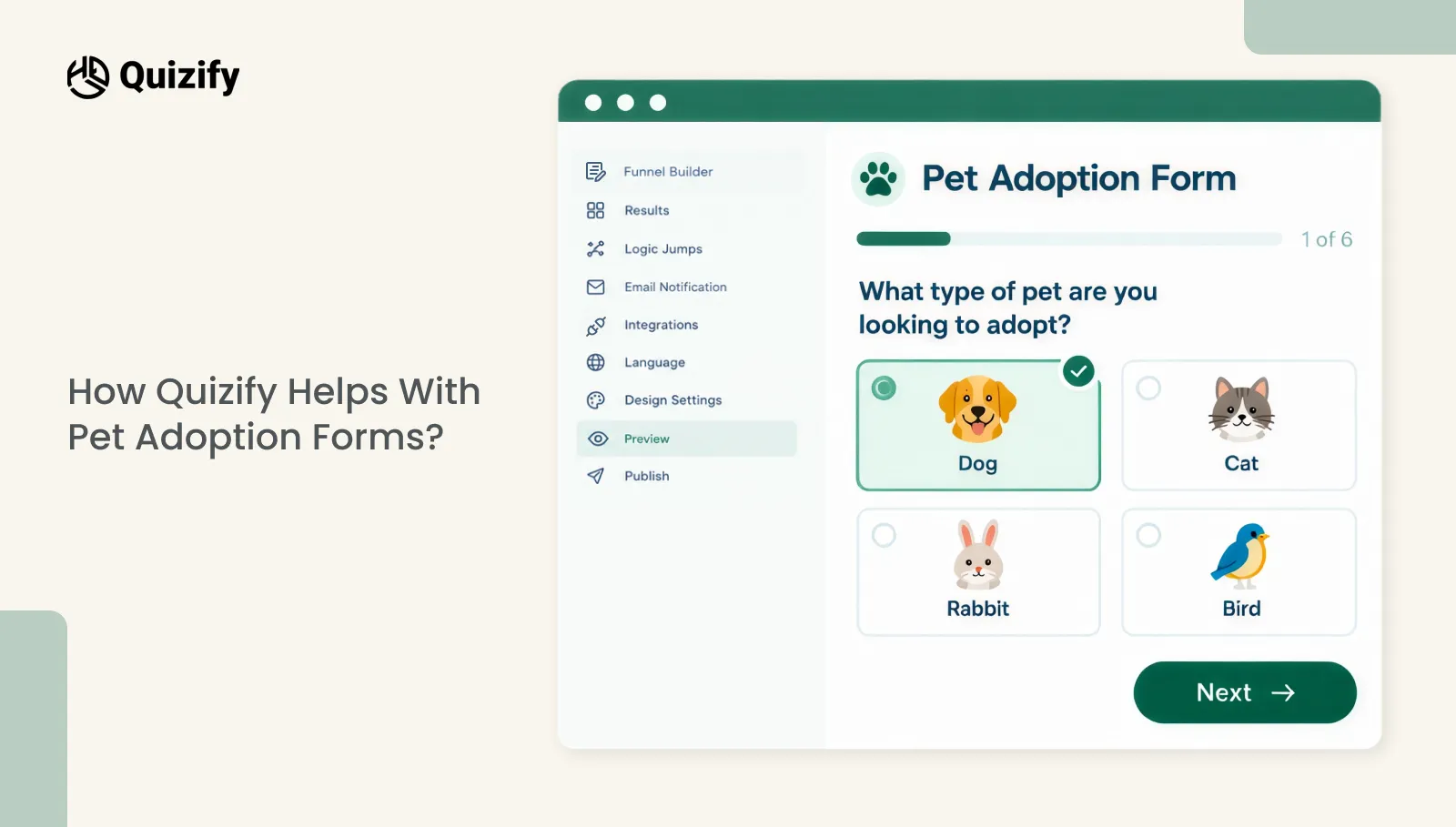
Many animal shelters and rescue groups are now using computers and websites to make it easier to create forms and manage applications. Quizify is a tool that helps these organizations create fun and interactive forms, surveys and application processes without needing to be super good at technology.
Shelters can use Quizify to do lots of things like:
Build forms for people who want to adopt pets that can be changed to fit their needs
Make the forms work better by adding rules that decide what happens next
Send emails and updates to people
Connect Quizify to other tools they use
Keep track of who's applying to adopt pets and what they say
Keep all the information about people who want to adopt pets in one place
Quizify also provides useful resources, ready-to-use templates, workflow automation, and helpful blogs for shelters managing pet adoption applications. For shelters handling many adoption requests every week, these tools help reduce manual work and make responses easier to manage.
Conclusion
The pet adoption application form is an important tool for responsible pet placement. The application form allows shelters to gather the prospective adopter's information so that they are able to evaluate their living situation, understand their previous experience with pets, and make better adoption decisions.
In addition, good quality forms create less paperwork and improve organization and communication between the shelter and the prospective adopter.
Modern products with automation, integrations, customizable templates, and workflow tools have made pet adoption management easier for shelters.
The purpose of a good adoption application is not to inhibit the applicant; however, its purpose is to ensure that pet(s) are placed in the proper home where they can receive the requisite care, attention, and long-term support.
Similar Topic
Free Customer Feedback Survey Template
Getting started does not have to be complicated.Quizify includes a ready-to-use customer feedback survey template so you do not have to build one from scratch. It is designed to:



FAQ
Frequently Asked Questions
What is a pet adoption form?
A pet adoption form is something that shelters and rescue organizations use to get information from people who want to adopt pets.
Why do shelters use pet adoption forms?
Shelters use pet adoption forms to find out about the person's life, where they live and if they can take care of a pet.
What questions are included in a pet adoption form?
Most pet adoption forms ask for detailed information about your home if you have had pets before, what you do, who your veterinarian is and what kind of pet you want to adopt.
Are online pet adoption forms better than paper forms?
Yes. Online pet adoption forms are easier to use. They help keep things organized there is paperwork, and shelters can talk to people faster.
What are the important features of a digital adoption form?
Some pet adoption forms can show different questions based on answers, work properly on phones, allow file uploads, send automatic updates, and help shelters keep track of applications easily.
Can shelters customize pet adoption form templates?
Yes. Most digital pet adoption form platforms allow shelters to customize forms based on their rules, process, and pet adoption requirements.
How does Quizify help shelters manage adoption applications?
Quizify helps shelters create pet adoption forms, send automatic messages, manage applications, and connect with other tools to handle the adoption process more easily.