The Client Intake Form Every Coach Should Send Before the First Session
Marketing and Promotion
10 Min Read
Discover how a client intake form helps coaches understand clients’ goals, gather essential information, and prepare for more productive first sessions.
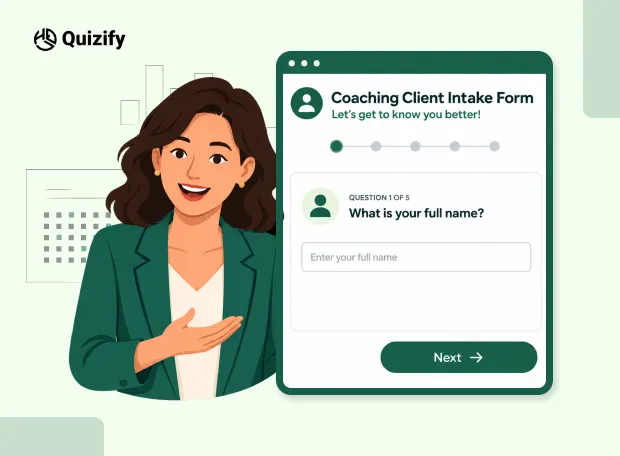
The first coaching session should be about the client’s situation, goals, and concerns. It should not be spent asking basic questions that could have been answered before the meeting.
A client intake form gives coaches a simple way to collect this information in advance. The client can fill it out before the session, while the coach gets a better idea of what they want to discuss.
Why Use a Client Intake Form?

Each client comes to coaching with his own motivation. The former may be connected with career development, while the latter could be related to business, leadership or personal life goals.
A short questionnaire allows you to know about that prior to the first meeting with the client. It provides you with some information about expectations and issues of the client.
Some of them may include:
Basic contact information
Main objective of coaching
Current problems
Previous experiences
Client’s expectations from coaching
Topics that he/she would like to discuss first
The questionnaire should not be very long.
A few useful questions are usually more helpful than a long list that takes too much time to complete.
What Should You Ask in the Form?
The questions should give you a basic picture of the client. At the same time, they should leave enough room for the client to explain things in their own words.
Start with the reason for coaching
Ask why they decided to look for coaching at this point.
For example:
-> What made you decide to seek coaching?
You can follow this with:
-> What would you like help with right now?
These questions can tell you more than simply asking the client to select a coaching category.
-> Ask about their main goal
Next, find out what they want to achieve.
You could ask:
-> What would you like to achieve through coaching?
Then ask what that result would look like for them. This can help you understand whether they are looking for a specific change or are still working out what they want.
-> Find out what is holding them back`
Goals are only one part of the picture. The client may already know what they want but have trouble moving forward.
Ask:
-> What is currently getting in the way?
The answer can give you a useful starting point for the first session.
-> Ask what they have tried
It is useful to know what the client has already done.
For example:
-> What have you tried so far?
You can ask what worked, what did not work, or what they would like to approach differently this time.
This can help you avoid spending time going over the same things.
-> Ask what they want from the first session
One final question can focus on the upcoming session:
-> What would you most like to discuss in our first session?
The answer does not have to decide the entire session. It simply gives you an idea of where the client would like to start.
Keep the Form Short
One common mistake is trying to collect too much information.
A client intake form with 30 or 40 questions can feel like an application rather than a simple step before a coaching session. Some clients may rush through it, while others may not complete it at all.
Instead, keep the form focused on information that you will actually use.
Section | What you can ask |
Basic details | Name and contact information |
Goals | What do you want to achieve? |
Current situation | What is happening right now? |
Challenges | What is making progress difficult? |
Previous attempts | What have you tried? |
Expectations | What are you looking for from coaching? |
Session focus | What would you like to discuss first? |
You can add more questions when your coaching service needs them. Otherwise, keeping the form short makes it easier for the client to complete.
Make Questions Relevant to Each Client
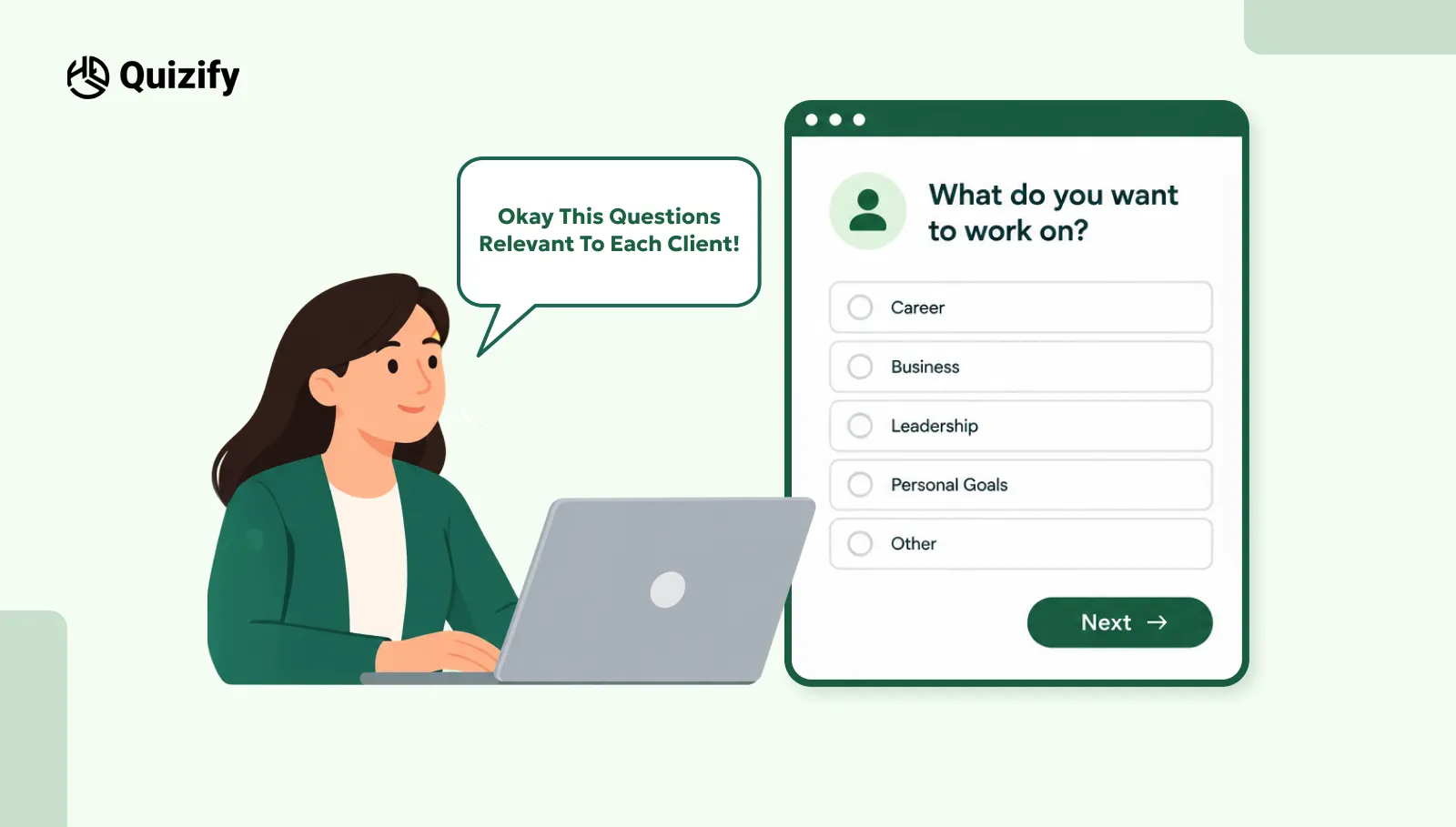
Not every client needs to answer the same questions. For instance, the business coach can be interested in learning more about the client’s business, whereas the career coach would be interested in knowing more about their position and career goals.
It would be better to create an interactive form.
Start your interview with a question such as:
What do you want to work on?
Career
Business
Leadership
Personal goals
Other
If the client answers Career, you can go on asking them career-related questions, whereas if the answer is Business, you can ask them some business-related questions.
This keeps the form from becoming a long set of questions that may not apply to everyone.
Use Logic Jumps to Guide the Form
Quizify’s Logic Jumps can be useful for this type of intake form.
For example, you could ask:
What is your main reason for seeking coaching?
If the client selects career growth, the next questions can focus on their current role, goals, and career challenges. If they select business growth, the form can move to questions about their business goals and current situation.
The client sees questions that relate to their answer rather than moving through the same form as everyone else.
Use the Answers Before the Session
The main purpose of the intake form is to give you some context before the meeting.
Suppose a client says they want to change careers but are unsure about their next step. They may mention that they have already looked at different options but have not made a decision.
That gives you something to explore during the session. You can ask about what is stopping them, what options they have considered, and what they want their next step to look like.
The form does not replace that conversation. It simply means you are not starting with the most basic questions.
A Simple Coaching Intake Flow

A basic client intake form could follow this structure:
Basic Details → Reason for Coaching → Main Goal → Current Challenge → Previous Attempts → Expectations → First Session Focus
This is enough for many coaches to get started. You can change the questions depending on your coaching service and the type of clients you work with.
Build the Intake Form With Quizify
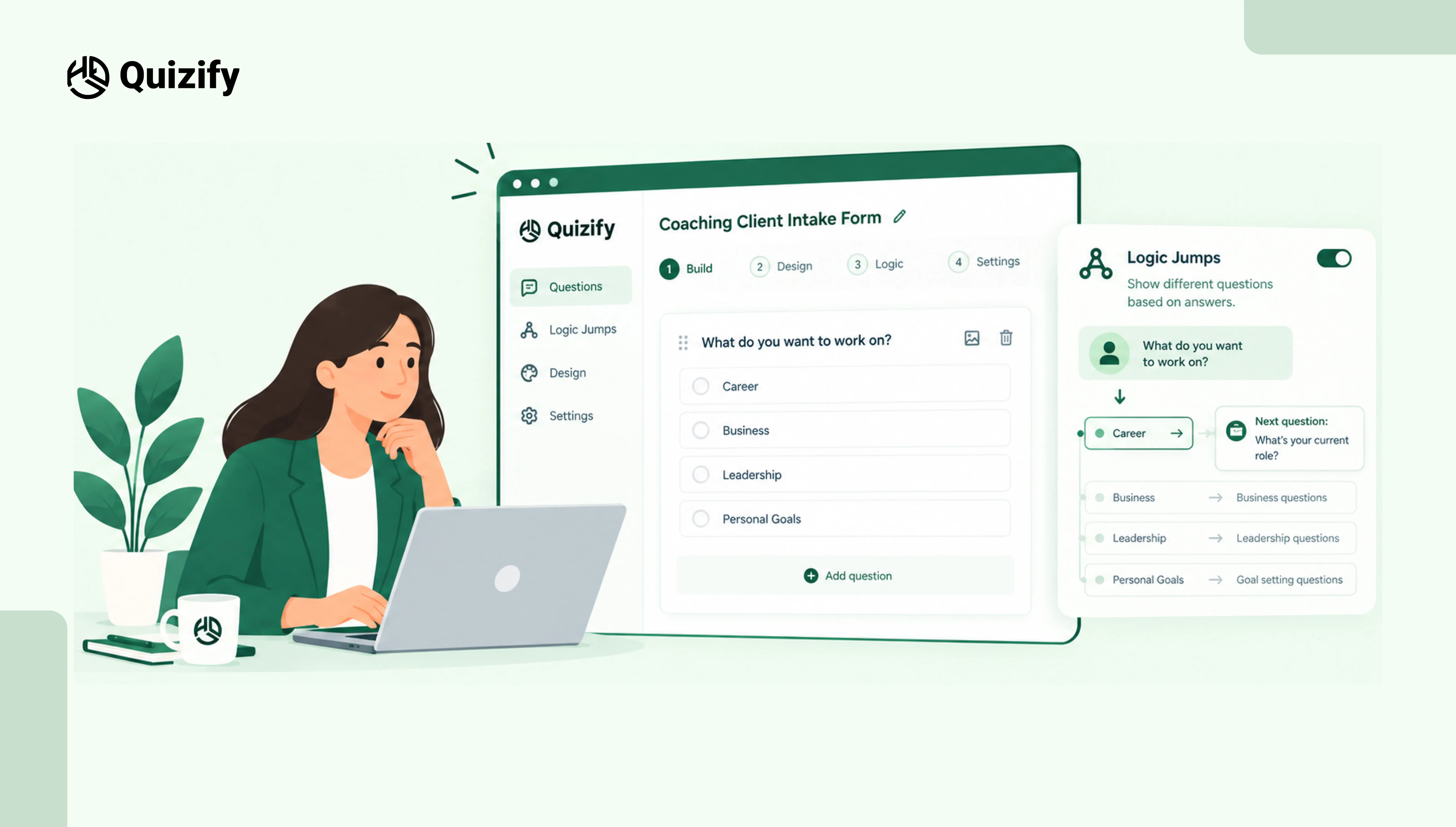
Quizify allows you to craft an interactive intake form for coaching clients. You may design various fields on the forms, compose your questions and apply Logic Jump features to ask different clients a different demographic based upon their responses.
For instance, the coach can ask the main goal of the client first. Further, the form can pose other questions, depending on the client's response whether the client wants career change, a launch of a business or other aspects.
After preparing the form, it could be forwarded to the clients prior to their first meeting. Quizify offers various options of sharing the form, as well that could be named upon the specific preferences of the coach.
When Should You Send the Form?
The best time depends on your coaching process, but sending it after the session is booked gives the client time to complete it.
You can include a short message explaining what the form is for. Something as simple as asking them to complete it before the first session is enough.
Try not to make the process feel like another task they have to complete. The form should help them prepare for the conversation too.
Final Thoughts
A client intake form can help a coach get useful information before the first session. This form allows clients to think about their targets and also provides coaches with some background prior to the talk.
Keep the questions specific so that you do not ask for information that you will not use and for which you do not need any follow-up questions.
With the use of Quizify, it is possible to make the intake process interactive and to use the Logic Jump option and ask different questions based on the answers given by clients, thus making the process much simpler and shortening the length of the intake form.
Join our newsletter list
Sign up to get the most recent blog articles in your email every week.
Similar Topic
Related Blogs






FAQ
Frequently Asked Questions
What questions should a coach ask before the first session?
Start with questions about why the client is seeking coaching, what they want to achieve, what is getting in the way, and what they have tried so far. You can then ask what they want to focus on in the first session.
Should every coaching client get the same intake form?
Not necessarily. A career coaching client may need different questions from someone looking for business coaching. You can use different questions based on the type of support the client needs.
How can I stop a coaching intake form from becoming too long?
Only ask for information that you are likely to use during the coaching process. You can start with the main goal and then use follow-up questions for details that are relevant to that goal.
Can an intake form ask different questions based on client answers?
Yes. For example, if a client chooses career coaching, you can ask about their current role and career goals. A client who chooses business coaching can instead see questions about their business and priorities.
Should I review the intake form before the first coaching session?
Yes. Reviewing the answers beforehand gives you some background on the client and their main concerns. You can then use the first session to explore those points instead of starting with basic questions.