How to Prevent Scope Creep Before a Consulting Project Begins
Engagement Strategies
12 Min Read
Learn how to prevent scope creep before a consulting project begins by setting clear expectations, defining project deliverables, and aligning client requirements from the start.

A consulting project may start with a clear plan and still become difficult to manage later.
A client may ask for one more deliverable. Then another request comes up. A task that seemed small may take several hours, and suddenly the project is taking more time than planned.
This is how scope creep starts. Scope creep is not always caused by a client trying to get extra work. In many cases, the problem starts because the project was not clearly defined before the work began.
Maybe the client expected implementation along with strategy. Maybe the consultant assumed the client would handle certain tasks. Or maybe neither side discussed what would happen if the project changed.
These details are easier to sort out before the project starts than halfway through it.
A good consulting intake process can help with this. By asking specific questions about the client's goals, expected work, timeline, budget, and responsibilities, a consultant can understand the project before preparing the proposal.
What Is Scope Creep in Consulting?
Scope creep begins when a project's scope goes beyond what was originally agreed. For example, a consultant may be hired to review a business's marketing funnel and provide recommendations.
Later, the client may ask the consultant to write email content, make landing page changes, research competitors, and create a campaign plan.
Each request may sound small. However, once several of them are added, the original project can look very different.
Original Scope | Scope Creep |
Review the existing strategy | Create a new strategy from scratch |
Provide a written report | Create presentations for multiple teams |
Review five competitors | Research ten more competitors |
One consultation call | Weekly calls throughout the project |
Provide recommendations | Implement all recommendations |
Scope creep does not always happen because a client wants more work for the same price. Sometimes, the client simply believes a task is already included.
For example, a client who pays for a marketing strategy may assume that campaign setup is part of the service. If this was never discussed, both sides may have different ideas about what the project includes.
That is why the project needs clear boundaries before work begins.
Why Scope Creep Often Starts Before the Project

Many scope problems start during the sales or discovery stage.
A consultant may ask questions such as:
What do you need help with?
What are your business goals?
When would you like to start?
These are useful questions, but they may not tell you enough about the actual project.
A client might say they need “help with marketing.” That could mean strategy, content, lead generation, paid advertising, analytics, or all of these.
The same problem can happen with a request like “improve our website.” The client may only want an audit, while the consultant may understand it as a website redesign.
So, before preparing a proposal, ask questions that get into the actual work.
The aim is not to create a long and difficult intake form. It is to collect enough information to understand what the client needs and what they expect from the project.
Start With a Detailed Client Intake Process

A client intake process gives the consultant useful information before the project starts.
Rather than depending only on a discovery call, a questionnaire can help gather all the necessary information prior to that.
It can include, for instance:
The main problem of the business of the client
What the desired result of the project will be
Current difficulties
Currently used tools and procedures
Target audience
Deliverables
Timeline of the project
Estimated budget
People involved in the project
Responsibilities of the consultant.
This information will be reviewed before making the proposal.
It may raise some additional questions that were not touched upon during the discovery meeting. The client might, for instance, say they require a marketing strategy and expect the consultant to manage the campaigns as well.
That difference needs to be discussed before the scope is agreed upon.
Ask Questions That Define the Project
Some intake questions should focus directly on the work the client wants done.
For example:
What exact problem is to be solved by the project?
How would you define a successful result?
What work do you expect from the consultant?
What work do you plan to do yourself?
Do you expect some other services to be performed?
Are there any deadlines or other events which could affect the project schedule?
This list clarifies the expectations of the client. For example, “I want better marketing” is difficult to turn into a project scope. “I want a strategy for reaching small business owners through email and LinkedIn” gives the consultant much more to work with.
The answers can then be used when preparing the proposal.
Use Conditional Questions to Go Deeper
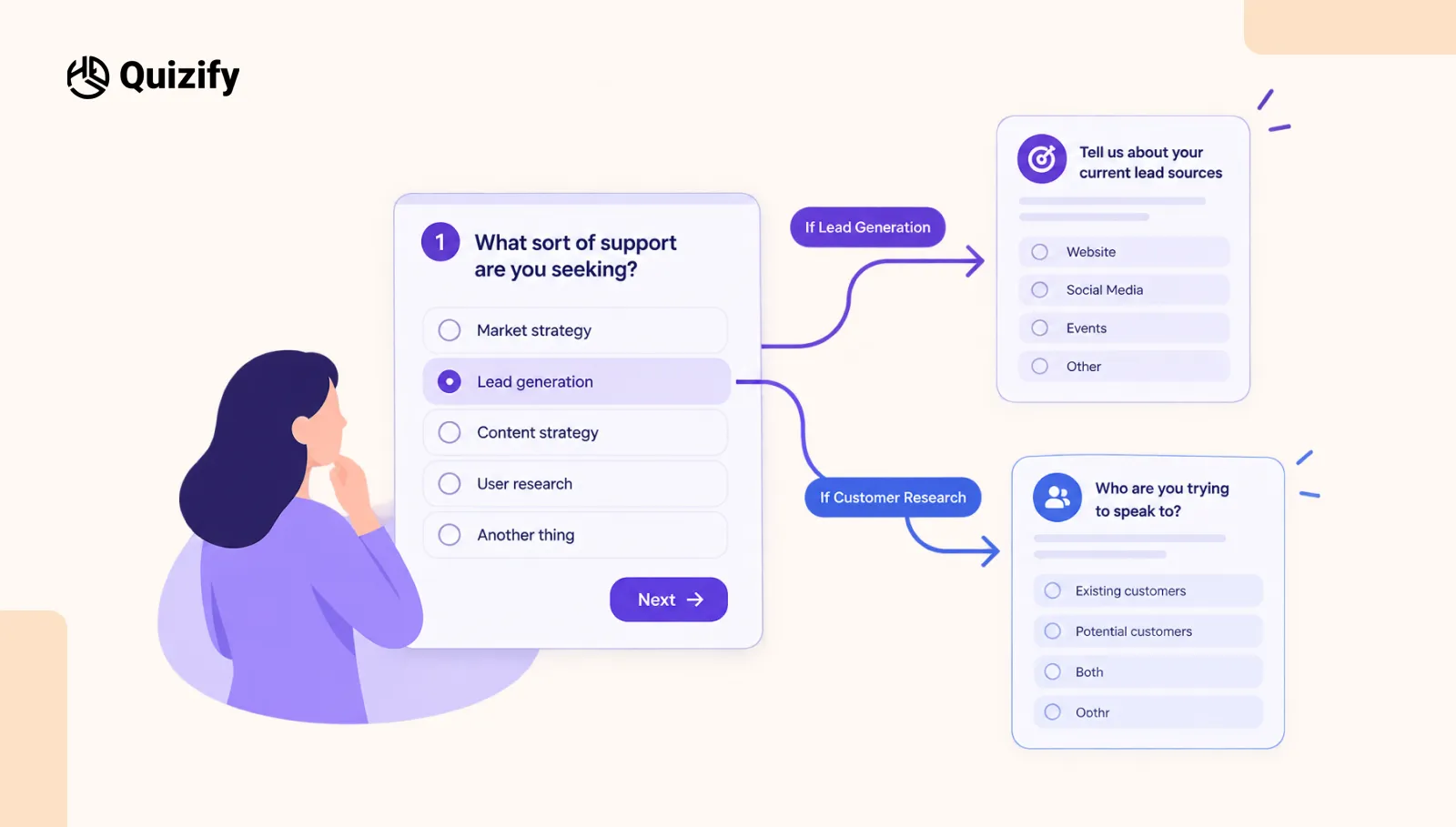
A long intake form can be tiring for a client, especially when half of the questions do not apply to their situation.
Conditional questions can solve this problem.
Take for example a consultant who advises companies on marketing strategy. The initial question might have posed:
What sort of support are you seeking?
Market strategy
Generation of lead
Content strategy
User research
Another thing
In the "lead generation" choice, a form might question the customers' present lead sources, the one-on-one target shoppers, and the present campaigns.
If the user chooses "customer research", you could then ask them questions like: who are you trying to speak to? What is the aim of your research? What type of customers do you already have?
This is why attention is paid not to project the client's preconceptions onto the form.
Through Quizify, consultants can assemble dynamic forms and Logic Jumps to deliver different questions according to prior responses.
This means clients do not have to go through questions that are not relevant to their project.
Define What Is Included and What Is Not
One simple way to prevent scope creep is to write down what the project includes and what it does not include.
Your proposal should make the expected work easy to understand.
Included
Initial project consultation
Competitor review of five selected businesses
Written strategy document
Two rounds of revisions
Final consultation call
Not Included
Website development
Ad campaign management
Copywriting
Additional competitor research
Ongoing consulting after project completion
The “not included” section matters because clients may otherwise make their own assumptions.
For example, if a proposal includes “marketing strategy,” a client may later assume that writing the campaign copy is part of the same work.
Writing exclusions does not mean making the project difficult for the client. It simply removes uncertainty.
Agree on Deliverables Before Work Starts
A deliverable should be specific enough for the client and consultant to understand what will be provided.
For example, instead of writing:
Marketing support
A consultant could define the deliverable as:
A written marketing strategy covering target audience, positioning, key channels, content direction, and recommended next steps.
The second version gives the client a much clearer idea of what they will receive.
It also makes later requests easier to review. If a client asks the consultant to write ten social media posts, the consultant can check whether that work is part of the agreed deliverables.
A simple table can help:
Area | What Is Included |
Research | Review of five competitors |
Strategy | Written marketing strategy |
Recommendations | Priority actions and next steps |
Revisions | Two rounds |
Calls | One kickoff and one final review |
The more specific the deliverables are, the less room there is for different interpretations.
Discuss What Happens When the Scope Changes
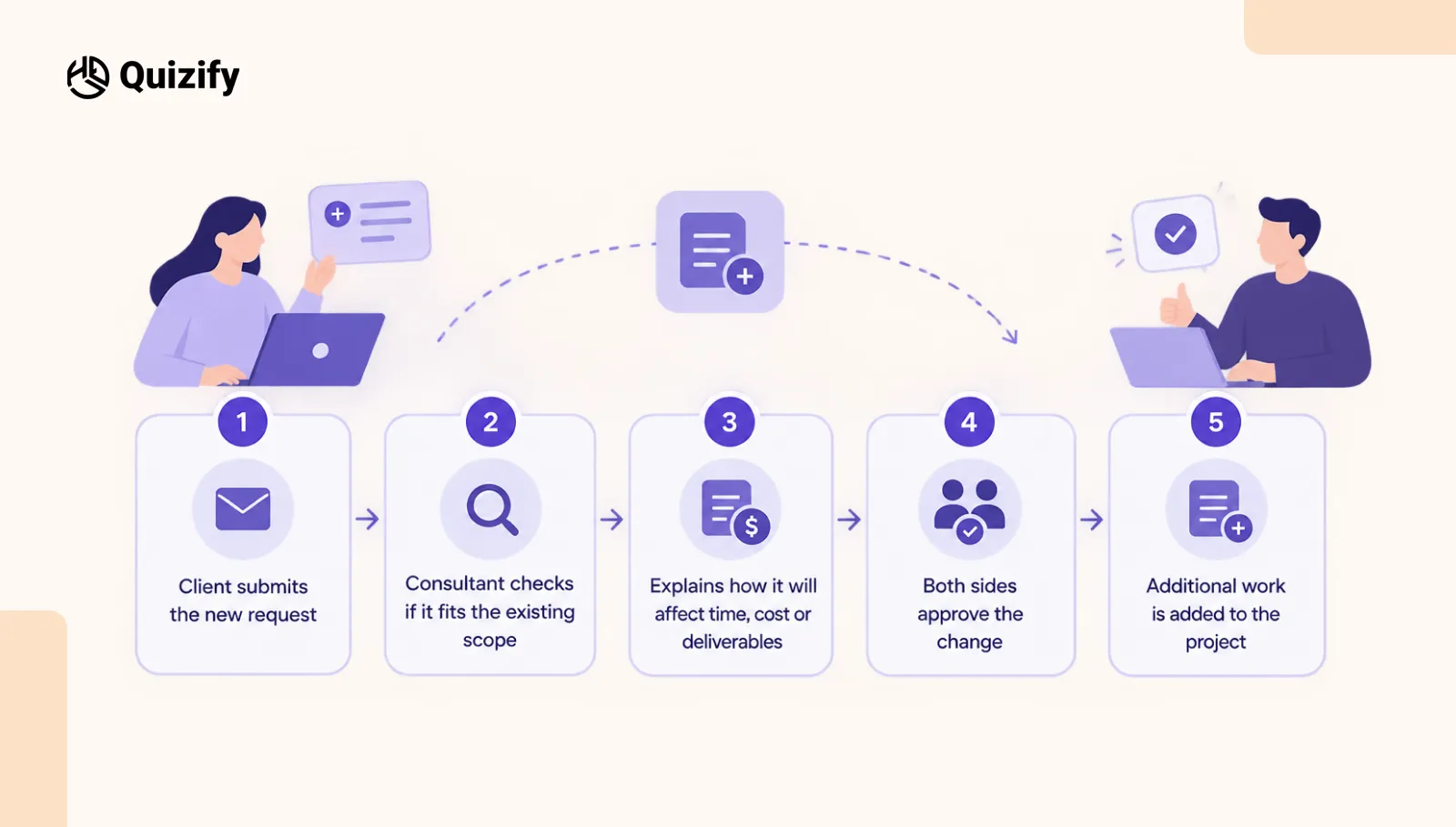
Even a well-planned project can change. A client may find a new problem during the project. New information may come up. The business may change direction. Sometimes, the client simply decides they need something different.
So, preventing scope creep does not mean saying no to every new request.
Instead, agree on how additional work will be handled.
For example:
The client submits the new request.
The consultant checks whether it fits the existing scope.
If it does not, the consultant explains how it will affect the time, cost, or deliverables.
Both sides approve the change.
The additional work is added to the project.
This keeps a new request from quietly becoming part of the existing workload.
It is especially useful when the project is being managed through several emails or meetings. Everyone can refer back to the agreed change instead of relying on memory.
Use the Intake Information to Build a Better Proposal

The information collected during intake should be used when preparing the proposal.
For example, if the client says their main problem is poor lead quality, the proposal should reflect that problem. If they have a fixed deadline, the timeline should take that deadline into account.
The proposal can connect:
Client problem → Project goal → Deliverables → Timeline → Responsibilities
This gives the project a clear starting point.
It also gives the consultant and client something to refer to later. If a new request comes up, they can check whether it was part of the original agreement.
Make Client Responsibilities Clear
The consultant is not the only one who can influence the project deadlines.
The client can slow down the project by not providing necessary documents, approving a draft, providing access, or giving feedback.
Thus, it is better to talk about the client’s responsibilities before the project starts.
For instance:
Providing necessary documents
Giving access to required tools
Providing feedback on time
Approving project materials
Naming one main contact person
Joining planned meetings
People may add these responsibilities to the proposal or project agreement.
For instance, if the consultant does not receive website analytics, the client should inform the consultant about the need for those analytics at the very beginning of the project.
If the client sends the information late, the project timeline may need to move as well.
It is easier to manage this when the responsibility was agreed upon before the work started.
Use an Interactive Intake Form to Spot Scope Risks Early

A normal contact form generally collects important information like name, email, and information of the business.
However, the consulting intake form needs more information. The purpose of an interactive form is to collect project information prior to the first meeting. It can help the client to answer questions that center on project goals, current state of affairs, expected outcome, and duration.
In this regard, a consultant can request information in four steps:
Understand → Qualify → Define → Prepare
Understand
Find out as much as possible about what the client does and what problem the client has;
Qualify
Determine whether the project fits the company's services provided;
Define
Specify the goals, deliverables, timeline, and budget;
Prepare
Collect the information needed before the first consultation.
This makes the intake form part of the project planning process instead of just a way to collect contact details.
Create a Scope Checklist Before Sending the Proposal
Before sending a consulting proposal, review the project against a simple checklist.
Scope Checklist
Is the main business problem clear?
Is the desired outcome specific?
Are the deliverables defined?
Are exclusions listed?
Is the timeline realistic?
Are client responsibilities clear?
Is the number of meetings defined?
Are revision limits included?
Is the process for additional work explained?
Has the client confirmed their expectations?
If some of these answers are still unclear, it may be worth discussing them with the client before sending the proposal.
A short conversation at this stage can prevent a much longer conversation later.
Prevent Scope Creep Without Making the Client Feel Restricted
Setting boundaries does not mean making the consulting relationship difficult.
The important part is to explain what happens when the client needs something outside the agreed work.
Instead of saying:
That's not included.
You can say:
That request is outside the current project scope. We can add it as a separate deliverable, and I can confirm the additional time and cost before we proceed.
This keeps the conversation open while protecting the original agreement.
It also gives the client a clear option if their needs change during the project.
Final Thoughts
Scope creep usually becomes a problem when the project was not clear enough at the start.
A better consulting process begins with better questions. The consultant needs to understand the client's problem, expected outcome, required work, timeline, and responsibilities before agreeing to the project.
An interactive intake form can make this easier. It can collect project information before the first meeting and, with conditional questions and Logic Jumps, show clients only the questions that apply to their situation.
The main goal is simple: understand the work before agreeing to the work.
When the client and consultant know what is included, what is not included, and what happens when the project changes, there is much less room for confusion later.
Join our newsletter list
Sign up to get the most recent blog articles in your email every week.
Similar Topic
Related Blogs





FAQ
Frequently Asked Questions
What is scope creep?
Scope creep happens when extra work gets added to a project after the work has been agreed on.
How can I avoid scope creep?
Be clear about the work before the project starts. Write down the tasks, deliverables, timeline, and what is not included.
What should I do if a client asks for extra work?
Check if the request is part of the agreed work. If it is not, discuss the extra work, time, and cost with the client first.
Should I use a client intake form?
Yes. An intake form can help you understand what the client needs before the project starts.
Why should I list what is not included?
It helps avoid confusion. The client knows what they are paying for, and you know what work you have agreed to do.