Lead Generation Survey Questions: Best Practices, Examples, and Tips to Get Better Leads
Engagement Strategies
9 Min Read
Discover the best lead generation survey questions, examples, and tips to collect valuable customer data, qualify prospects, and generate higher-quality leads.
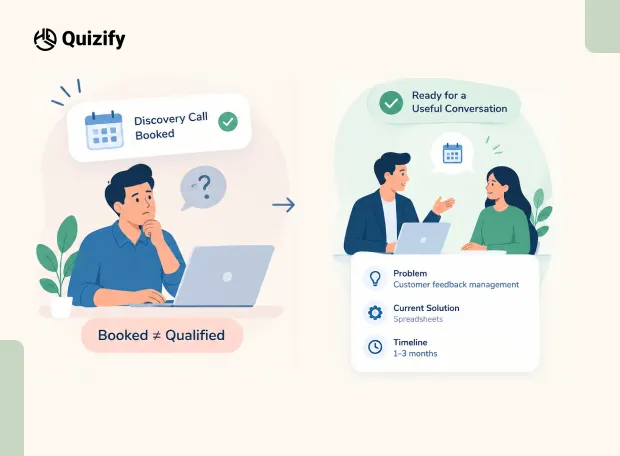
Every company needs leads. Having lots of leads is great, but it doesn’t end there. What matters most is finding prospects who are interested in your product or service and would like to purchase it.
That’s where lead generation surveys come into play. A properly designed survey gives you a chance not only to gather contacts but also to understand your target audience's pain points, what kind of solutions they need and if they are ready to buy.
Instead of guessing, you know what your audience wants by asking questions. It happens many times that companies invest significant funds into advertising, webinars, landing pages, and other types of campaigns.
However, at some point, they fail because they do not have enough questions after the customer's action of interest. You can fix this issue with a short survey.
Here you will find out what lead generation surveys are, why they matter, what questions to include, and how to build surveys that work.
What Is a Lead Generation Survey?
A lead generation survey is a brief form designed to get information about your prospects. This way, you will get to know more about them and be able to decide whether they mistake.
The information may include:
Contact data
Company data
Problems with business
Purchase plans
Budget
Permission to make a purchase
It will help you determine high-quality leads from just visitors on your website.
Let's say there is a company offering HR software solutions. Two individuals requested their pricing guide.
One of them is a student working on research. Another one is an HR manager seeking the new software solution within two months.
In this case, without any survey, you cannot differentiate between these two leads. A couple of simple questions will be enough.
Why Lead Generation Surveys Matter?
Lead generation surveys are useful because they improve the quality of the information collected from potential customers.
Instead of asking your sales team to contact every lead, surveys help them focus on people who are more likely to buy.
Some key benefits include:
Surveys for lead generation do not just collect contact information; they allow companies to qualify their leads and understand the needs of the customers.
Benefit | Why It Matters |
Better lead qualification | Helps sales teams focus on the most promising prospects. |
Improved personalization | Makes marketing messages more relevant to customer needs. |
Smarter marketing campaigns | Ensures campaigns target the right audience. |
Higher conversion rates | Qualified leads are more likely to become customers. |
Better customer understanding | Reveals customer challenges, goals, and pain points. |
Companies also use survey responses to improve products, create relevant content, and identify common customer issues before starting a sales conversation.
When Should You Use Lead Generation Surveys?
There's no single best place to use a lead generation survey. The right timing depends on how customers interact with your business.
Customer Touchpoint | Survey Purpose |
Landing pages | Capture visitor information before they download a resource. |
Webinar registration | Learn what attendees are interested in. |
Free trial signup | Understand business needs and goals. |
Contact forms | Qualify people who are reaching out. |
Live chat | Collect key details before scheduling a demo. |
Events and trade shows | Gather information from potential customers. |
Product demo requests | Determine whether prospects are ready to buy. |
Keep your survey short to encourage more people to complete it.
Lead Generation Survey Questions You Should Ask
Not every survey needs the same questions. The best questions depend on your business, product, and target audience.
Still, most lead generation surveys include these categories.
1. Basic Contact Information
This is the basic requirement to get leads started. Without the contact details, it’s not possible to move further with the communication process.
Questions could be:
What is your complete name?
What is your professional e-mail id?
What is your mobile number?
For which organization do you work?
What is your position in the organization?
Do not demand more information than you realistically need. The filling out of long forms usually results in lower completion rates.
2. Company Information
Picking up a lead is one thing, selling it is another. The more details you get about the Company the better you know whether that customer is your target one.
Here some common examples:
What kind and/or level of job does/do you do?
Approximately how large a workforce does/do the company/companies have?
Where are the companies based/d based?
Has/how long has the business been running?
In B2B businesses this kind of data is a great support in lead scoring and prioritization of accounts.
3. Understand Their Main Challenge
People always look for products when they need to solve some problem. Identifying their problem at an early stage will allow you to come up with more appropriate solutions.
Possible questions could be:
What is your current business problem?
What do you need to improve?
What prevents you from achieving your goals?
Where do you spend too much time?
In case you deal with customer support software, and most of the respondents mention long response time, your sales team will know what should be emphasized.
4. Learn About Their Buying Plans
Not all leads are ready to purchase right away. There are some who are simply collecting information, while there are those who are comparing different vendors. These questions will determine if the lead has any intention of buying.
Sample questions that you can ask include:
Are you currently seeking solutions?
When are you planning to make a purchase?
Do you have prior experience using this type of software?
What is the deciding factor for selecting a vendor?
The answers help your sales team decide which leads need immediate follow-up and which ones should stay in a nurturing campaign.
5. Check Decision-Making Authority
Many conversations end because the person filling out the form cannot approve the purchase.
It helps to know this early.
You can ask:
Are you involved in the buying decision?
Who else is part of the approval process?
Do you need management approval before making a purchase?
These questions help sales teams better plan the conversation so they can focus on selling rather than spending valuable time finding out such details at a stage where you can no longer take action.
6. Budget-Related Questions
Budget inquiries are an opportunity to find out if a potential customer can afford your service or product. Usually, you'd want to have just one such question, but more are welcome if the context of the sales call justifies it.
Avoid asking an exact number, but instead offer options to the prospects.
Question
Purpose
Budget Range Example
Do you have a budget plan yet?
It's the simplest way to find out how far along a lead's budgeting has come.
Which budget range best fits your vision?
A quick way to get a sense of the maximum amount they're going to spend.
Less than $1,000 (Startups or micro businesses). $1,000, $5,000 (Growth-minded companies). More than $5,000 (Enterprises and medium-sized organizations).
This is probably the most useful data point if we want to qualify the lead and to suggest solutions that match their needs.
7. Discover Their Next Action Preference
The final step before ending the call, you can also ask the lead which option they would prefer for the next move. You can phrase it like this:
Would you like us to schedule a product demo?
Would it be more convenient for you if one of our associates gets in touch with you?
Is the pricing package the next thing you'd like to know?
Do you have a preference for the type of communication channel?
FAQs
1. How many questions should a lead generation survey include?
There should be between 5 and 10 questions for a lead generation survey. It will give you the necessary data without making the survey lengthy. For additional information, you may conduct a follow-up survey after the first conversation rather than putting everything in one questionnaire.
2. Should lead generation surveys include open-ended questions?
They may include a couple of open-ended questions but not more than that. The inclusion of open-ended questions is justified in case it brings any additional value. There will be less chance of completing the survey with a lot of text questions.
3. Can lead generation surveys be used for both B2B and B2C businesses?
Yes. Both of them have the same goal. However, the questions can differ depending on the target audience. B2B surveys may contain questions about company size, job title, and purchase process. B2C surveys include questions about individual preferences and interests.
4. How often should lead generation survey questions be updated?
Once in a few months or after you introduce new products or change the target audience. You will need to update your questions in case you want to gather the data that will help you achieve your goals.
Join our newsletter list
Sign up to get the most recent blog articles in your email every week.
Similar Topic