Lead generation funnel strategy: create multi-purpose funnels with forms, surveys, and quizzes
Engagement Strategies
7 Min Read
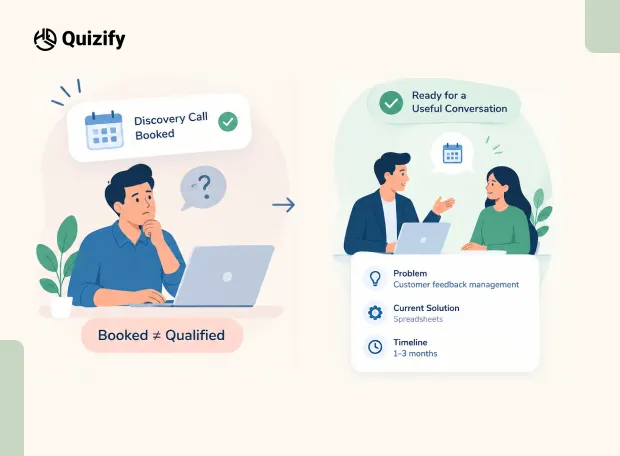
A lead generation funnel should do more than collect emails. Learn how to combine forms, surveys, and a quiz funnel into one multi purpose system that segments, nurtures, and converts.
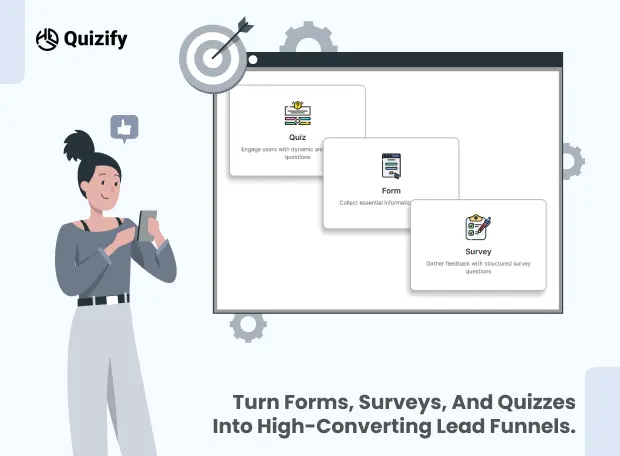
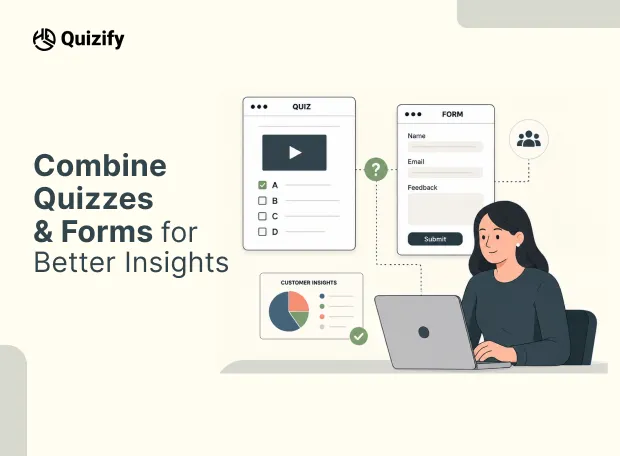
A lead generation funnel does more than capture contact details. It guides a visitor from curiosity to clarity, and then to action. When you assemble forms, surveys, and a quiz funnel into one flexible system, you can greet cold traffic with relevance, personalise mid-funnel education, and move warm prospects toward the right offer without extra steps.
What “Multi-Purpose” Really Means
Multi purpose does not mean messy. It means a single lead generation funnel that can handle several goals because it routes people based on intent. One person may want a quick recommendation, another may want a comparison, and a third may want a deep dive. If your flow recognizes these needs early, it can send each person down the path that fits, while keeping your data tidy and your follow up consistent.
Start with Outcomes, Not Widgets
Before you choose tools, decide what each step must achieve. First, define the moment of value for a new visitor. Next, decide what qualifies someone as sales ready. Then, list the minimum data you need to make a good recommendation. When outcomes lead the plan, your lead generation funnel stays focused, and each component earns its place.
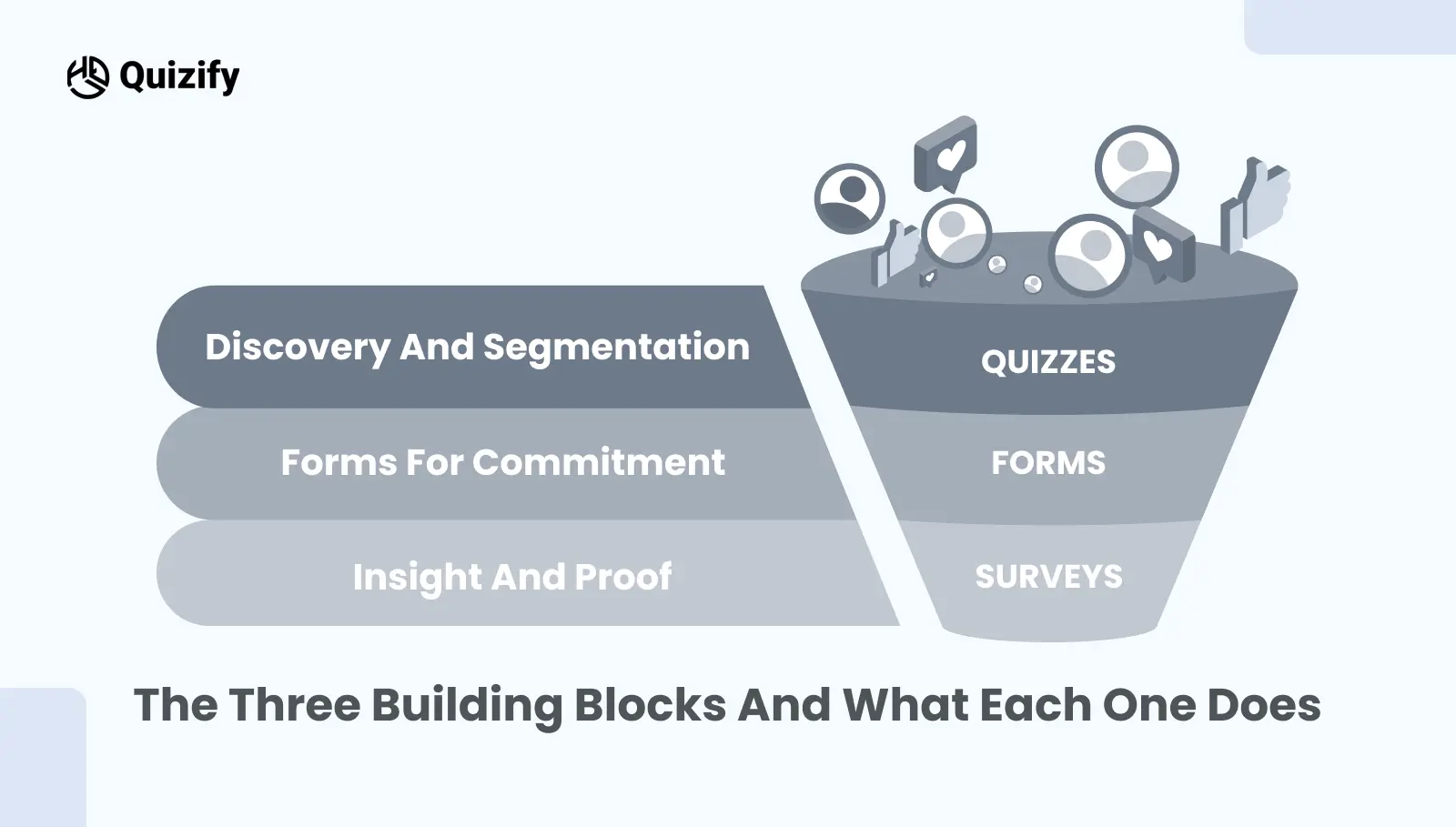
The Three Building Blocks and What Each One Does
Quizzes for Discovery and Segmentation
A quiz funnel helps a stranger tell you what matters in their own words, without friction. Short, outcome-driven questions reveal goals, obstacles, and timeline. As a result, you can tag each profile and speak to them as a person, not a generic lead. If you need structure ideas and examples of quiz-to-form patterns, browse the Quizify blog and adapt a format that fits your audience.
Surveys for Insight and Proof
Surveys confirm what your instincts only suggest. A three-question pulse after a demo collects language and objections you can reuse in copy. Meanwhile, after-purchase surveys provide proof points you can quote near your form. Because surveys are lightweight, you can deploy them at key moments without slowing the funnel.
Forms for Commitment
Forms turn interest into intent. Keep them short at first contact, then ask for more when trust rises. If you need richer data, add a second, optional step after submit instead of front-loading friction. This way, your lead generation funnel keeps moving while you still gather what your team needs.
Map the Routes People Actually Take
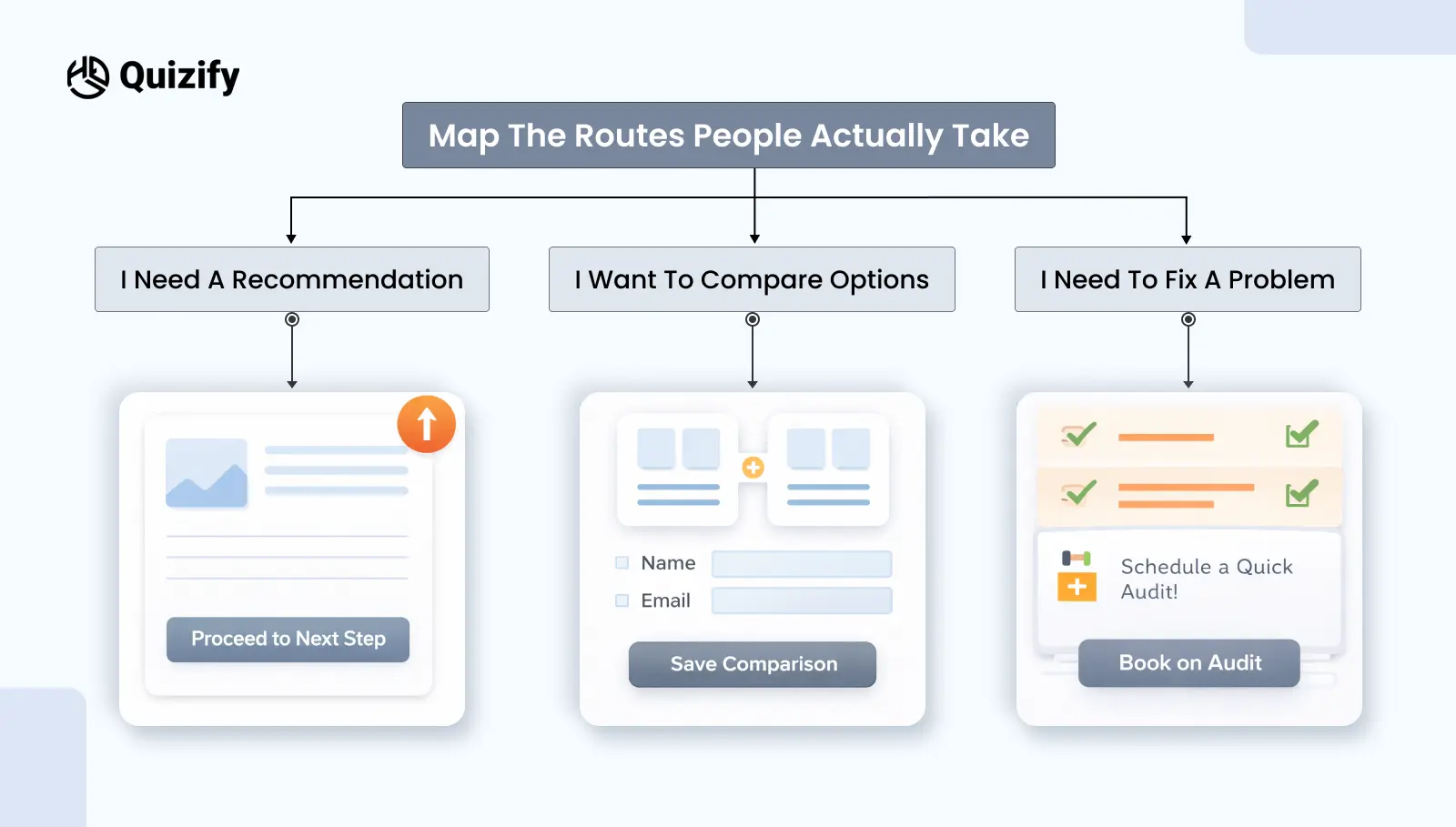
A multi-purpose system works because it guides, not because it guesses. Build a simple routing map that captures the most common paths.
If someone chooses “I need a recommendation,” send them to a result page with one clear next step
If someone chooses “I want to compare options,” send them to a side-by-side view and a short form to save the comparison
If someone chooses “I need to fix a problem,” send them to a checklist and invite them to book a quick audit
This map keeps the lead generation funnel honest. It also prevents dead ends, because every path includes a visible call to action and a reason to continue.
Write Copy That Carries People Forward
Words do the heavy lifting. Therefore, make the promise near the top specific and useful. “See your best-fit plan in two minutes” beats “Get started.” In the quiz funnel, use plain questions and answer options that sound like the way your audience talks. On the survey, explain how answers help you serve them better. At the form, reassure with one short line near the email field, such as “No spam. Unsubscribe anytime.” Finally, on the result page, pair the primary button with a brief benefit so the next click feels obvious.
Reduce Effort with Progressive Disclosure
People handle complex choices better when you show just enough at each step. This is why outcome quizzes paired with short forms work so well. First you clarify the goal, then you ask for the detail that helps you deliver. For a concise explanation of this pattern, see Nielsen Norman Group’s note on progressive.
Decide How You Will Store Data Before You Launch
Multi purpose funnels only pay off if the data flows cleanly. Choose one contact record in your CRM as the source of truth. Then decide which answers become tags, which become custom fields, and which become events. For example, treat “Goal: grow email list” as a tag, store “Budget range” as a field, and record “Completed quiz result: Starter” as an event. Because everything is structured, your emails, ads, and reports stay aligned.
Connect the Dots Between Steps
A smooth lead generation funnel avoids asking twice. Pass the email collected by the quiz funnel into the form so the field auto-fills. Then pass the quiz outcome into the result page so the CTA can change. At last pass survey insights into your email platform so sequences branch without manual work. When each handoff carries context, the experience feels personal and fast.
Plan One Test Per Step
You do not need a complex testing program to learn quickly. Instead, plan one test for each building block.
Quiz - Test the first question and the result headline. Look for higher starts and higher completions, not just one or the other.
Survey - Test a two-question version against a one-question version. Measure response rate and how often you can reuse the language in copy.
Form - Test one extra qualifier after submitting versus asking it upfront. Track completion rate, time to complete, and lead quality.
Because you test in small moves, you learn fast without breaking a working lead generation funnel.
Avoid the Five Common Failure Points
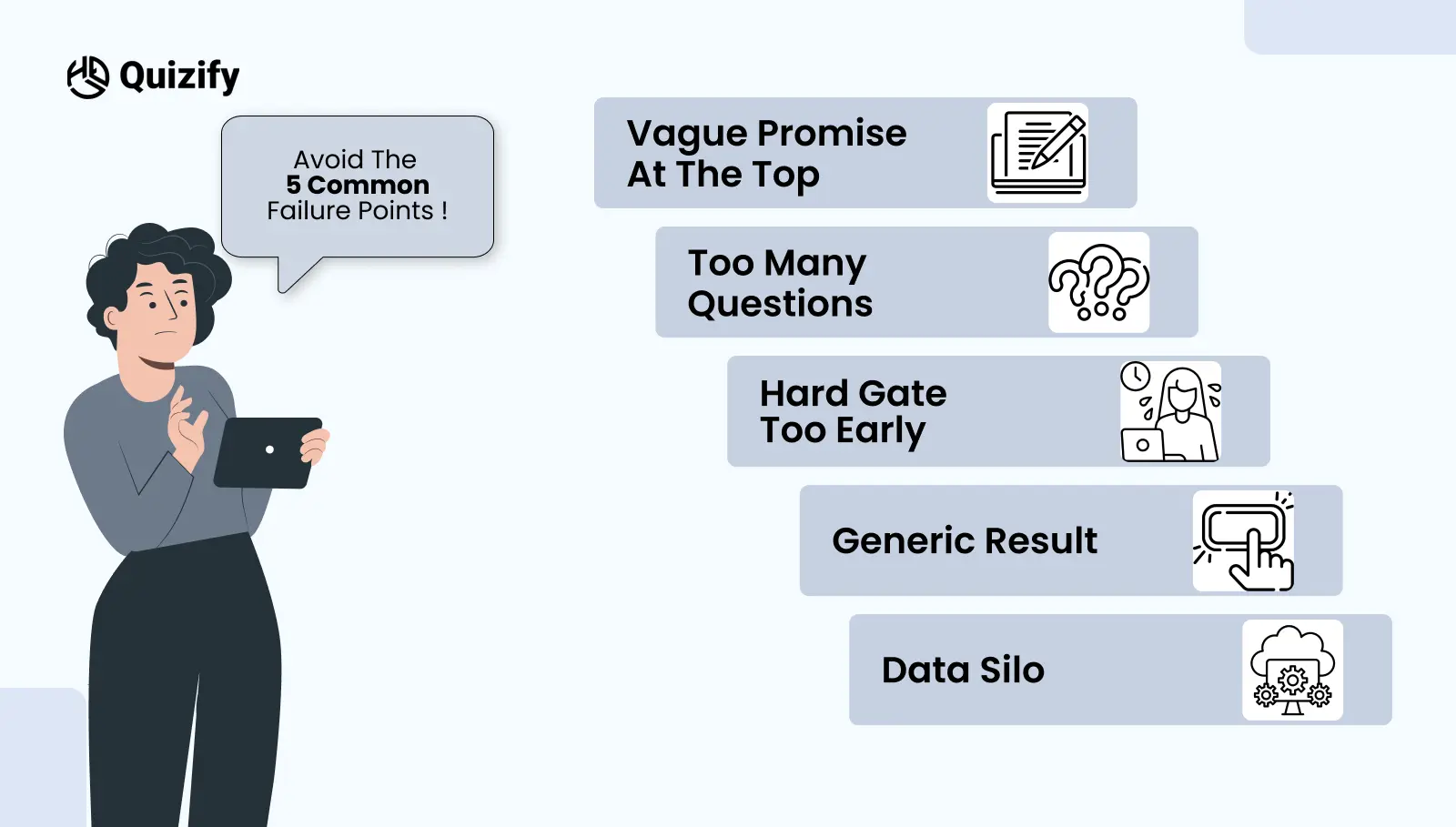
Even strong funnels fail in predictable places. Here is what to watch and how to correct it.
Vague promise at the top: If starts are low, rewrite the first two lines so the benefit is unmistakable. Add a small proof point nearby.
Too many questions: If quiz drop-off spikes in the middle, cut two questions or switch one open-text field to a multiple-choice set.
Hard gate too early: If the form scares people off, move one field to a post-submit step and add a privacy line.
Generic result: If clicks on the result page are weak, tailor the CTA to the outcome and use the visitor’s words in the button microcopy.
Data silo: If follow-up feels random, fix tagging and field mapping so emails and ads match what people told you.
Launch in one week without chaos
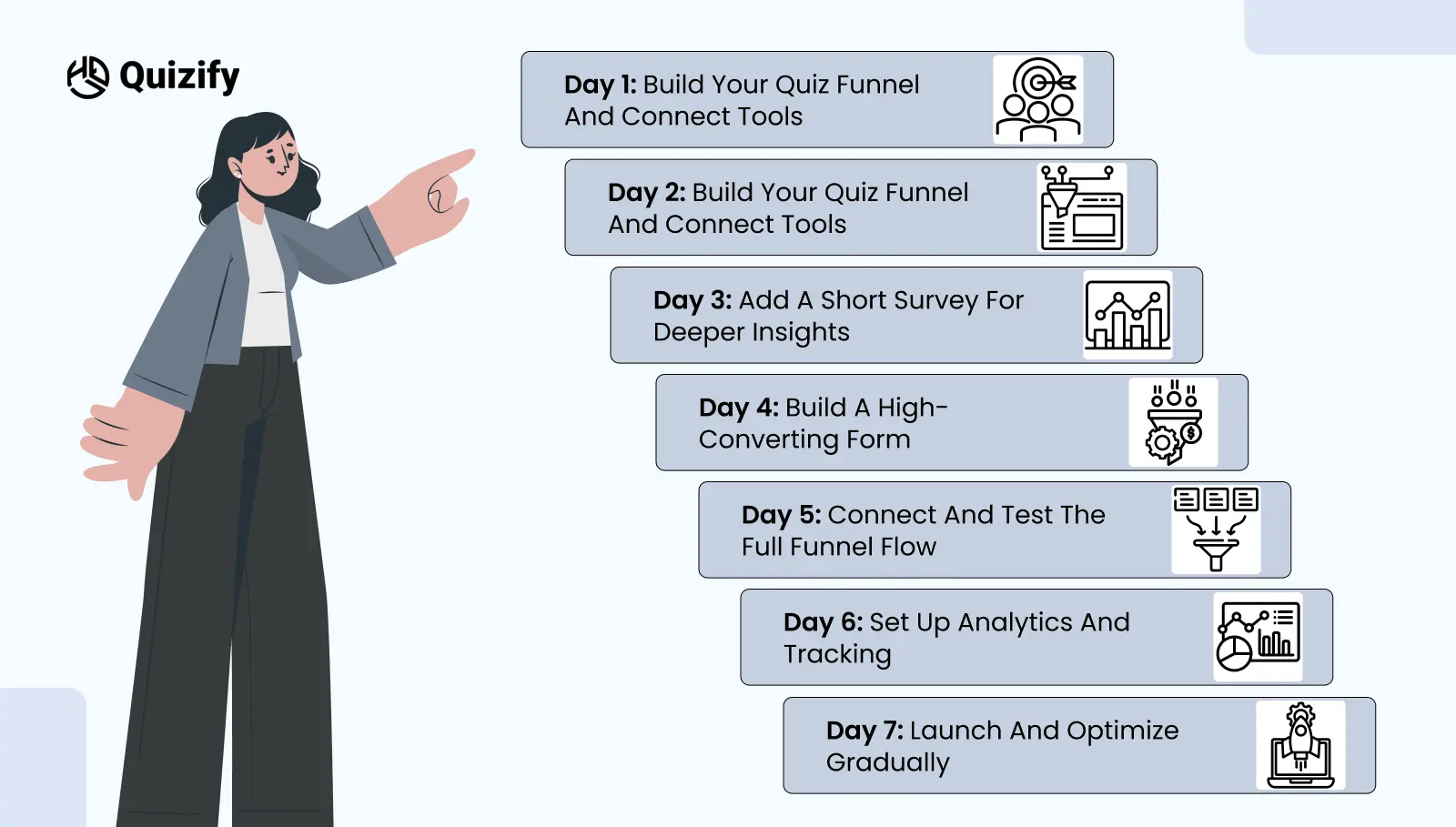
Launching a high-converting quiz funnel doesn’t have to be complicated or time-consuming. With the right plan, you can go live in just seven days while ensuring everything works smoothly—from lead capture to analytics.This step-by-step guide shows you how to build, test, and launch your funnel efficiently using an AI quiz builder, online form creator, and smart funnel marketing strategies.
Day 1: Define Your Goal and Core Offer
Start by identifying the main purpose of your funnel. What do you want to achieve—lead generation, product recommendations, or customer insights?
Define your core promise
Write your first quiz question
Create compelling result headlines
Align everything with one clear, measurable goal
👉 A strong foundation ensures your entire funnel stays focused and effective.
Day 2: Build Your Quiz Funnel and Connect Tools
Now it’s time to create your quiz funnel using an online quiz maker or AI quiz builder.
Build a quiz with at least two outcomes
Connect it to your CRM or email tool
Create tags for different outcomes
Test the integration using a dummy lead
👉 This step ensures your data flows correctly and your lead generation system works from day one.
Day 3: Add a Short Survey for Deeper Insights
To collect more valuable data, include a short follow-up survey.
Add 1–3 quick survey questions
Place it after the quiz result page
Include a polite opt-in message
Track response rate and completion quality
👉 This helps you gather zero-party data and better understand your audience.
Day 4: Build a High-Converting Form
Your form is where conversions happen, so optimise it carefully.
Enable email autofill from quiz responses
Add optional follow-up questions for better qualification
Include a clear privacy statement
Add a short reassurance message near the submit button
Test mobile usability (keyboard, input fields, errors)
👉 A well-designed form reduces friction and increases submissions.
Day 5: Connect and Test the Full Funnel Flow
Now link everything together:
Connect quiz → survey → form
Test the entire user journey
Check performance on iOS, Android, and desktop
Fix spacing, focus states, and navigation issues
👉 A smooth user experience is critical for higher conversion rates.
Day 6: Set Up Analytics and Tracking
Data is essential for improving your funnel.
Track quiz starts and completions
Measure time to complete
Monitor clicks on result pages
Verify data accuracy in your dashboard and CRM
👉 These insights help you optimise your conversion funnel over time.
Day 7: Launch and Optimise Gradually
Don’t launch everything at once—start small.
Release your funnel to a small audience
Monitor performance metrics
Wait for the data to stabilise
Roll out to full traffic
Plan your first A/B test
👉 Continuous testing is key to long-term success in funnel marketing.
Conclusion
A lead generation funnel that uses quizzes for discovery, surveys for insight, and forms for commitment covers more ground with less friction. Because you route by intent, people see value sooner. Because you store data cleanly, your messages stay relevant. And because you test in small steps, your quiz funnel keeps getting faster and smarter. Build it once, keep it tidy, and let the same system welcome new traffic, educate warm prospects, and turn ready buyers into customers.
Read More: Lead Generation Forms vs. Quiz: When to Use Each
Join our newsletter list
Sign up to get the most recent blog articles in your email every week.
Similar Topic