Brand Awareness Survey Question Examples to Ask Your Customers
Marketing and Promotion
12 Min Read
Brand awareness surveys provide valuable insights into how your audience discovers, remembers, and perceives your business. Explore proven survey questions that help improve brand visibility, customer engagement, and marketing performance.

Brand awareness has a great influence on how people remember and recognize a brand. People don't usually buy goods from unknown brands. Therefore, a company needs exact information about how its target audience perceives it and remembers.
Lots of companies spend money on online advertising, social networks, content marketing and customer engagement campaigns. Nevertheless, the amount spent on marketing activities doesn't indicate whether your brand is memorable. This is where brand awareness surveys come into play.
Such surveys will help a company understand how visible it is in the market. It will also let you know whether people remember the brand and how they find it and perceive it.
Market research practices developed recently keep emphasizing two key points: aided awareness and unaided awareness. Companies use both techniques in order to identify whether customers remember a brand spontaneously or only with prompts.
Here you'll learn about brand awareness survey questions and see examples of them for customer research.
What is a Brand Awareness Survey?
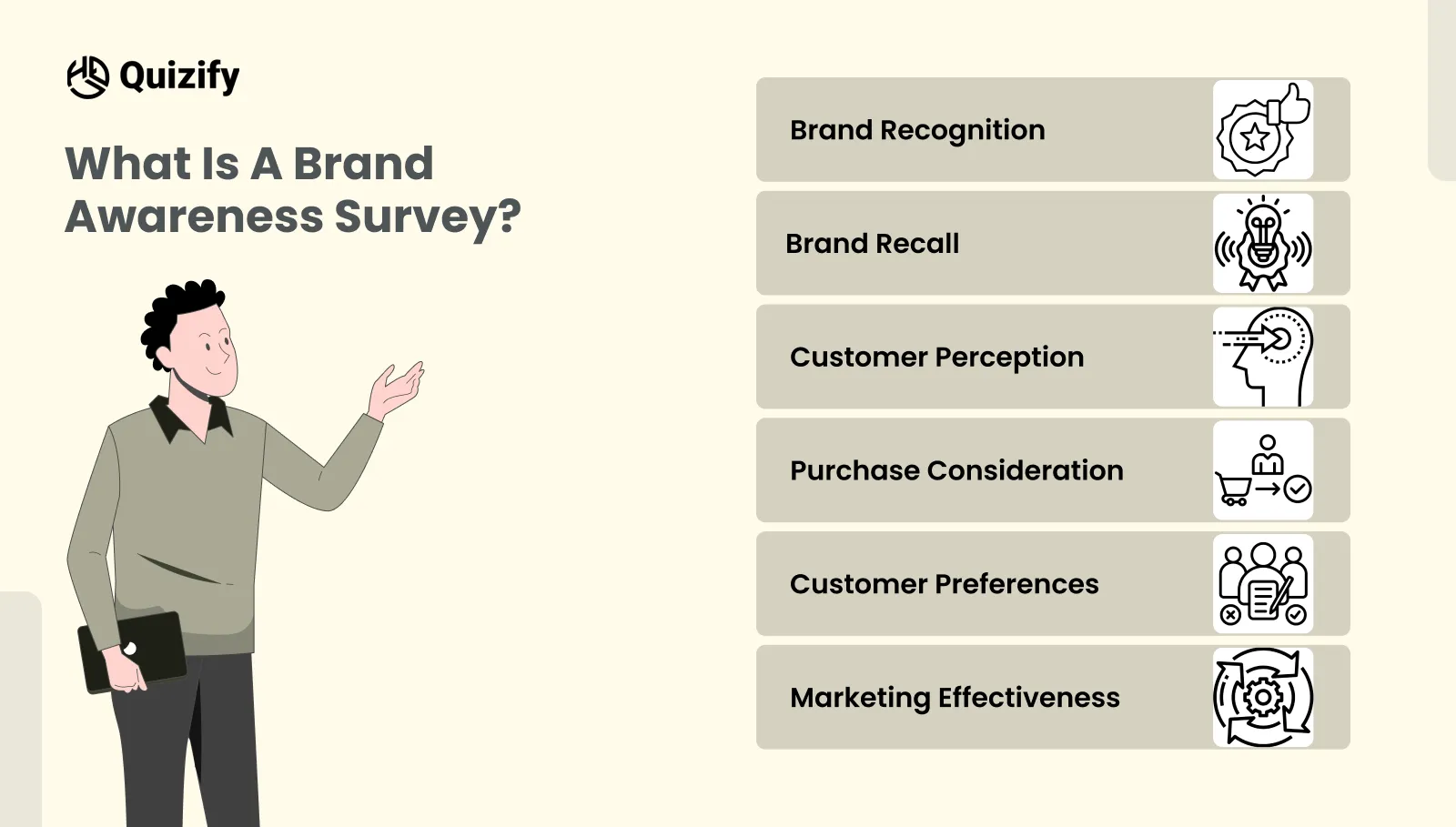
A brand awareness survey is a questionnaire designed to measure customer familiarity with a business, product, or service.
The survey collects information about:
Brand recognition
Brand recall
Customer perception
Purchase consideration
Customer preferences
Marketing effectiveness
In simple terms, it answers an important business question:
"Do customers know who we are?"
Yet, companies should not limit themselves to asking these basic questions only. They also need to figure out how consumers perceive their brand and what makes them recall it.
Why Brand Awareness Surveys Matter
Most companies monitor the number of visitors to their website as well as their sales figures. Though these data are helpful, they do not reveal what customers think.
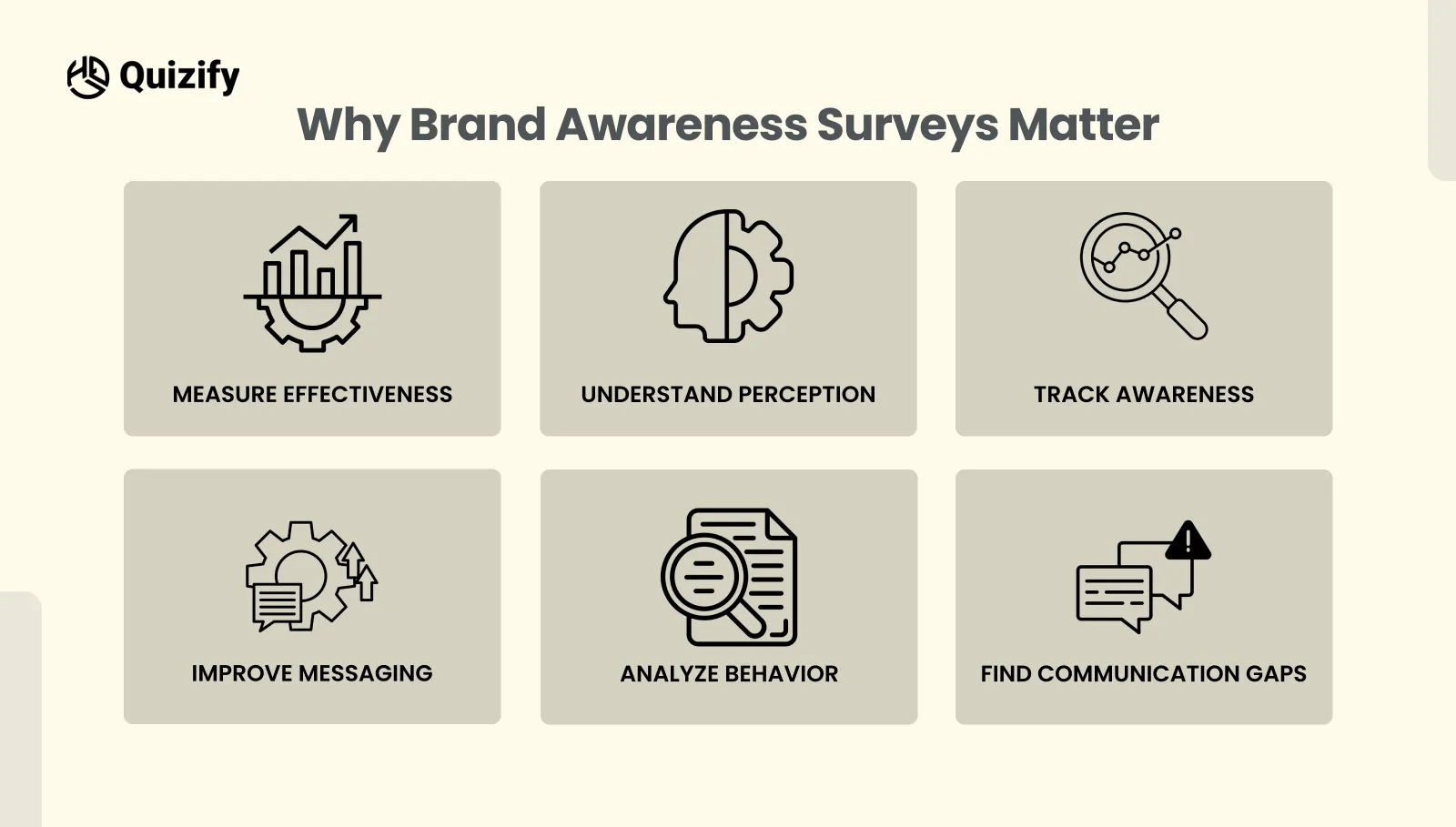
Brand awareness surveys allow companies to do this:
Understand how customers see the brand
Assess the awareness of their brand against competitors
Improve the marketing message
Understand customer behavior
Find out where the brand communication is failing
Let's say a company receives high web traffic but low recall scores in surveys. This is a common case where people go through the content but don't get the brand itself in their memory. As a result, marketers can adjust campaigns before spending more budget.
Types of Brand Awareness Questions
Different questions provide different insights. Therefore, surveys should include a mix of question formats.
Survey Type | Purpose | Example |
Unaided awareness | Measures spontaneous recall | Which brands come to mind when you think of project management software? |
Aided awareness | Measures recognition | Which of the following brands have you heard of? |
Brand perception | Understands customer opinions | What words describe our brand? |
Purchase behavior | Tracks readiness to buy | Have you bought from our brand? |
Source awareness | Identifies discovery channels | Where did you first hear about us? |
Research commonly separates aided and unaided awareness because they measure different levels of customer memory and brand presence.
Best Practices Before Writing Survey Questions
Before looking at examples, businesses should understand several important rules.
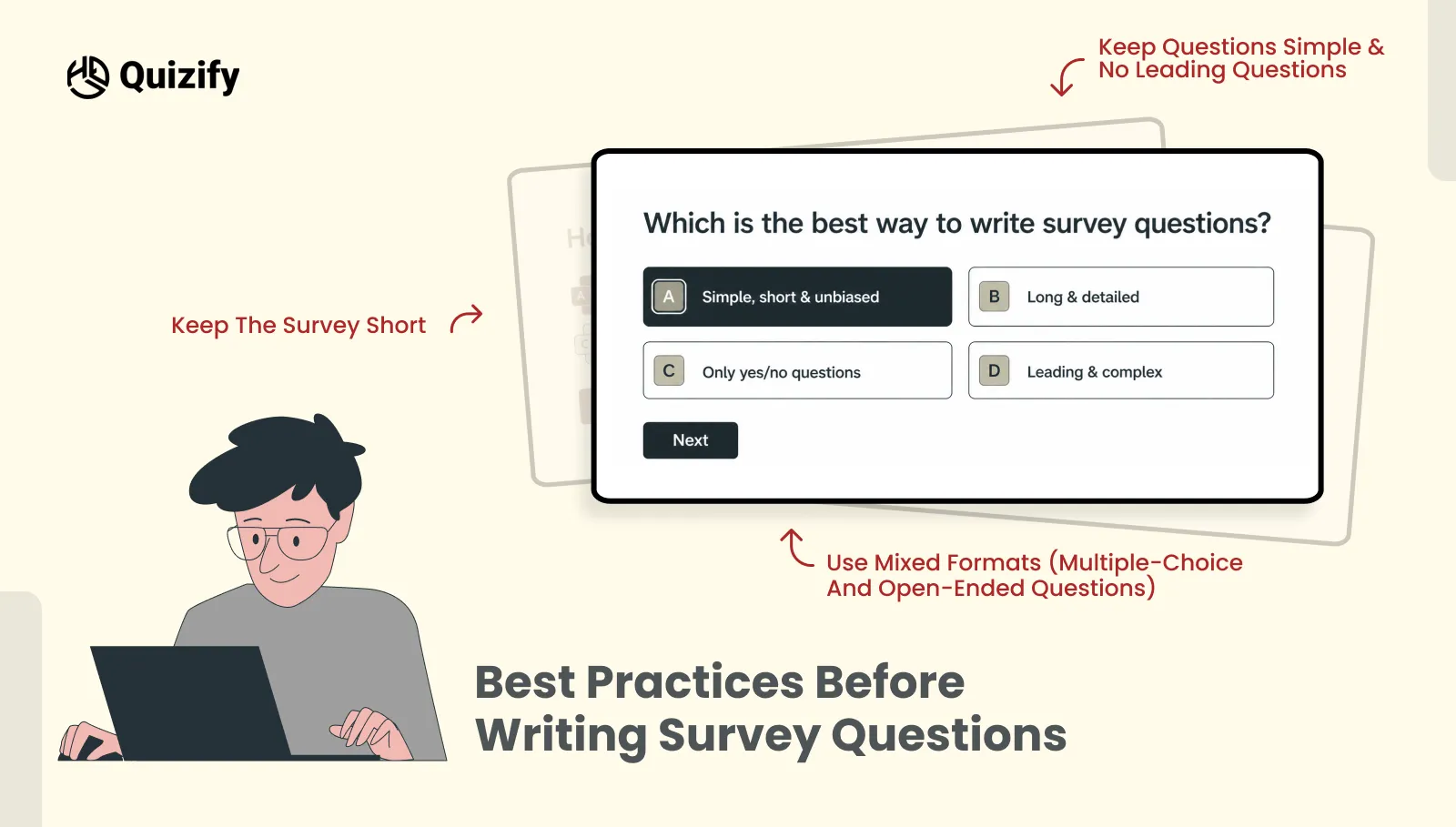
1.Keep questions simple
Customers should understand the question immediately. Complex wording creates confusion.
"Can you point out your level of familiarity with our brand products?"
Use:
"How well do you know our brand?"
2.No leading questions
Questions should not lead customers to a particular response.
For instance:
"Do you really like our products?"
Such questions introduce a bias.
Instead, try:
"How would you say your experience is with our products?"
3.Keep the survey short
Long surveys may lower the response rate. Hence, businesses should only include important questions in their survey.
4.Use mixed formats
A combination of multiple-choice and open-ended questions creates better insights.
Brand Awareness Survey Question Examples
Below are practical examples grouped by category.
1. Unaided Brand Awareness Questions
Questions on this topic do not offer any kind of help to consumers.
Examples:
If you were thinking of the [industry category], which are the brands that come into your mind?
Name the first company you think about for [product type].
Which brands are you familiar with in this market?
Without searching online, which companies can you remember?
If you were to choose a brand for this sector which one would it be?
Such questions are an effective tool for finding out to what extent your brand is the first one thought of by customers.
As research, questions asking for a brand recall without any prompts deliver more reliable signs of the brand power since customers recall the brand themselves.
2. Aided Brand Awareness Questions
These questions provide prompts.
Examples:
Have you heard about our company?
Which brands below do you recognize?
Which of these companies have you seen before?
Which logos do you recognize?
Can you remember seeing our brand in any advertisements?
Such questions are often asked by businesses after marketing campaigns and launches of new products.
3. Brand Perception Questions
Recognition alone is not enough. Customers may know a brand but still have a weak perception of it.
Examples:
Which three words describe our brand?
How can you describe the personality of our firm?
What distinguishes our brand from that of competing firms?
How would you rate our reliability?
What comes into your mind when thinking about our firm?
These answers give companies information about emotional associations.
4. Customer Discovery Questions
Businesses also need to know where awareness begins.
Examples:
Where did you first hear about us?
Which channels introduced you to our company?
How did you discover our products?
Did you find us through search engines, social media, referrals, or advertisements?
Which content influenced your first interaction?
These questions help marketing teams identify high-performing channels.
5. Purchase Intent Questions
Awareness should eventually support business outcomes.
Examples:
Have you purchased from us before?
Would you consider buying from us in the future?
How likely are you to recommend us?
What factors influence your purchasing decision?
Which competitor would you consider instead?
Sample Brand Awareness Survey Structure
The table below shows a practical survey sequence.
Step | Question Type | Goal |
Step 1 | Unaided awareness | Measure natural recall |
Step 2 | Aided awareness | Measure recognition |
Step 3 | Perception questions | Understand brand image |
Step 4 | Discovery questions | Identify channels |
Step 5 | Purchase questions | Measure customer intent |
This structure creates a logical flow and prevents biased responses. For example, businesses should place unaided questions first. If customers see the brand name earlier, answers may become influenced.
Common Mistakes Businesses Make
Many surveys collect data but fail to generate useful insights.
The following mistakes are common.
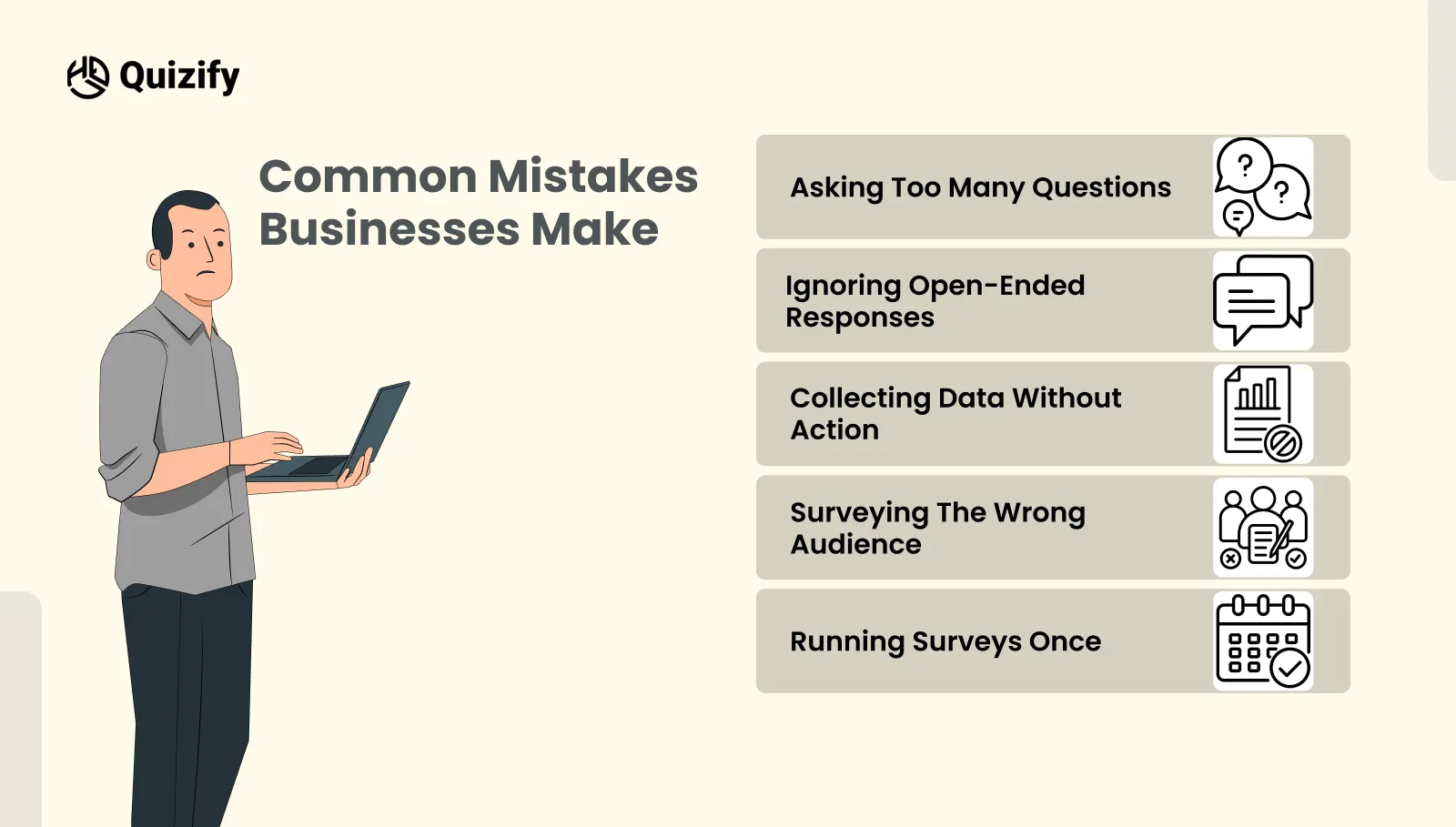
Asking too many questions
Customers lose interest quickly. Therefore, surveys should remain focused.
Ignoring open-ended responses
Many businesses only analyze numerical ratings. However, written comments often explain customer thinking.
Collecting data without action
Survey results should support decisions. Otherwise, the process becomes ineffective.
Surveying the wrong audience
Businesses should survey potential customers and existing customers separately because objectives differ.
Running surveys once
Brand awareness changes over time. Therefore, surveys should happen regularly.
How Often Should Businesses Conduct Brand Awareness Surveys?
Survey frequency depends on business activity.
Below is a general guideline:
Quarterly for fast-growing businesses
Every six months for established companies
After major campaigns
Following product launches
During rebranding initiatives
Keeping a regular check on awareness helps companies spot trends instead of one-off results.
Final Thoughts
Brand awareness studies do more than measuring customer recognition. It provides an insight into customer mindset and market exposure.
Correct questions in surveys can determine whether customers remember the brand, how they came to know it, and what they think about it.
However, getting information is just one side of the story. Organizations also need to interpret and utilize the information collected.
Even a slight shift in the customers’ mind can make a difference in their future purchasing decision. Thus, organizations should develop surveys wisely and analyze them regularly.
Good brands don’t depend on assumptions, they depend on customers’ insights.
FAQs
1. What are brand awareness survey questions?
Brand awareness survey questions help companies measure customer awareness of a company, product, or service.
2. What is the difference between aided and unaided awareness?
Unaided awareness refers to the ability of customers to recall a brand without any prompts while aided awareness refers to the recognition of a brand after viewing its name.
3. How many questions should a brand awareness survey contain?
Usually, successful surveys have between 10 to 15 questions each. Surveys that are too lengthy will affect their success rate negatively.
4. How often should businesses conduct brand awareness surveys?
Companies usually conduct these surveys every three months or six months. Other surveys can be done after advertising or introducing a new product or service.
5. Why is brand awareness important?
Brand awareness helps in gaining customer trust and influencing their buying behavior. Usually, customers go for the brands that they know and recall.
6. Can small businesses use brand awareness surveys?
Businesses may conduct surveys that would shed light on their level of visibility, customer perceptions, and marketing effectiveness.
Sources used for modern methods of conducting surveys: aided/unaided awareness models and brand surveying practices.
Join our newsletter list
Sign up to get the most recent blog articles in your email every week.
Similar Topic