Customer Satisfaction Survey Questions That Actually Get Answers
Marketing and Promotion
9 Min Read
Discover customer satisfaction survey questions that encourage honest feedback, increase response rates, and help you improve the customer experience.
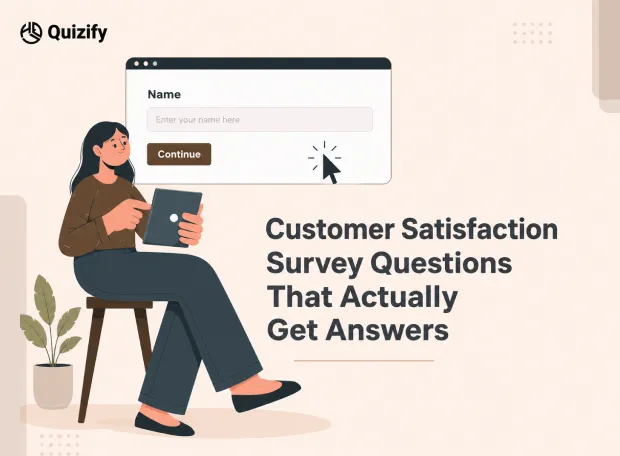
Businesses across different industries use customer satisfaction surveys as part of their customer feedback process. Customers receive them after placing an order, contacting support, using a product feature, or even just visiting a website. Yet many businesses still face the same issue: people either ignore surveys or give rushed responses that offer very little value.
A well-designed customer satisfaction survey should help businesses collect useful responses instead of collecting random ratings.
Questions like "How satisfied are you with our service?" or "Do you like our product?" often generate surface-level answers. They provide numbers but fail to explain why customers feel a certain way. Businesses end up collecting customer feedback data without collecting understanding.
Customers today have shorter attention spans and more choices than ever. They expect experiences to be faster, simpler, and more personalized. Because of that, businesses need customer satisfaction questions that feel relevant and easy to answer while still delivering useful insights.
A good customer survey should do three things:
Encourage customers to respond
Help identify problems and opportunities
Turn feedback into action
This article explains customer satisfaction survey questions that people actually answer, why they work, and how businesses can structure surveys that produce meaningful responses.
Why Traditional Customer Satisfaction Surveys Often Fail
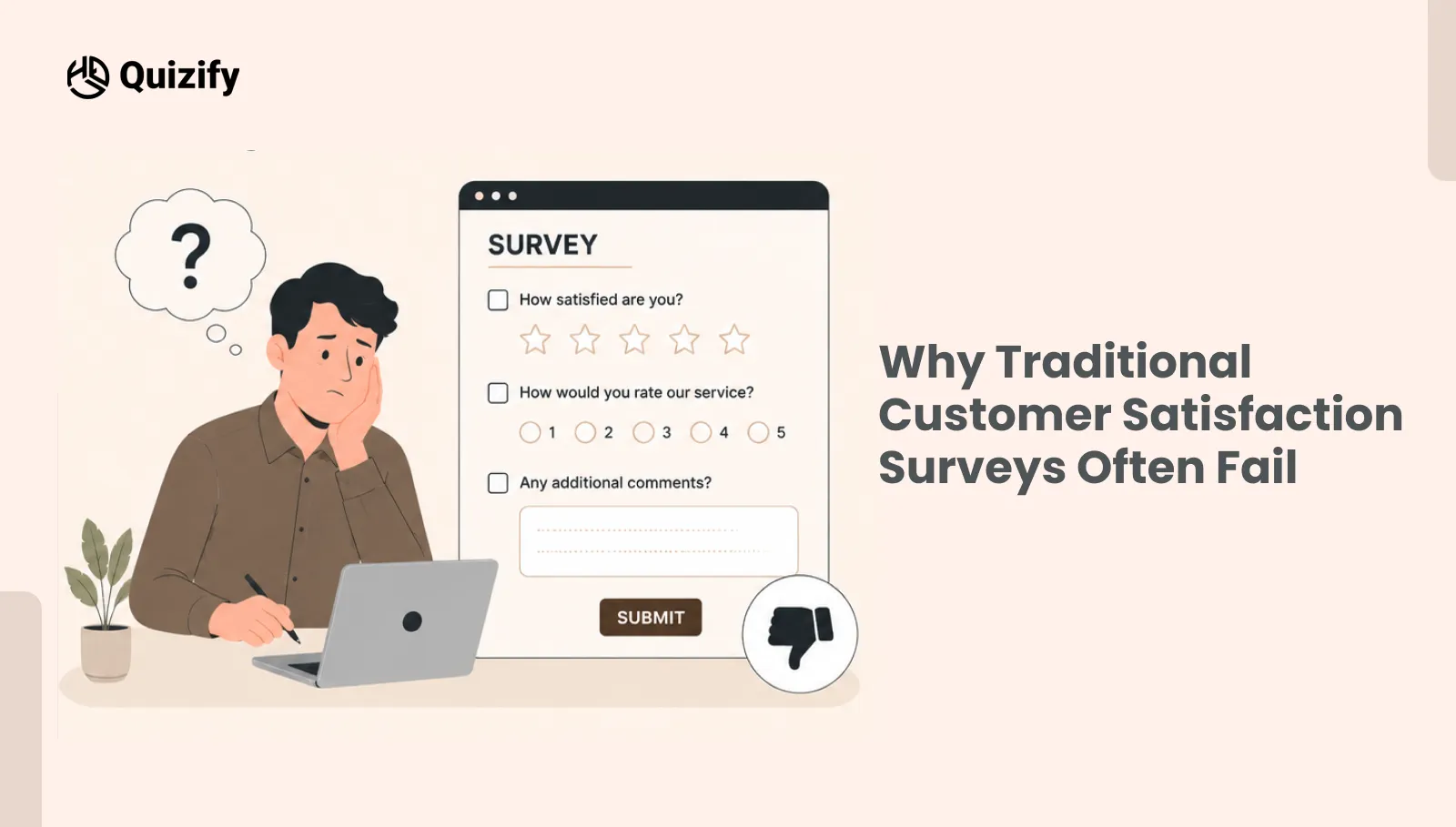
Many organizations focus heavily on collecting feedback volume rather than feedback quality.
Some common reasons surveys fail include:
Surveys are too long
Questions sound robotic
Customers are asked for information the business already knows
Rating scales dominate every section
Questions are vague
There is no clear purpose behind the survey
Imagine receiving a survey immediately after contacting support:
"Rate your experience from 1–10."
You may select a number and move on. Now compare that with:
"What was the most frustrating part of getting help today?"
The second question creates context. It encourages customers to share a real experience.
Businesses are increasingly moving toward experience-focused questions rather than simply collecting scores.
What Makes Survey Questions Get More Responses?
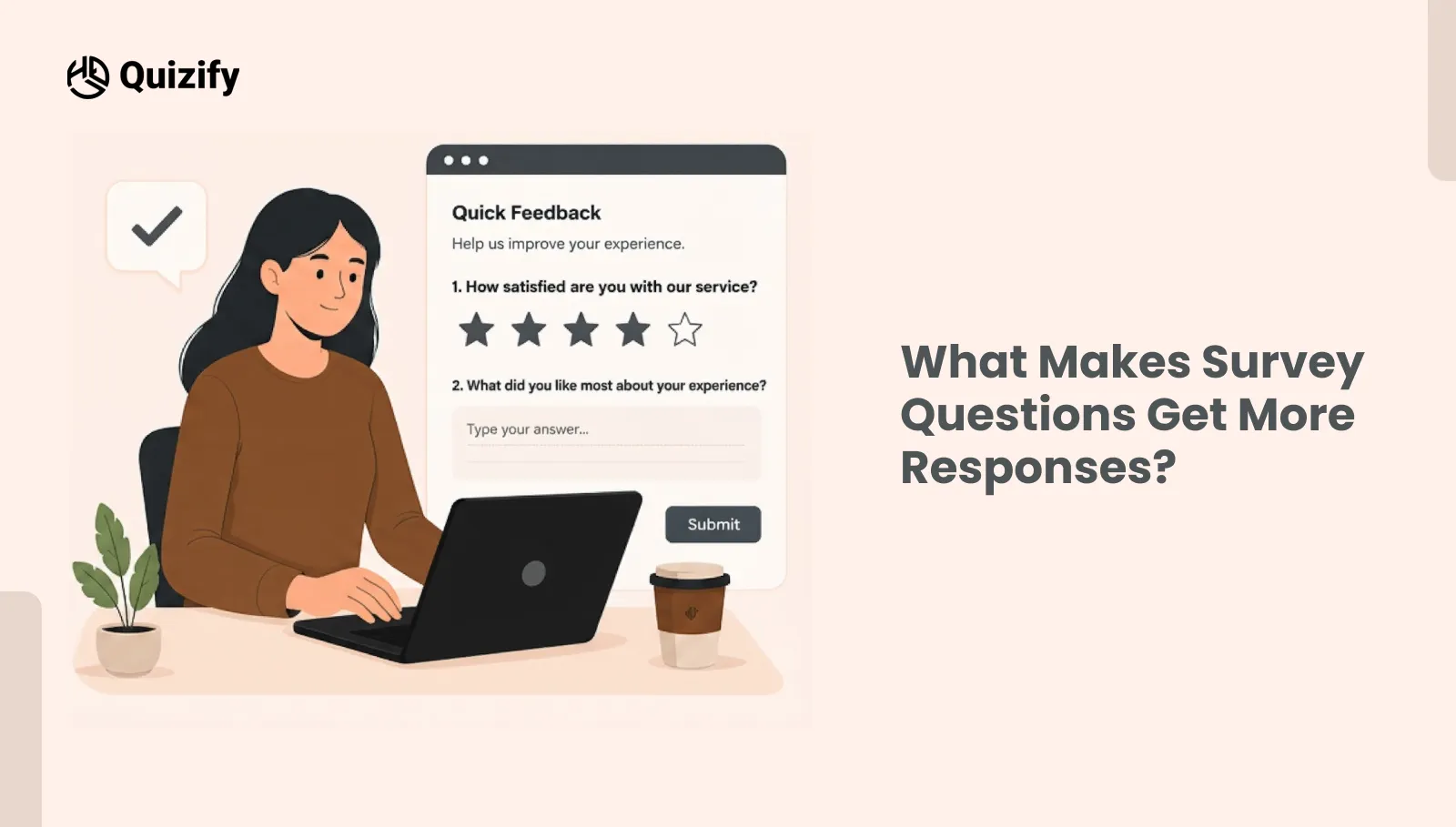
Before writing questions, it helps to understand why people choose to answer.
Customers are more likely to participate when:
Questions feel personal
The survey is short
Questions are easy to understand
They see value in giving feedback
Questions relate to a recent interaction
Open-ended questions are used carefully
There is also a balance to maintain. Too many yes/no questions provide limited insights. Too many open-ended questions create survey fatigue. The goal is not to ask more questions. The goal is to ask better questions that provide useful customer insights.
Types of Customer Satisfaction Survey Questions
Using a mix of these question types creates stronger feedback quality and improves overall survey response quality.
Question Type | Purpose | Example |
Rating scale | Measure overall experience | Rate your experience from 1–5 |
Multiple choice | Identify common patterns | Which feature do you use most? |
Open-ended | Understand customer thinking | What could we improve? |
Yes/No | Quick validation | Did you find what you needed? |
Follow-up question | Add context | Why did you choose that rating? |
Using a mix of these question types creates stronger feedback quality.
Questions That Get Useful Customer Feedback
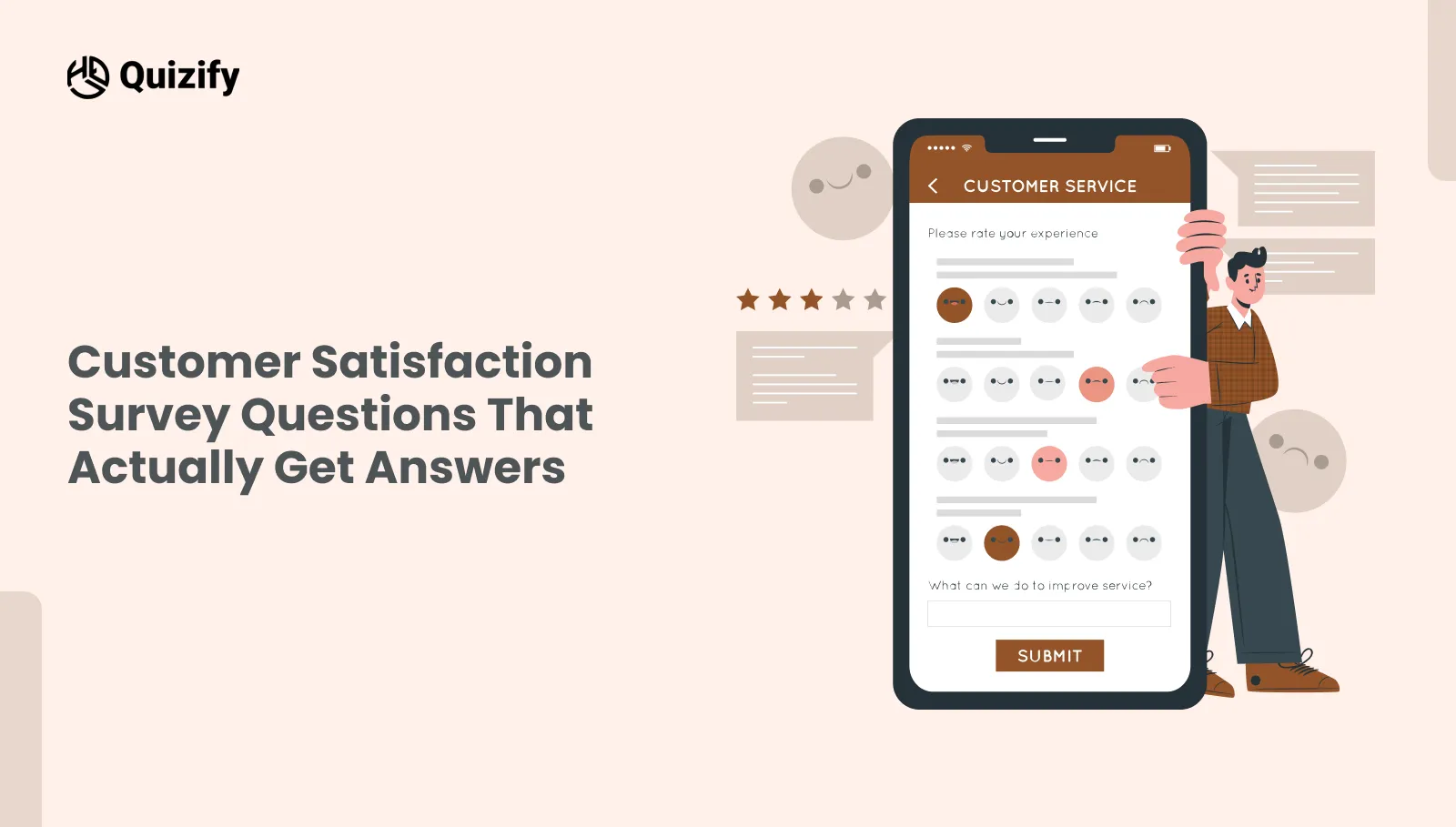
1. How easy was it to achieve your goal today?
This question works because customers focus on effort rather than satisfaction.
People often remember effort more clearly than emotion.
Examples:
How easy was it to place your order?
How easy was it to find the information that you needed?
How easy was it to fix your problem?
Why it works:
Easy-to-understand language
It concentrates on the experience
Identifies pain points
2. What almost made you not go through with your purchase?
This question works well for e-commerce companies and digital goods.
There are many cases when a customer purchases something even after encountering difficulties. Standard surveys would not catch these problems.
The answers might indicate such factors as:
Expensive shipping
Inconvenient check-out process
Limited choice of payment methods
Confusing product descriptions
These points usually have an immediate impact on conversions.
3. What was the most helpful part of your experience?
Standard surveys mostly focus on difficulties. Positive experiences are no less important and can be analyzed for further improvement.
Examples:
Helpful interaction with support
Quick delivery
Suggestions for similar products
Easy navigation
4. If you could change one thing, what would it be?
Customers generally answer this question because it is direct. It does not force them to think about multiple categories at once.
Instead of asking:
"What features, design elements, pricing concerns, and support improvements would you recommend?"
Ask:
"If you could change one thing, what would it be?" The response is usually more focused and honest.
5. Did anything confuse or frustrate you?
Customers often experience small frustrations that never become formal complaints.
These small issues gradually affect customer retention over time.
Examples include:
Unclear instructions
Website navigation problems
Missing information
Slow response times
Even minor frustrations can become major issues over time.
6. How likely are you to recommend us to others?
This is commonly known as a recommendation or customer loyalty question. It helps understand customer sentiment and future behavior.
Typical scale:
0–10
Follow-up question:
"What is the main reason for your score?"
Without the follow-up, businesses miss important context.
7. Which feature/service do you use the most?
When it comes to products and software platforms, such a question helps businesses understand customer behavior and identify what customers value the most.
Sometimes, companies allocate a lot of resources to implementing features that customers use scarcely.
Such questions may provide insights into:
Valuable features
Less valuable features
Improvement opportunities
8. What almost made you contact support?
This question uncovers customer challenges you are unaware of. Not all issues result in support tickets. Customers sometimes resolve their issues on their own but recall the difficulty.
The answers might expose the following:
Lack of documentation
Bad navigation
Complexity of process
Product misunderstanding
9. Was our product or service up to your expectations?
Customers compare their experiences based on competitors, previous interactions, promises, and customer expectations.
Customers’ experience depends on the following:
Other companies
Past experience
Promises
Their expectations
Follow-up question:
"Which expectations were met/unmet?"
10. Is there anything else you would like us to know?
This question should usually appear at the end.
Customers sometimes share valuable insights that structured questions never uncover.
Unexpected responses may include:
New feature ideas
Compliments
Pain points
Customer stories
Many businesses discover useful improvements from these final comments.
Sample Customer Satisfaction Survey Structure
A survey should feel natural rather than repetitive. Below is an example structure:
Survey Stage | Question Example |
Introduction | Thank you for your feedback |
Experience question | How easy was your experience today? |
Satisfaction question | Did we meet your expectations? |
Improvement question | What would you change? |
Loyalty question | How likely are you to recommend us? |
Final comments | Is there anything else we should know? |
This sequence follows a logical customer journey and reduces drop-offs.
Best Practices for Writing Customer Satisfaction Questions
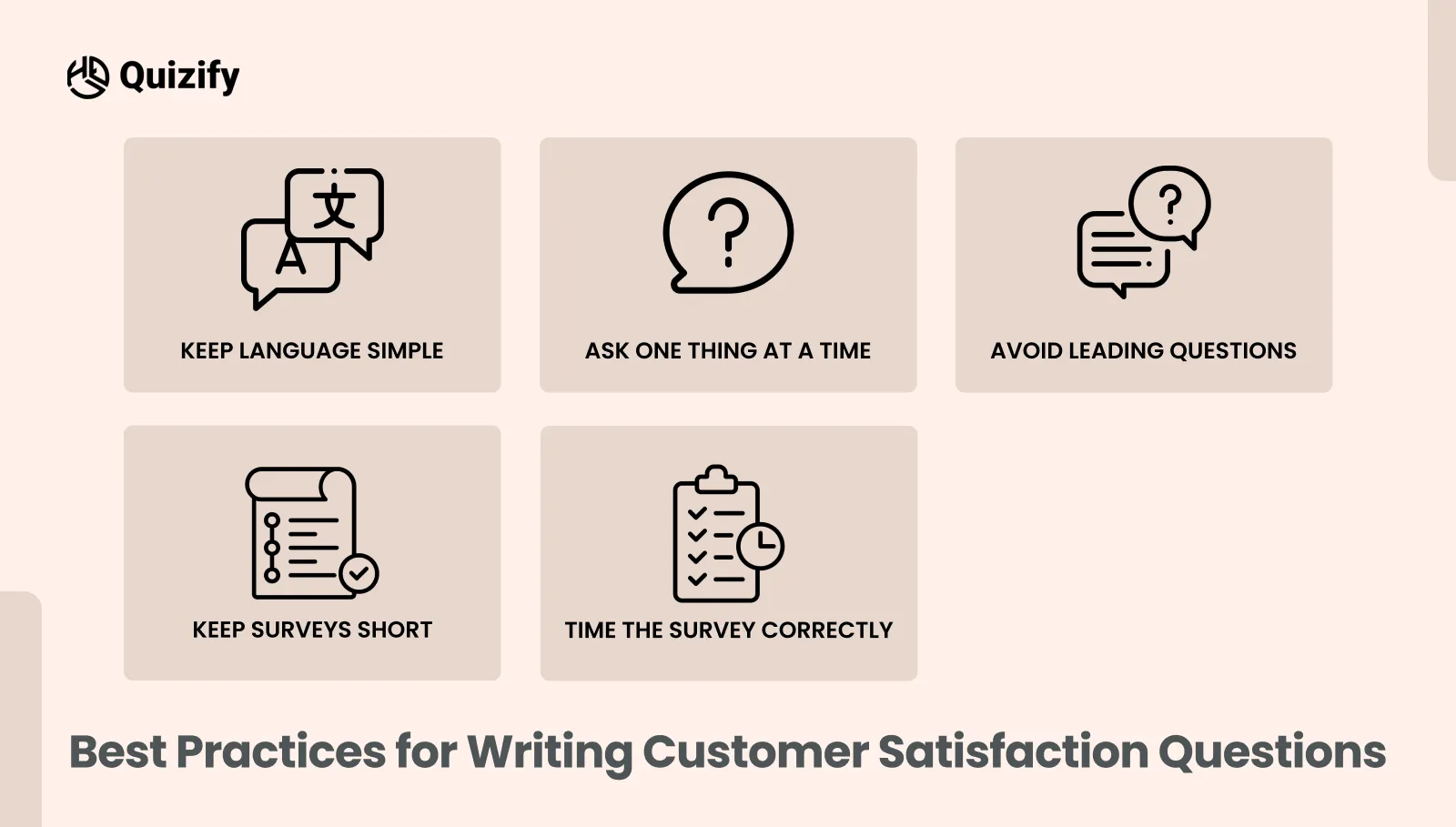
Writing survey questions sounds simple, but wording changes response quality significantly.
Keep language simple
Avoid:
"Please evaluate your overall post-purchase satisfaction metrics."
Use:
"How satisfied were you with your purchase?"
Simple questions receive faster and more accurate responses.
Avoid leading questions
Leading questions influence answers.
For example:
"How much did you enjoy our excellent customer service?"
This already suggests the expected response.
Better version:
"How would you describe your customer service experience?"
Ask one thing at a time
A common mistake is combining multiple ideas.
Avoid:
"How satisfied were you with our price, product quality, and customer support?"
Customers may have different opinions on each area. Instead, separate them.
Keep surveys short
Long surveys reduce completion rates.
A practical guideline:
Transaction surveys: 5–7 questions
Product surveys: 7–10 questions
Detailed research surveys: 10–15 questions
Every question should have a clear purpose.
Time the survey correctly
Timing affects response rates.
Examples:
After purchase
Ask about:
Buying experience
Checkout process
Delivery expectations
After support interaction
Ask about:
Resolution speed
Communication quality
Ease of getting help
After product usage
Ask about:
Features
Performance
Overall experience
The closer the survey is to the interaction, the more accurate responses become.
Common Survey Mistakes Businesses Still Make
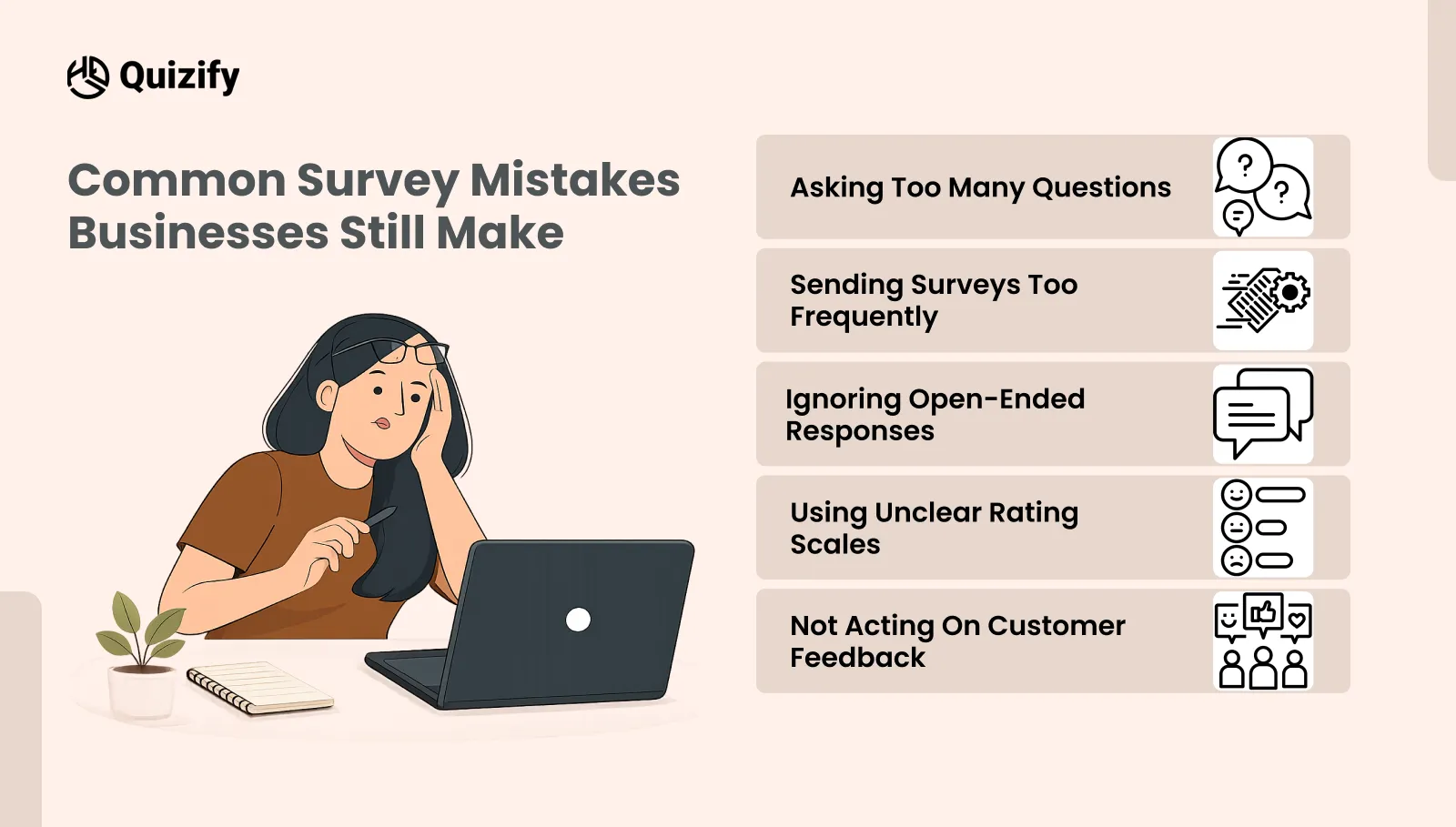
Even now, many businesses continue using outdated approaches.
Some examples include:
Asking more than 20 questions
Sending surveys too frequently
Ignoring open-ended responses
Using unclear rating scales
Not acting on customer feedback
There is another issue that customers notice quickly: Businesses ask for feedback repeatedly but never show visible changes.
Customers become less willing to participate when they feel their opinions disappear into a system without action.
Collecting feedback without acting on it creates frustration rather than engagement.
Time the survey correctly
If you want people to participate in your survey, you have to be very careful when you send it.
Examples:
After purchase
Ask about:
Buying experience
Checkout process
Delivery expectations
After support interaction
Ask about:
Resolution speed
Communication quality
Ease of getting help
After product usage
Ask about:
Features
Performance
Overall experience
The longer you wait after a customer has made the interaction, the less accurate their responses tend to be.
Common Survey Mistakes Businesses Still Make
Quite a number of businesses are still relying on old methods, which is why nowadays we can still hear about their mistakes through common customer complaints.
Here are some typical mistakes:
Extending the survey over 20 questions
Quite often sending surveys
Not paying attention to customer's open-ended responses
Using inappropriate rating scales
Ignoring customer feedback
Final Thoughts
Customer satisfaction surveys should not exist simply because every business has a survey process in place. Their purpose is to understand customers and learn what is actually working and what is not.
Good survey questions do not just provide ratings. They help businesses understand customer behavior, expectations, frustrations, and priorities. The strongest surveys usually ask fewer questions, use simple language, and focus on real experiences instead of generic measurements.
Instead of only asking customers for a score, businesses should also understand the reason behind that score. Numbers can show performance, but customer responses explain the story behind it.
FAQs
1. What is an ideal response rate for a customer satisfaction survey?
Response rates will differ from company to company. It is important to note that in most cases, short surveys usually have higher response rates compared to lengthy surveys. Response rate will also be dependent on a number of variables including time of survey, industry, and distribution channel among others.
2. Do businesses need to reward their customers for filling out surveys?
There are companies which give customers some rewards like discount codes, points or other small favors for taking part in the survey. However, customers should not be induced by the incentives to give positive responses to the survey.
3. Which platform is better suited for customer surveys?
It will always depend on how and where customers interact with a business in question. Possible platforms to use include:
Email Surveys
SMS Surveys
Feedback Forms on Website
In App Surveys
Among others
4. How frequent should customer satisfaction surveys be distributed?
Surveys should be distributed at the right time, before customers forget about their experience. Distributing surveys too often will discourage customers from responding.
5. How can businesses act on customer feedback?
Feedback is not all that businesses need to take from the process. They can evaluate the results of customers' reactions, find out problems, and make improvements where necessary. It is only then when the feedback will become valuable.
6. Can customer satisfaction surveys be beneficial for small businesses?
Yes. Customer satisfaction surveys can be beneficial for small businesses by identifying expectations of the customers and recurrent problems.
Join our newsletter list
Sign up to get the most recent blog articles in your email every week.
Similar Topic