New & Enhanced Analytics How to Gather Deeper Insights
Engagement Strategies
Jan 5, 2026
1/5/26
7 Min Read
Explore out how better analytics can help you understand how users behave, keep track of performance, and get better business results.
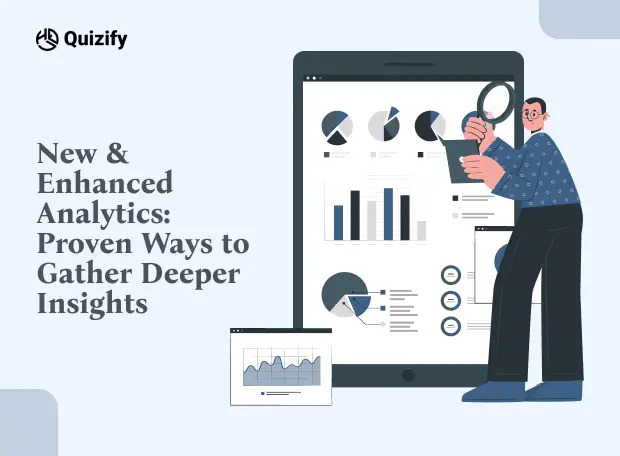
Internet and social media sites where data is central to business operations—it will not be wrong to call analytics more than just an enabler; it is necessary. Both organizations and individuals are looking for a better approach and ways of gathering, processing, and drawing inferences out of data. It is great that we have advanced analytical technologies; the business has a great chance of improving tactics, optimizing and transforming customer relations, and boosting an organization’s performance. This blog explores recent developments in analytics, the need for greater data volumes, and these developments to grow your business.
The Collection of Data in Today’s Analysis
Data is a term that is quite often referred to as the new oil: the base for creating new solutions and making decisions. But just as with crude oil, raw data isn’t very useful and requires processing in order to become useful. Advanced analytical methods facilitate the gathering, analysis, and interpretation of enormous data in order to support the decision-making processes of organizations.
Key benefits of collecting more data include:
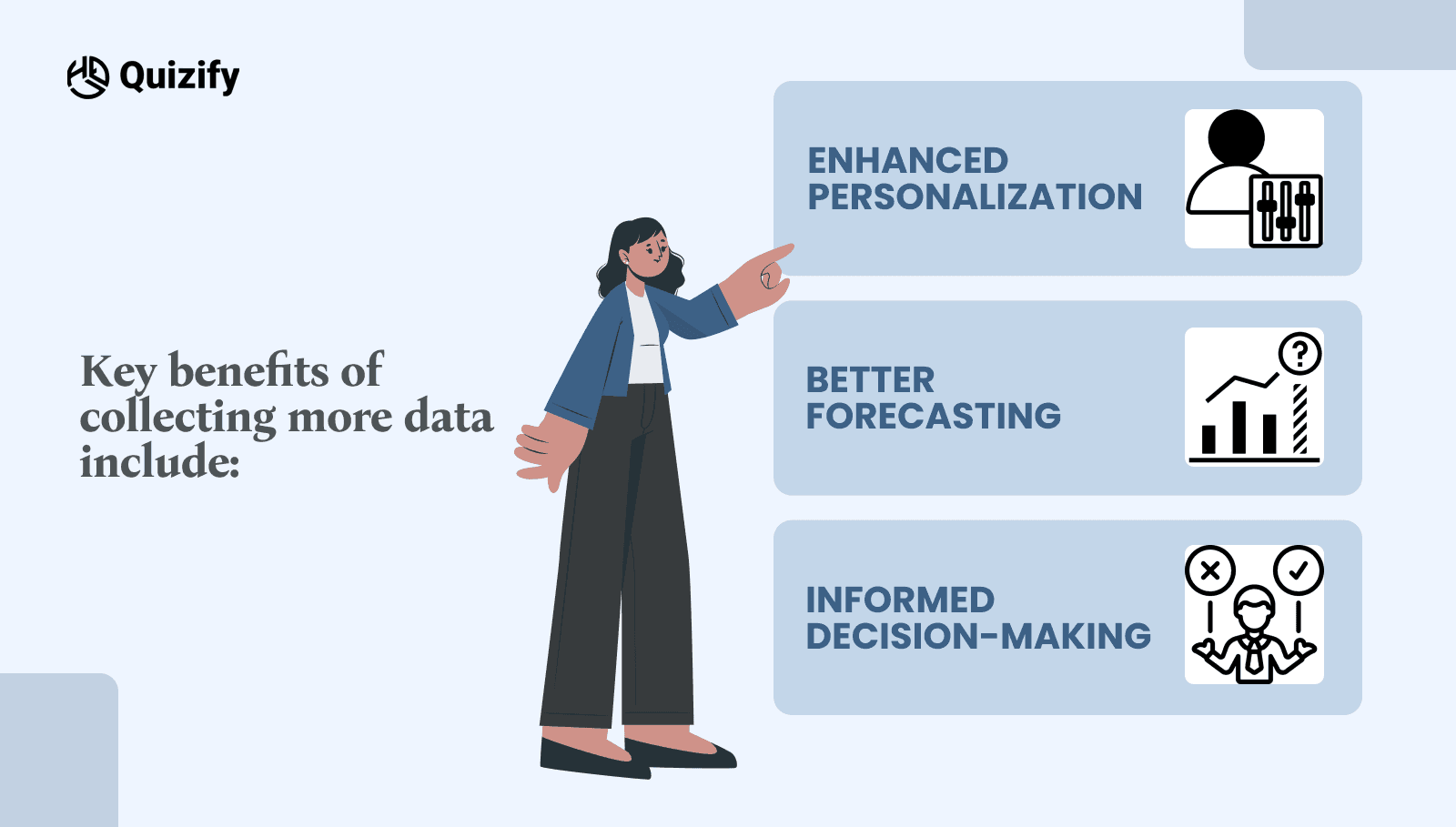
Enhanced Personalization: A high level of customer information enables the firm to provide customized interactions to the consumer, leading to increased purchasing.
Better Forecasting: Since trends are determined based on correct data, this ensures that any business gets the right trend to adopt.
Informed Decision-Making: Business intelligence leads to guess-free planning since data gives specific instructions for maneuvering.
Because of the improved data acquisition instruments, companies can get ahead of the real-time information and knowledge, free from repetitive manual efforts, and guarantee data integrity, which also leads to these benefits.
Key Trends in New & Improved Analytics
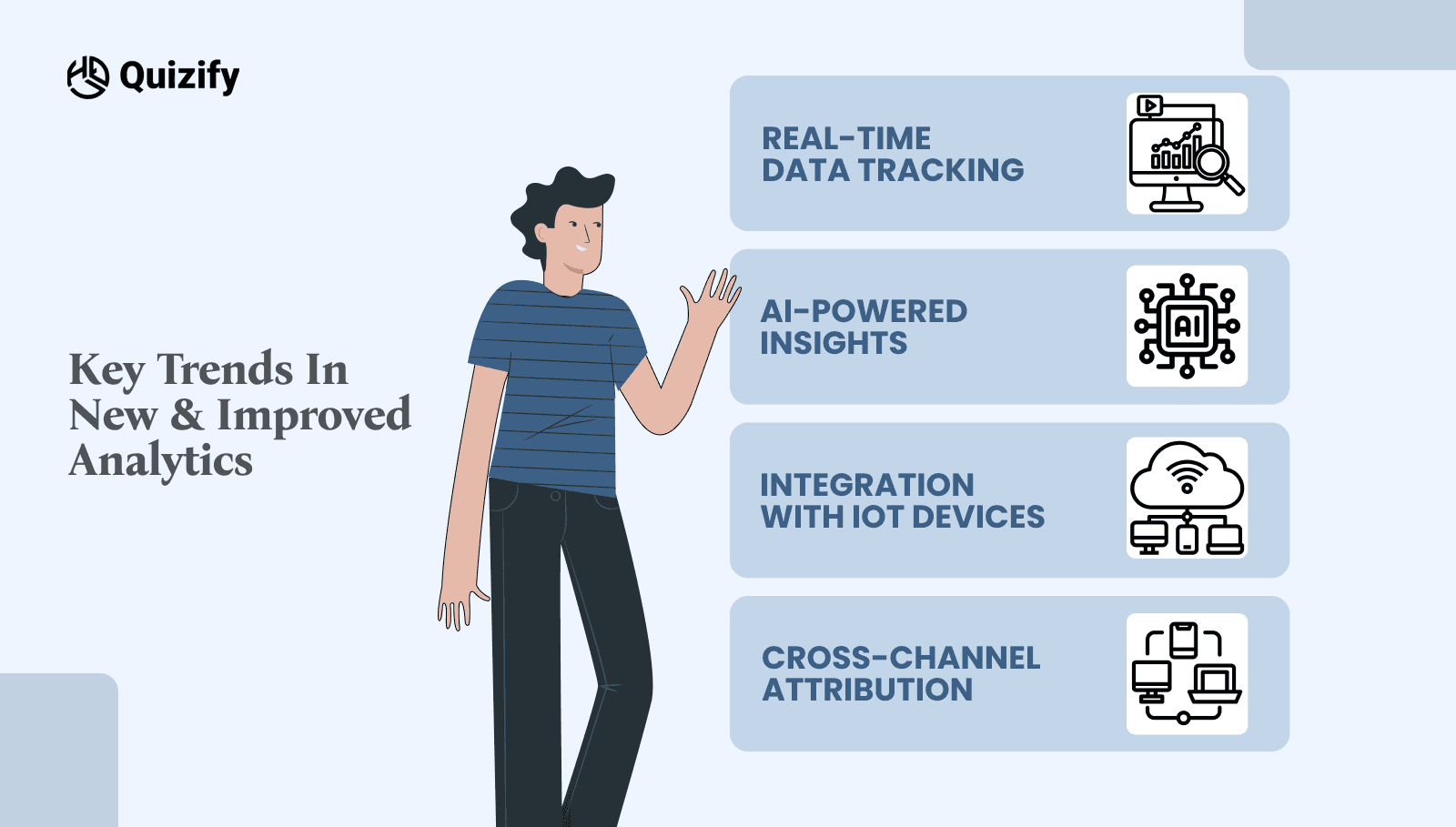
New analytics platforms that are in use today have elements built into the systems to minimize the process of data gathering and analysis. Here are the standout advancements:
Real-Time Data Tracking: The traditional analytics approach used a schedule for data updates to make their predictions. Currently, in real time, businesses are able to track when specific metrics are being recorded, allowing for the immediate response when deviations are recorded.
AI-Powered Insights: Artificial intelligence (AI) has dramatically changed how interpretations of data are made. One saves time, as it automatically displays patterns, analytically comes up with outcomes, and precisely gives suggestions rather than having human beings work on them.
Integration with IoT Devices: IoT devices save data at an unprecedented rate, which only adds to current data collection form. Wearable devices, smart home devices, and connected systems are always producing data streams that must feed into analytics platforms with varied and abundant formats.
Cross-Channel Attribution: New platforms for analytics are now developed, which provide cross-channel attribution models and show the customer journey. It also helps businesses learn the impact of each touchpoint in relation to conversions. They provide better compliance with the rules on data privacy.
Due to the GDPR, CCPA, and other restrictions, analytics tools contain powerful privacy tools that help prevent data abuse and maintain compliance.
How to Use Better Analytics in Data Gathering
New analytics tools should not be embraced haphazardly; here are some strategies: Here are some tips for getting started:
Invest in Advanced Tools: Nowadays current solutions such as Google Analytics 4, Mixpanel, or Tableau still provide the most avant-garde tools for data gathering and analysis. As a result, depending on your business needs, choose the most appropriate one for it.
Utilize Automation: Automation minimizes human error and helps in bringing uniformity. Be it tracking customer behavior or preparing reports, automated analytics can be much more helpful and time-consuming.
Focus on Key Metrics: More data is always good, but it is far more valuable to concentrate on those aspects of it that are important. Set specific goals to help you in your data-gathering processes.
Ensure Data Quality: Hunting for additional data simply does not guarantee that the decision-maker will make better decisions. Always focus on data cleaning processes and data validation processes to produce your analytics outputs that are more actionable.
Train Your Team: Help your team to be able to analyze and utilize analytics in the right way. TRAINING guarantees that everyone is well equipped with knowledge of how to extract useful information properly from data.
Difficulties of Modern Analytical Work
While new tools have simplified data collection, they also present unique challenges:
Data Overload: Working with thousands or millions of records can be a real challenge if there is no classification or preliminary sorting.
Security Risks: The collection of more data may bring in more cyber threats, making cybersecurity measures stronger.
High Costs: Business intelligence solutions and sophisticated data analysis tools have usually been developed within high budget requirements, so they are still rather inaccessible for SMBs.
That is why it is necessary to acknowledge these challenges and strive to turn analytics into an optimal capability.
The Future of Analytics
New technologies such as AI, ML, and blockchain have paved the way for the growth and development of the analytics landscape. And the future years will take an additional step with more advanced programs that are more personalized, more reactionary, and compatible with other platforms.
Moreover, there will be increased focus on ethical issues related to data gathering, which will lead to more pressure on organizations to perform their data-gathering activities in a more responsible and more focused approach going forward, with an emphasis on users’ consent.
Conclusion
The dawn of new and enhanced analytics has revolutionized the way and manner in which companies gather and analyze data. With these and many other advancements, it becomes possible for organizations to gather more information, increase efficiency, and improve the value offered to clients. However, it is important to be well thought out—the right tools have to be selected, work should be deeper rather than larger, and challenges should be solved.
With data firmly driving today and increasingly tomorrow, modern analytics is not just optional; it is mandatory. It is useful to remember that for any company, whether a start-up seeking growth or a large company seeking change, better analytics will always be your greatest asset.
Read More: How Quizify Helps Subscription-Based Businesses Upsell and Retain Customers
Internet and social media sites where data is central to business operations—it will not be wrong to call analytics more than just an enabler; it is necessary. Both organizations and individuals are looking for a better approach and ways of gathering, processing, and drawing inferences out of data. It is great that we have advanced analytical technologies; the business has a great chance of improving tactics, optimizing and transforming customer relations, and boosting an organization’s performance. This blog explores recent developments in analytics, the need for greater data volumes, and these developments to grow your business.
The Collection of Data in Today’s Analysis
Data is a term that is quite often referred to as the new oil: the base for creating new solutions and making decisions. But just as with crude oil, raw data isn’t very useful and requires processing in order to become useful. Advanced analytical methods facilitate the gathering, analysis, and interpretation of enormous data in order to support the decision-making processes of organizations.
Key benefits of collecting more data include:

Enhanced Personalization: A high level of customer information enables the firm to provide customized interactions to the consumer, leading to increased purchasing.
Better Forecasting: Since trends are determined based on correct data, this ensures that any business gets the right trend to adopt.
Informed Decision-Making: Business intelligence leads to guess-free planning since data gives specific instructions for maneuvering.
Because of the improved data acquisition instruments, companies can get ahead of the real-time information and knowledge, free from repetitive manual efforts, and guarantee data integrity, which also leads to these benefits.
Key Trends in New & Improved Analytics

New analytics platforms that are in use today have elements built into the systems to minimize the process of data gathering and analysis. Here are the standout advancements:
Real-Time Data Tracking: The traditional analytics approach used a schedule for data updates to make their predictions. Currently, in real time, businesses are able to track when specific metrics are being recorded, allowing for the immediate response when deviations are recorded.
AI-Powered Insights: Artificial intelligence (AI) has dramatically changed how interpretations of data are made. One saves time, as it automatically displays patterns, analytically comes up with outcomes, and precisely gives suggestions rather than having human beings work on them.
Integration with IoT Devices: IoT devices save data at an unprecedented rate, which only adds to current data collection form. Wearable devices, smart home devices, and connected systems are always producing data streams that must feed into analytics platforms with varied and abundant formats.
Cross-Channel Attribution: New platforms for analytics are now developed, which provide cross-channel attribution models and show the customer journey. It also helps businesses learn the impact of each touchpoint in relation to conversions. They provide better compliance with the rules on data privacy.
Due to the GDPR, CCPA, and other restrictions, analytics tools contain powerful privacy tools that help prevent data abuse and maintain compliance.
How to Use Better Analytics in Data Gathering

New analytics tools should not be embraced haphazardly; here are some strategies: Here are some tips for getting started:
Invest in Advanced Tools: Nowadays current solutions such as Google Analytics 4, Mixpanel, or Tableau still provide the most avant-garde tools for data gathering and analysis. As a result, depending on your business needs, choose the most appropriate one for it.
Utilize Automation: Automation minimizes human error and helps in bringing uniformity. Be it tracking customer behavior or preparing reports, automated analytics can be much more helpful and time-consuming.
Focus on Key Metrics: More data is always good, but it is far more valuable to concentrate on those aspects of it that are important. Set specific goals to help you in your data-gathering processes.
Ensure Data Quality: Hunting for additional data simply does not guarantee that the decision-maker will make better decisions. Always focus on data cleaning processes and data validation processes to produce your analytics outputs that are more actionable.
Train Your Team: Help your team to be able to analyze and utilize analytics in the right way. TRAINING guarantees that everyone is well equipped with knowledge of how to extract useful information properly from data.
Difficulties of Modern Analytical Work

While new tools have simplified data collection, they also present unique challenges:
Data Overload: Working with thousands or millions of records can be a real challenge if there is no classification or preliminary sorting.
Security Risks: The collection of more data may bring in more cyber threats, making cybersecurity measures stronger.
High Costs: Business intelligence solutions and sophisticated data analysis tools have usually been developed within high budget requirements, so they are still rather inaccessible for SMBs.
That is why it is necessary to acknowledge these challenges and strive to turn analytics into an optimal capability.
The Future of Analytics
New technologies such as AI, ML, and blockchain have paved the way for the growth and development of the analytics landscape. And the future years will take an additional step with more advanced programs that are more personalized, more reactionary, and compatible with other platforms.
Moreover, there will be increased focus on ethical issues related to data gathering, which will lead to more pressure on organizations to perform their data-gathering activities in a more responsible and more focused approach going forward, with an emphasis on users’ consent.
Conclusion
The dawn of new and enhanced analytics has revolutionized the way and manner in which companies gather and analyze data. With these and many other advancements, it becomes possible for organizations to gather more information, increase efficiency, and improve the value offered to clients. However, it is important to be well thought out—the right tools have to be selected, work should be deeper rather than larger, and challenges should be solved.
With data firmly driving today and increasingly tomorrow, modern analytics is not just optional; it is mandatory. It is useful to remember that for any company, whether a start-up seeking growth or a large company seeking change, better analytics will always be your greatest asset.
Read More: How Quizify Helps Subscription-Based Businesses Upsell and Retain Customers
Internet and social media sites where data is central to business operations—it will not be wrong to call analytics more than just an enabler; it is necessary. Both organizations and individuals are looking for a better approach and ways of gathering, processing, and drawing inferences out of data. It is great that we have advanced analytical technologies; the business has a great chance of improving tactics, optimizing and transforming customer relations, and boosting an organization’s performance. This blog explores recent developments in analytics, the need for greater data volumes, and these developments to grow your business.
The Collection of Data in Today’s Analysis
Data is a term that is quite often referred to as the new oil: the base for creating new solutions and making decisions. But just as with crude oil, raw data isn’t very useful and requires processing in order to become useful. Advanced analytical methods facilitate the gathering, analysis, and interpretation of enormous data in order to support the decision-making processes of organizations.
Key benefits of collecting more data include:

Enhanced Personalization: A high level of customer information enables the firm to provide customized interactions to the consumer, leading to increased purchasing.
Better Forecasting: Since trends are determined based on correct data, this ensures that any business gets the right trend to adopt.
Informed Decision-Making: Business intelligence leads to guess-free planning since data gives specific instructions for maneuvering.
Because of the improved data acquisition instruments, companies can get ahead of the real-time information and knowledge, free from repetitive manual efforts, and guarantee data integrity, which also leads to these benefits.
Key Trends in New & Improved Analytics

New analytics platforms that are in use today have elements built into the systems to minimize the process of data gathering and analysis. Here are the standout advancements:
Real-Time Data Tracking: The traditional analytics approach used a schedule for data updates to make their predictions. Currently, in real time, businesses are able to track when specific metrics are being recorded, allowing for the immediate response when deviations are recorded.
AI-Powered Insights: Artificial intelligence (AI) has dramatically changed how interpretations of data are made. One saves time, as it automatically displays patterns, analytically comes up with outcomes, and precisely gives suggestions rather than having human beings work on them.
Integration with IoT Devices: IoT devices save data at an unprecedented rate, which only adds to current data collection form. Wearable devices, smart home devices, and connected systems are always producing data streams that must feed into analytics platforms with varied and abundant formats.
Cross-Channel Attribution: New platforms for analytics are now developed, which provide cross-channel attribution models and show the customer journey. It also helps businesses learn the impact of each touchpoint in relation to conversions. They provide better compliance with the rules on data privacy.
Due to the GDPR, CCPA, and other restrictions, analytics tools contain powerful privacy tools that help prevent data abuse and maintain compliance.
How to Use Better Analytics in Data Gathering

New analytics tools should not be embraced haphazardly; here are some strategies: Here are some tips for getting started:
Invest in Advanced Tools: Nowadays current solutions such as Google Analytics 4, Mixpanel, or Tableau still provide the most avant-garde tools for data gathering and analysis. As a result, depending on your business needs, choose the most appropriate one for it.
Utilize Automation: Automation minimizes human error and helps in bringing uniformity. Be it tracking customer behavior or preparing reports, automated analytics can be much more helpful and time-consuming.
Focus on Key Metrics: More data is always good, but it is far more valuable to concentrate on those aspects of it that are important. Set specific goals to help you in your data-gathering processes.
Ensure Data Quality: Hunting for additional data simply does not guarantee that the decision-maker will make better decisions. Always focus on data cleaning processes and data validation processes to produce your analytics outputs that are more actionable.
Train Your Team: Help your team to be able to analyze and utilize analytics in the right way. TRAINING guarantees that everyone is well equipped with knowledge of how to extract useful information properly from data.
Difficulties of Modern Analytical Work

While new tools have simplified data collection, they also present unique challenges:
Data Overload: Working with thousands or millions of records can be a real challenge if there is no classification or preliminary sorting.
Security Risks: The collection of more data may bring in more cyber threats, making cybersecurity measures stronger.
High Costs: Business intelligence solutions and sophisticated data analysis tools have usually been developed within high budget requirements, so they are still rather inaccessible for SMBs.
That is why it is necessary to acknowledge these challenges and strive to turn analytics into an optimal capability.
The Future of Analytics
New technologies such as AI, ML, and blockchain have paved the way for the growth and development of the analytics landscape. And the future years will take an additional step with more advanced programs that are more personalized, more reactionary, and compatible with other platforms.
Moreover, there will be increased focus on ethical issues related to data gathering, which will lead to more pressure on organizations to perform their data-gathering activities in a more responsible and more focused approach going forward, with an emphasis on users’ consent.
Conclusion
The dawn of new and enhanced analytics has revolutionized the way and manner in which companies gather and analyze data. With these and many other advancements, it becomes possible for organizations to gather more information, increase efficiency, and improve the value offered to clients. However, it is important to be well thought out—the right tools have to be selected, work should be deeper rather than larger, and challenges should be solved.
With data firmly driving today and increasingly tomorrow, modern analytics is not just optional; it is mandatory. It is useful to remember that for any company, whether a start-up seeking growth or a large company seeking change, better analytics will always be your greatest asset.
Read More: How Quizify Helps Subscription-Based Businesses Upsell and Retain Customers
Join our newsletter list
Sign up to get the most recent blog articles in your email every week.
Similar Topic
Related Blogs
Similar Topic
Related Blogs
More Articles
Latest Blogs
More Articles
Latest Blogs
More Articles