Understanding Zero-Party Data: What It Is and Why It Matters

Marketing and Promotion

Jan 16, 2026

1/16/26

7 min Min Read

Discover zero-party data, its benefits, and why businesses rely on it for ethical data collection, personalization, and stronger customer relationships.
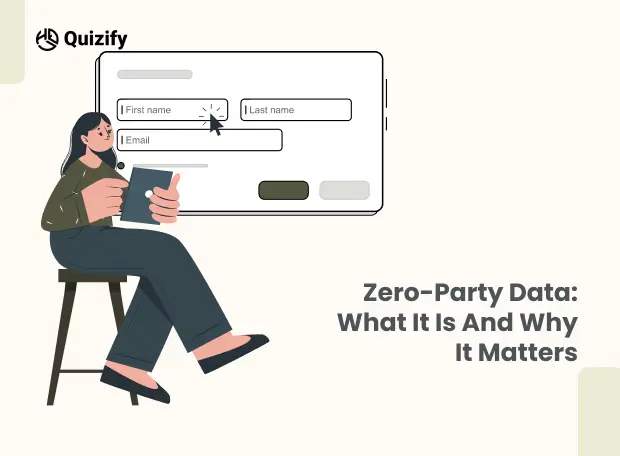
We know that the traditional method of collecting and using customer data is becoming less effective and efficient. On the other hand, many companies are now eyeing the use of zero-party data in order to more effectively and efficiently build customer relationships while still respecting the customer’s privacy. But first, let’s define zero-party data and why it is gaining so much importance in today’s world of marketing. Let us examine this developing trend through a definition, an analysis of its advantages, and an understanding of why it is important for organizations striving to strengthen their relationships with the target market. 

What is Zero-Party Data?

We define zero-party data as customer data that the customer voluntarily provides. While first-party data is collected through people’s engagement on websites, apps, or social media, or third-party data is purchased from a third party, zero-party data is volunteered by the customer. They include preferences, purchase intentions, feedback, and personal information that the users willingly provide.  

For instance, a customer may complete a quiz on a website on what he or she likes, complete a survey, or follow an account by providing digitized information on what their interest is. Such disclosure enhances confidence and is gaining significance given the increasing focus on privacy issues.

Types of Zero-Party Data: 

Zero-party data can be categorized into several types based on what customers provide:

1. Personal Preferences  
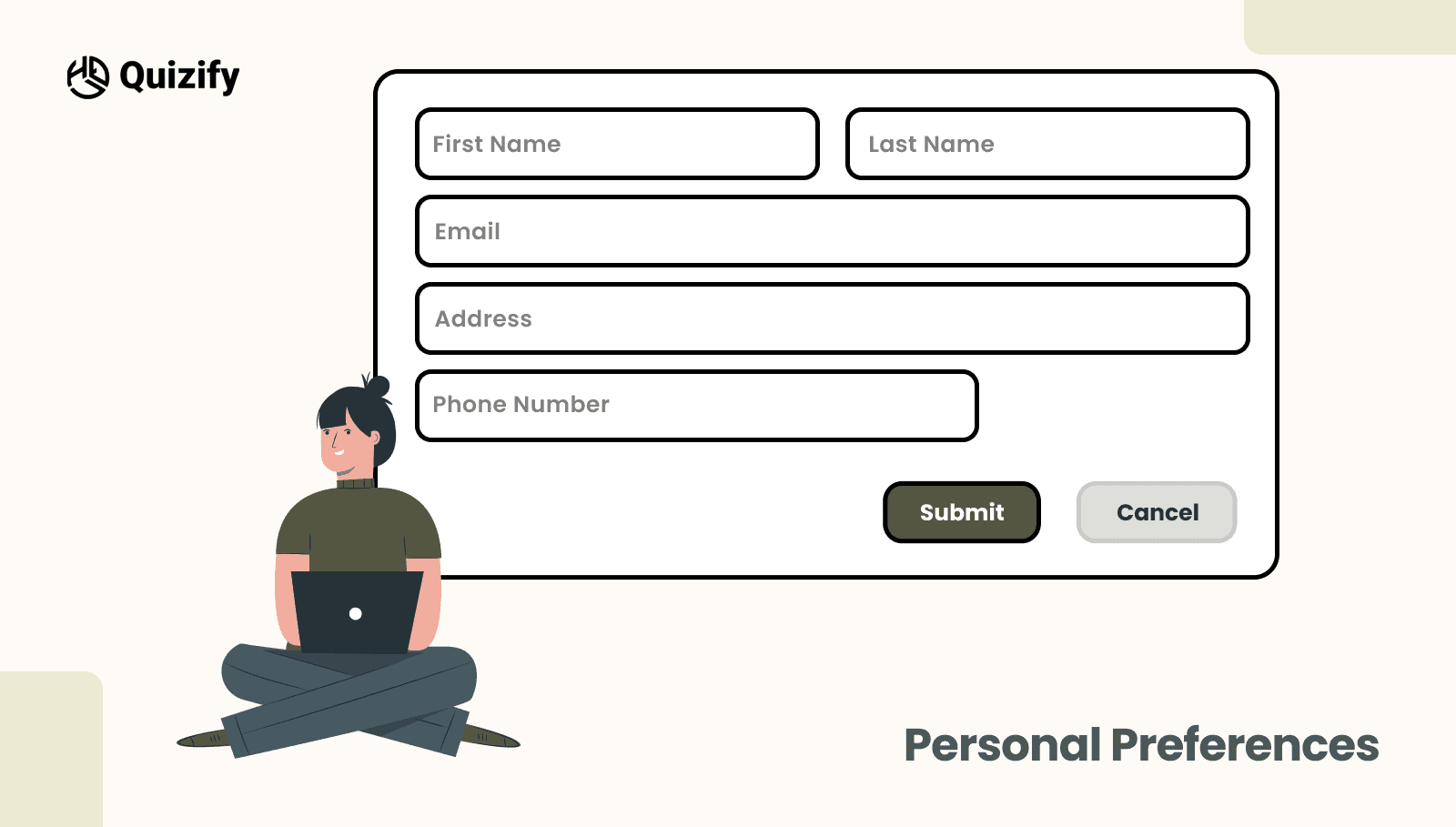
Personal Preferences | Quizify

Description:
Personal preference data includes information users willingly share about what they like, need, or prefer. This helps businesses tailor content, products, and communication to individual tastes. 

Examples: 

  • Preferred product categories or features

  • Favorite colors, styles, or formats

  • Preferred communication channels (email, SMS)

  • Content preferences (blogs, videos, tutorials)

How it’s collected:
Preference quizzes, onboarding forms, and profile setup surveys 

2. Purchase Intentions
Description:
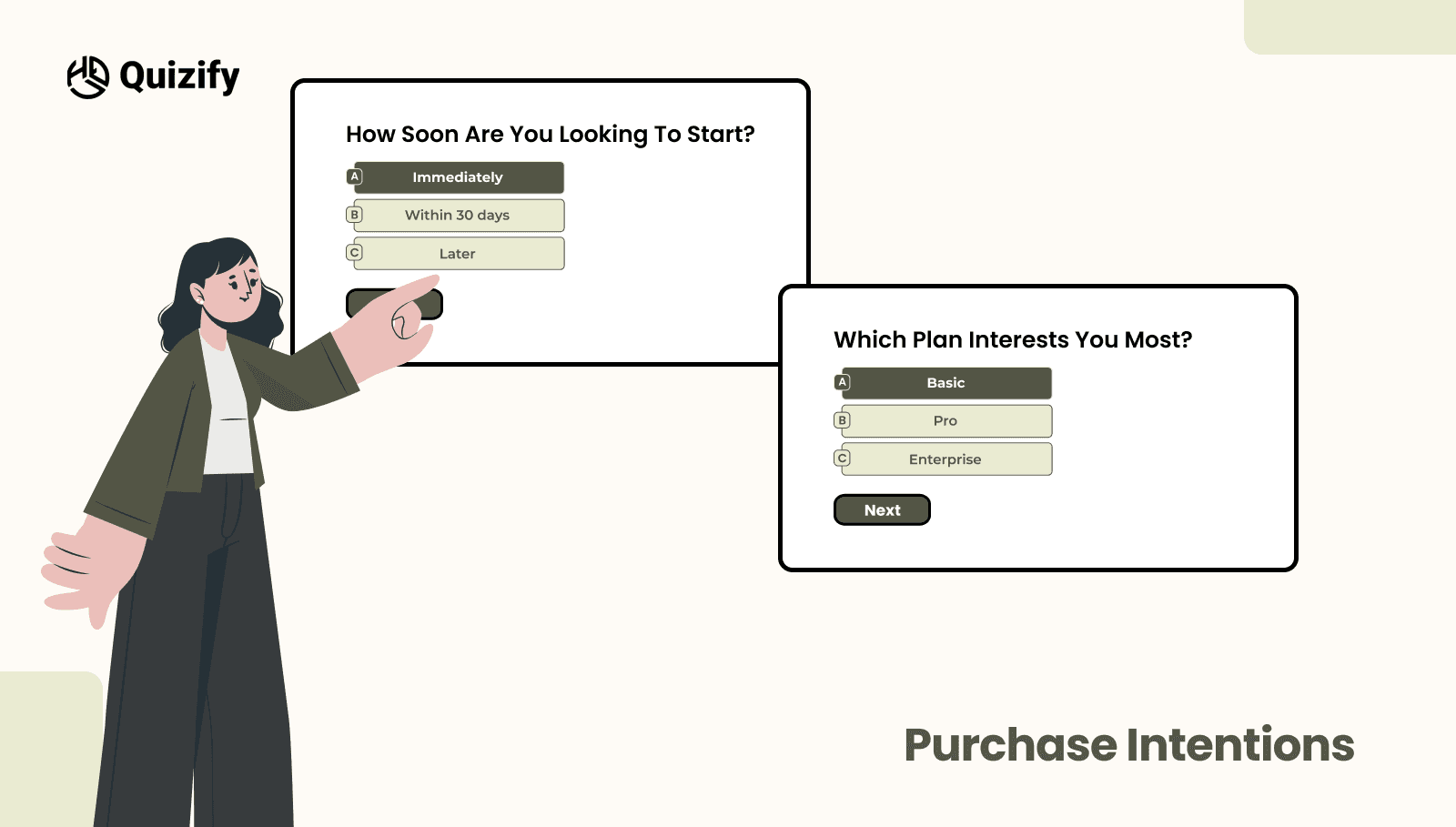
Purchase intention data reveals what a customer plans to buy and how soon. It provides strong signals about readiness to purchase and future buying behavior.

Examples:

  • Products added to a Wishlist

  • Budget range for a purchase

  • Planned purchase timeframe (now, soon, later)

  • Interest in upgrades or premium plans

How it’s collected:
Product recommendation quizzes, buying-intent surveys

3. Customer Feedback  
Description:
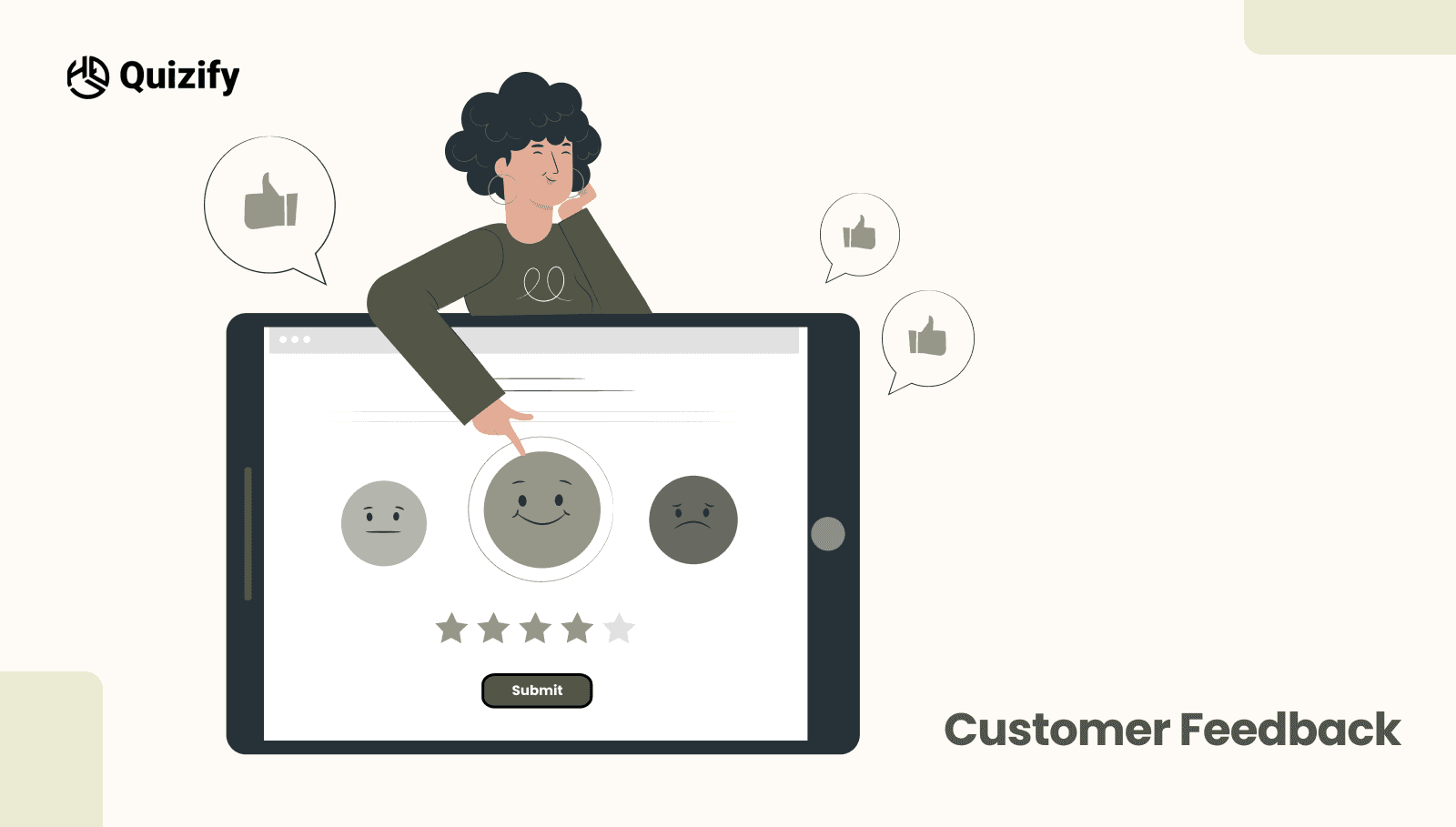
Customer feedback data is information users share about their experience, satisfaction, or expectations. It helps businesses improve products, services, and overall customer experience. 

Examples:

  • Satisfaction ratings or NPS scores

  • Feature requests or improvement suggestions

  • Reviews and testimonials

  • Reasons for churn or dissatisfaction

How it’s collected:
Feedback surveys, post-purchase quizzes, experience forms.

4. Personalized Experiences 
Description:
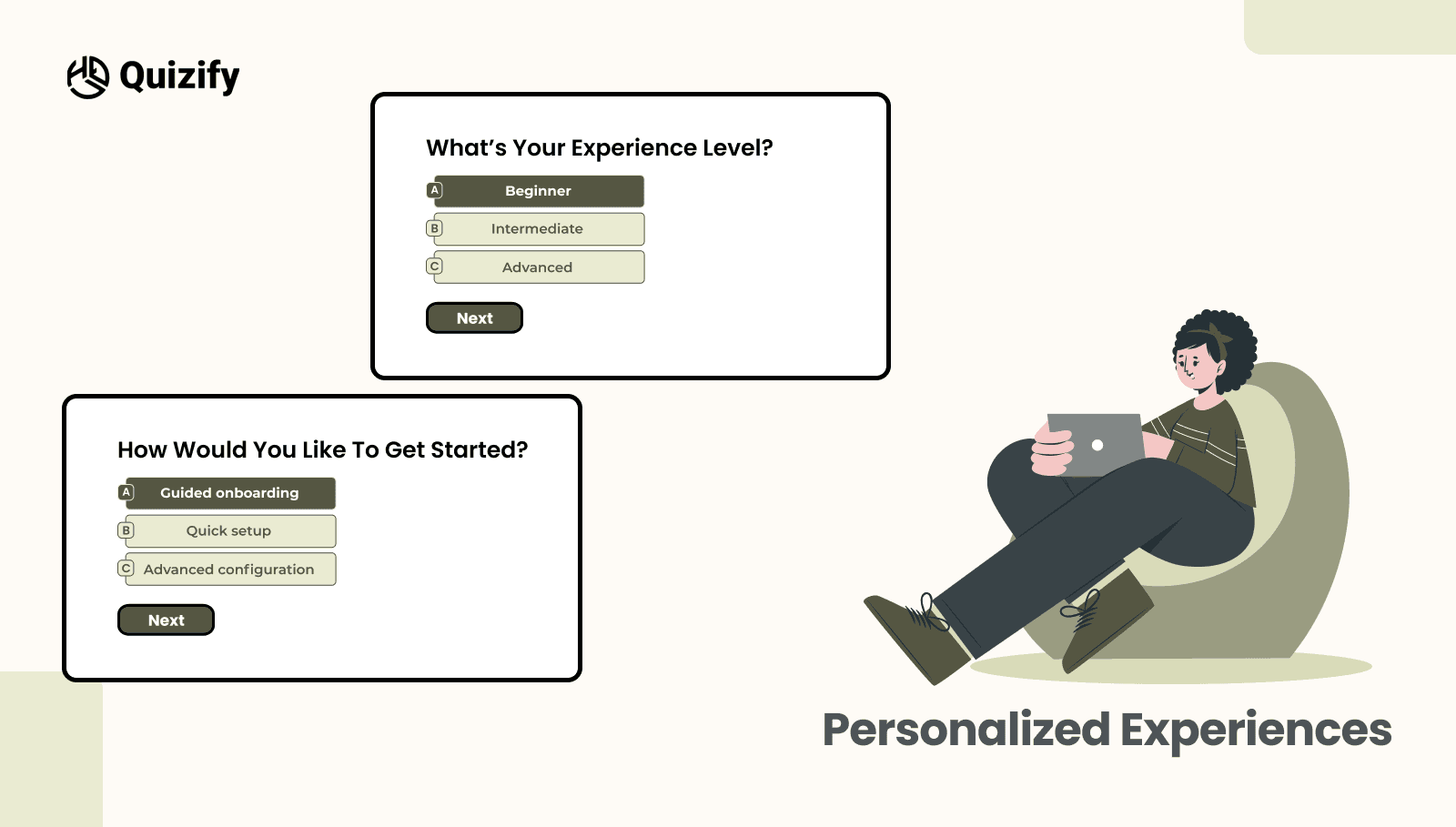
Personalized experience data is information users provide that allows businesses to deliver tailored experiences. The data includes how users want content, products, or services customized for them.  

Examples:

  • Learning level (beginner, intermediate, advanced)

  • Preferred onboarding style or pace

  • Personalized content or product recommendations

  • Customized dashboards or feature access

How it’s collected:
Personalization quizzes, onboarding assessments, preference forms.

Why Zero-Party Data Matters
Why Zero-Party Data Matters | Quizify

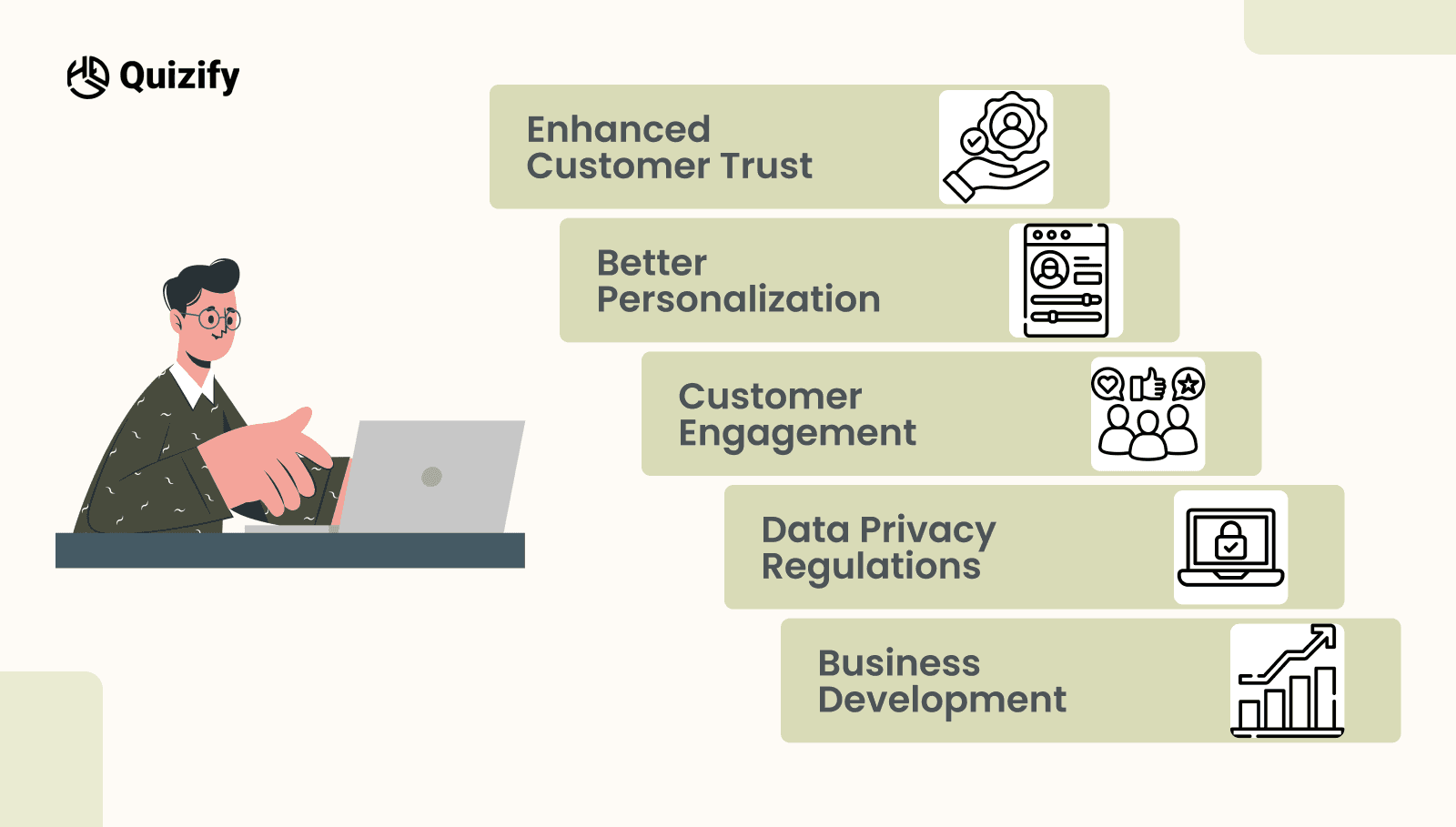
Enhanced Customer Trust: Nowadays, in the world of social media and the internet, when cases of data leaks and complications violate personal data, the population is becoming more selective of their data utilization. The best part of zero-party data is that it is shared directly by the consumer and willingly, hence creating trust. Customers are fully aware of what they are willing to share and how that information will be applied, thus the likelihood of customers engaging and further interacting with the brand. 

Better Personalization: Zero-party data offers companies direct specifics of their buyers’ wants and requirements. Possessing such important data, it becomes possible to deliver experiences beyond basic segmentation and appeal to the psychologically unique needs of consumers. For instance, if a customer intends to tell the business their interests in specific categories of products, the company is capable of forwarding the relevant products, content, and other recommendations to the specific interested customer. 

Such knowledge leads to improved marketing initiatives and a superior serving of customers.  

Improved Customer Engagement: The finding was that consumers engage with a brand when they perceive that the particular brand knows their preferences and any need that may arise. Zero-party data enables this type of engagement. From targeted email subscribers based on their interests to a website with optimally located content based on a customer’s search history, customer preferences, and more, zero-party data is a way for businesses to communicate with their audience in an immediately relatable method. 

Compliance with data privacy regulations is necessary: now, with the rise of GDPR and CCPA and other stringent data regulations, businesses have to make sure that they are processing customer data fairly and legally. In addition, the concept of zero-party data only gathers data that is willingly provided and shared by the customer to maintain compliance with the data protection laws. 

Practical Solution for Business Development: Zero-party data is pretty useful to fine-tune a company’s marketing or product positioning strategies. This data is often gathered directly from the consumers and enables organizations to make strategic decisions on what products to create, what messages to use on the products, and how to structure clients’ experiences. This leads to better investment, more satisfaction for the customers, and ultimately more sales.  

Challenges of Zero-Party Data

However, just like any other marketing technique, there are some difficulties in collecting zero-party data. Perhaps the greatest challenge of all is the ability to get customers to open up to provide their information. For this reason, to drive the participation of consumers, businesses should provide some incentive in return, for instance, recommendations based on the data, extra discounts, or advanced data on what is in or out in the market. 

Another challenge is effectively managing and utilizing data. Since zero-party data can be heterogeneous and even qualitative, organizations need to possess the proper instruments and approaches to derive tangible benefits from such information.

Conclusion

Collecting data from the consumer in a clear, noncoercive manner is beneficial to businesses, as consumer relationships improve, the business can provide a more favorable experience to the consumer, and the business is able to gain useful information that can lead to sales. Considering the current widespread focus on consumer trust and data privacy, zero-party data is not only a sound strategy, but it is also a more ethical one.  


Read More: Crafting an Effective Customer Data Collection Form


We know that the traditional method of collecting and using customer data is becoming less effective and efficient. On the other hand, many companies are now eyeing the use of zero-party data in order to more effectively and efficiently build customer relationships while still respecting the customer’s privacy. But first, let’s define zero-party data and why it is gaining so much importance in today’s world of marketing. Let us examine this developing trend through a definition, an analysis of its advantages, and an understanding of why it is important for organizations striving to strengthen their relationships with the target market. 

What is Zero-Party Data?

We define zero-party data as customer data that the customer voluntarily provides. While first-party data is collected through people’s engagement on websites, apps, or social media, or third-party data is purchased from a third party, zero-party data is volunteered by the customer. They include preferences, purchase intentions, feedback, and personal information that the users willingly provide.  

For instance, a customer may complete a quiz on a website on what he or she likes, complete a survey, or follow an account by providing digitized information on what their interest is. Such disclosure enhances confidence and is gaining significance given the increasing focus on privacy issues.

Types of Zero-Party Data: 

Zero-party data can be categorized into several types based on what customers provide:

1. Personal Preferences  

Personal Preferences | Quizify

Description:
Personal preference data includes information users willingly share about what they like, need, or prefer. This helps businesses tailor content, products, and communication to individual tastes. 

Examples: 

  • Preferred product categories or features

  • Favorite colors, styles, or formats

  • Preferred communication channels (email, SMS)

  • Content preferences (blogs, videos, tutorials)

How it’s collected:
Preference quizzes, onboarding forms, and profile setup surveys 

2. Purchase Intentions

Description:
Purchase intention data reveals what a customer plans to buy and how soon. It provides strong signals about readiness to purchase and future buying behavior.

Examples:

  • Products added to a Wishlist

  • Budget range for a purchase

  • Planned purchase timeframe (now, soon, later)

  • Interest in upgrades or premium plans

How it’s collected:
Product recommendation quizzes, buying-intent surveys

3. Customer Feedback  

Description:
Customer feedback data is information users share about their experience, satisfaction, or expectations. It helps businesses improve products, services, and overall customer experience. 

Examples:

  • Satisfaction ratings or NPS scores

  • Feature requests or improvement suggestions

  • Reviews and testimonials

  • Reasons for churn or dissatisfaction

How it’s collected:
Feedback surveys, post-purchase quizzes, experience forms.

4. Personalized Experiences 

Description:
Personalized experience data is information users provide that allows businesses to deliver tailored experiences. The data includes how users want content, products, or services customized for them.  

Examples:

  • Learning level (beginner, intermediate, advanced)

  • Preferred onboarding style or pace

  • Personalized content or product recommendations

  • Customized dashboards or feature access

How it’s collected:
Personalization quizzes, onboarding assessments, preference forms.

Why Zero-Party Data Matters

Why Zero-Party Data Matters | Quizify

Enhanced Customer Trust: Nowadays, in the world of social media and the internet, when cases of data leaks and complications violate personal data, the population is becoming more selective of their data utilization. The best part of zero-party data is that it is shared directly by the consumer and willingly, hence creating trust. Customers are fully aware of what they are willing to share and how that information will be applied, thus the likelihood of customers engaging and further interacting with the brand. 

Better Personalization: Zero-party data offers companies direct specifics of their buyers’ wants and requirements. Possessing such important data, it becomes possible to deliver experiences beyond basic segmentation and appeal to the psychologically unique needs of consumers. For instance, if a customer intends to tell the business their interests in specific categories of products, the company is capable of forwarding the relevant products, content, and other recommendations to the specific interested customer. 

Such knowledge leads to improved marketing initiatives and a superior serving of customers.  

Improved Customer Engagement: The finding was that consumers engage with a brand when they perceive that the particular brand knows their preferences and any need that may arise. Zero-party data enables this type of engagement. From targeted email subscribers based on their interests to a website with optimally located content based on a customer’s search history, customer preferences, and more, zero-party data is a way for businesses to communicate with their audience in an immediately relatable method. 

Compliance with data privacy regulations is necessary: now, with the rise of GDPR and CCPA and other stringent data regulations, businesses have to make sure that they are processing customer data fairly and legally. In addition, the concept of zero-party data only gathers data that is willingly provided and shared by the customer to maintain compliance with the data protection laws. 

Practical Solution for Business Development: Zero-party data is pretty useful to fine-tune a company’s marketing or product positioning strategies. This data is often gathered directly from the consumers and enables organizations to make strategic decisions on what products to create, what messages to use on the products, and how to structure clients’ experiences. This leads to better investment, more satisfaction for the customers, and ultimately more sales.  

Challenges of Zero-Party Data

However, just like any other marketing technique, there are some difficulties in collecting zero-party data. Perhaps the greatest challenge of all is the ability to get customers to open up to provide their information. For this reason, to drive the participation of consumers, businesses should provide some incentive in return, for instance, recommendations based on the data, extra discounts, or advanced data on what is in or out in the market. 

Another challenge is effectively managing and utilizing data. Since zero-party data can be heterogeneous and even qualitative, organizations need to possess the proper instruments and approaches to derive tangible benefits from such information.

Conclusion

Collecting data from the consumer in a clear, noncoercive manner is beneficial to businesses, as consumer relationships improve, the business can provide a more favorable experience to the consumer, and the business is able to gain useful information that can lead to sales. Considering the current widespread focus on consumer trust and data privacy, zero-party data is not only a sound strategy, but it is also a more ethical one.  


Read More: Crafting an Effective Customer Data Collection Form


We know that the traditional method of collecting and using customer data is becoming less effective and efficient. On the other hand, many companies are now eyeing the use of zero-party data in order to more effectively and efficiently build customer relationships while still respecting the customer’s privacy. But first, let’s define zero-party data and why it is gaining so much importance in today’s world of marketing. Let us examine this developing trend through a definition, an analysis of its advantages, and an understanding of why it is important for organizations striving to strengthen their relationships with the target market. 

What is Zero-Party Data?

We define zero-party data as customer data that the customer voluntarily provides. While first-party data is collected through people’s engagement on websites, apps, or social media, or third-party data is purchased from a third party, zero-party data is volunteered by the customer. They include preferences, purchase intentions, feedback, and personal information that the users willingly provide.  

For instance, a customer may complete a quiz on a website on what he or she likes, complete a survey, or follow an account by providing digitized information on what their interest is. Such disclosure enhances confidence and is gaining significance given the increasing focus on privacy issues.

Types of Zero-Party Data: 

Zero-party data can be categorized into several types based on what customers provide:

1. Personal Preferences  

Personal Preferences | Quizify

Description:
Personal preference data includes information users willingly share about what they like, need, or prefer. This helps businesses tailor content, products, and communication to individual tastes. 

Examples: 

  • Preferred product categories or features

  • Favorite colors, styles, or formats

  • Preferred communication channels (email, SMS)

  • Content preferences (blogs, videos, tutorials)

How it’s collected:
Preference quizzes, onboarding forms, and profile setup surveys 

2. Purchase Intentions

Description:
Purchase intention data reveals what a customer plans to buy and how soon. It provides strong signals about readiness to purchase and future buying behavior.

Examples:

  • Products added to a Wishlist

  • Budget range for a purchase

  • Planned purchase timeframe (now, soon, later)

  • Interest in upgrades or premium plans

How it’s collected:
Product recommendation quizzes, buying-intent surveys

3. Customer Feedback  

Description:
Customer feedback data is information users share about their experience, satisfaction, or expectations. It helps businesses improve products, services, and overall customer experience. 

Examples:

  • Satisfaction ratings or NPS scores

  • Feature requests or improvement suggestions

  • Reviews and testimonials

  • Reasons for churn or dissatisfaction

How it’s collected:
Feedback surveys, post-purchase quizzes, experience forms.

4. Personalized Experiences 

Description:
Personalized experience data is information users provide that allows businesses to deliver tailored experiences. The data includes how users want content, products, or services customized for them.  

Examples:

  • Learning level (beginner, intermediate, advanced)

  • Preferred onboarding style or pace

  • Personalized content or product recommendations

  • Customized dashboards or feature access

How it’s collected:
Personalization quizzes, onboarding assessments, preference forms.

Why Zero-Party Data Matters

Why Zero-Party Data Matters | Quizify

Enhanced Customer Trust: Nowadays, in the world of social media and the internet, when cases of data leaks and complications violate personal data, the population is becoming more selective of their data utilization. The best part of zero-party data is that it is shared directly by the consumer and willingly, hence creating trust. Customers are fully aware of what they are willing to share and how that information will be applied, thus the likelihood of customers engaging and further interacting with the brand. 

Better Personalization: Zero-party data offers companies direct specifics of their buyers’ wants and requirements. Possessing such important data, it becomes possible to deliver experiences beyond basic segmentation and appeal to the psychologically unique needs of consumers. For instance, if a customer intends to tell the business their interests in specific categories of products, the company is capable of forwarding the relevant products, content, and other recommendations to the specific interested customer. 

Such knowledge leads to improved marketing initiatives and a superior serving of customers.  

Improved Customer Engagement: The finding was that consumers engage with a brand when they perceive that the particular brand knows their preferences and any need that may arise. Zero-party data enables this type of engagement. From targeted email subscribers based on their interests to a website with optimally located content based on a customer’s search history, customer preferences, and more, zero-party data is a way for businesses to communicate with their audience in an immediately relatable method. 

Compliance with data privacy regulations is necessary: now, with the rise of GDPR and CCPA and other stringent data regulations, businesses have to make sure that they are processing customer data fairly and legally. In addition, the concept of zero-party data only gathers data that is willingly provided and shared by the customer to maintain compliance with the data protection laws. 

Practical Solution for Business Development: Zero-party data is pretty useful to fine-tune a company’s marketing or product positioning strategies. This data is often gathered directly from the consumers and enables organizations to make strategic decisions on what products to create, what messages to use on the products, and how to structure clients’ experiences. This leads to better investment, more satisfaction for the customers, and ultimately more sales.  

Challenges of Zero-Party Data

However, just like any other marketing technique, there are some difficulties in collecting zero-party data. Perhaps the greatest challenge of all is the ability to get customers to open up to provide their information. For this reason, to drive the participation of consumers, businesses should provide some incentive in return, for instance, recommendations based on the data, extra discounts, or advanced data on what is in or out in the market. 

Another challenge is effectively managing and utilizing data. Since zero-party data can be heterogeneous and even qualitative, organizations need to possess the proper instruments and approaches to derive tangible benefits from such information.

Conclusion

Collecting data from the consumer in a clear, noncoercive manner is beneficial to businesses, as consumer relationships improve, the business can provide a more favorable experience to the consumer, and the business is able to gain useful information that can lead to sales. Considering the current widespread focus on consumer trust and data privacy, zero-party data is not only a sound strategy, but it is also a more ethical one.  


Read More: Crafting an Effective Customer Data Collection Form


Join our newsletter list

Sign up to get the most recent blog articles in your email every week.