Lead Funnels: What They Are and How to Build Them
Marketing and Promotion
Feb 2, 2026
2/2/26
7 Min Read
Learn what lead funnels are, how they work, and step-by-step methods to build high-converting funnels that capture, nurture, and convert more prospects.
If an interested inquiry comes across your business online. They most probably want to know more but are not interested in buying anything yet. You then have to guide them from temporary interest to being a loyal, long-time paying customer. The lead funnel comes in as a strategy for building relationships, developing trust, and converting leads into paying customers.
Lead funnels are no fluff marketing speak; they are tried and true frameworks for building regular connections and turning site visitors into leads and leads into loyal customers. From a startup to an already established business, an ideal lead funnel can change how you account for, entice, and serve your customers.
We're going to explore lead funnels, their stages, and how to build one that truly brings in leads and grows a business over time.
What is a lead funnel?
A lead funnel is a systematic process that helps take potential customers from an early stage through their buying journey. It's like a digital stepping stone that takes someone from just knowing about your brand to becoming an advocate of your product or service.
The funnel metaphor represents that with every advance into the next stage, fewer prospects remain to continue to the finish line. While at the top of the funnel, there will be many interested parties, but only the most qualified and interested leads will go through to the bottom to complete the purchase.
Phases of the Funnel:
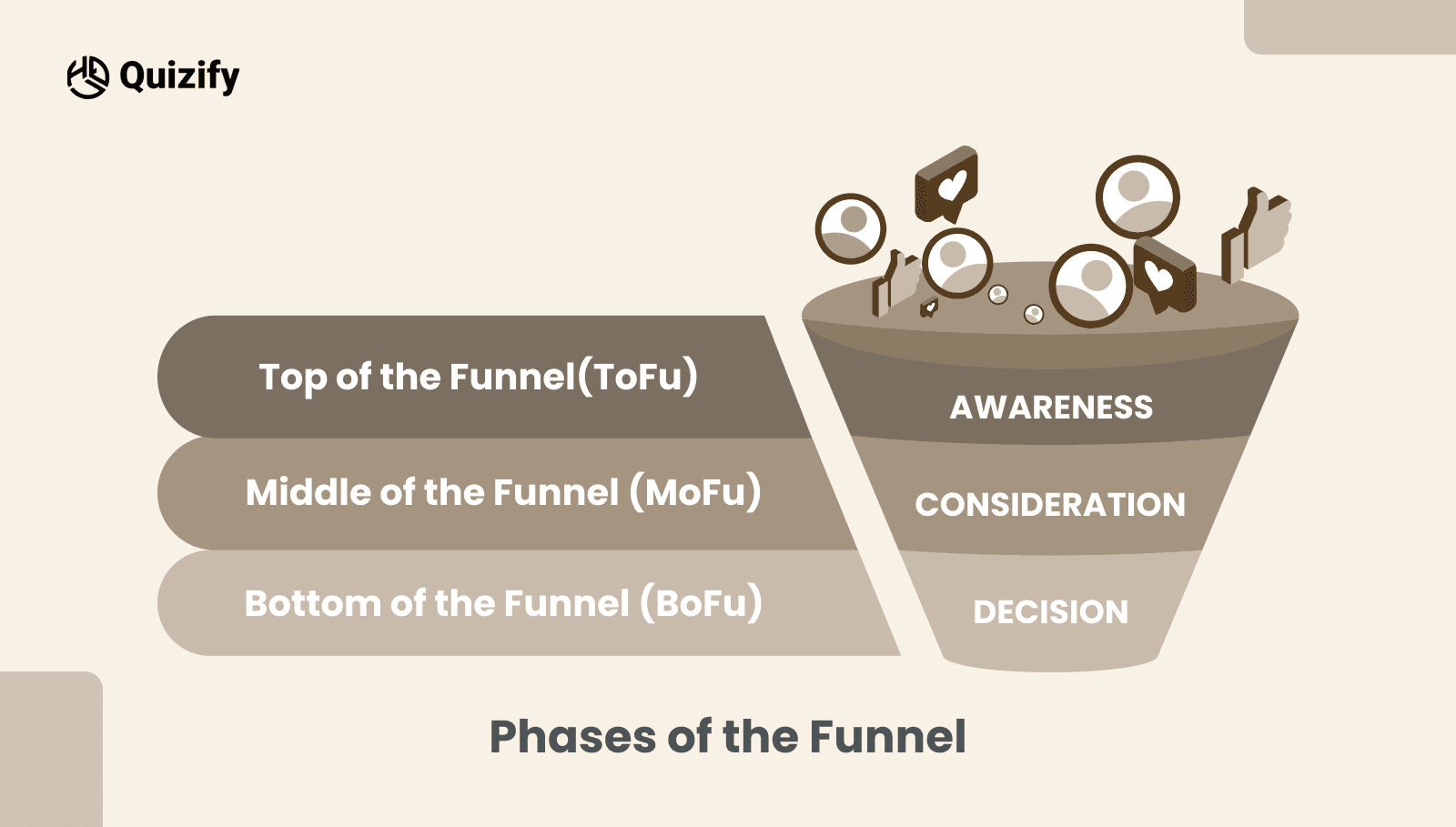
Funnel stages can generally be distinguished into three main factors.
Top of the Funnel (ToFu): Awareness
At this stage, large attempts are made to attract many people to your brand. This is where potential customers get to know your business for the first time. Strategies involved are generally content marketing, social media engagement, quizzes, paid advertising, etc.
Middle of the Funnel (MoFu): Consideration
Here, your leads are still deciding whether your product or service is the right choice to help them with their particular needs. This is where you start to build trust and provide value through email campaigns, case studies, webinars, or free trials.
Bottom of the Funnel (BoFu): Decision
Here, the lead is just about ready to purchase. At this stage, you focus on making the conversion process as seamless as possible through personalized offers, clear calls to action (CTAs), and optimized checkout processes.
Why Do Lead Funnels Matter?
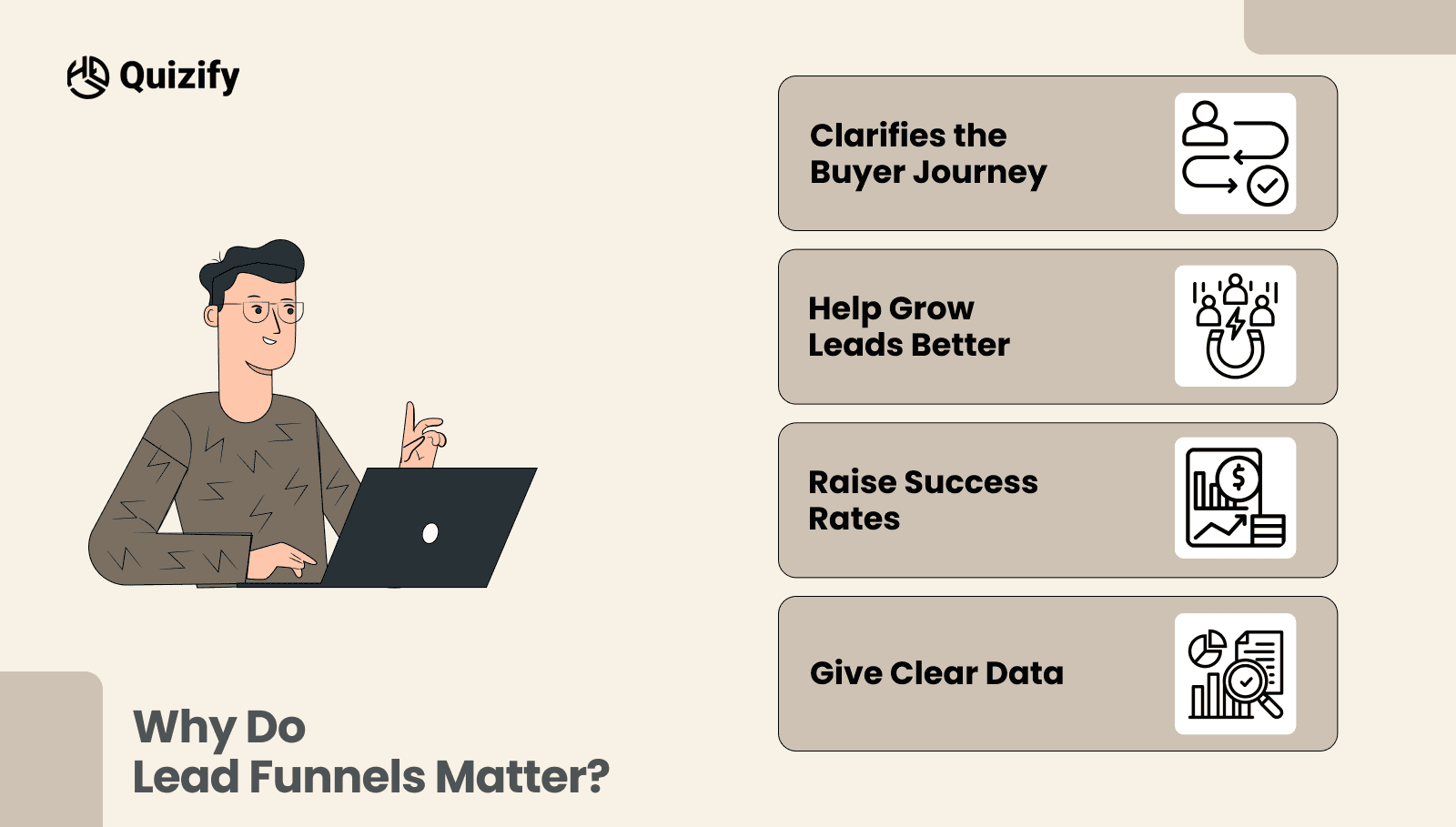
Lead funnels play a key role for businesses because they:
Make the Buyer's Path Clearer: By laying out the buying steps, lead funnels help prospects move from interest to action more.
Help Grow Leads Better: Content made for each stage helps grow leads well.
Raise Success Rates: By talking to and sorting leads at each step, you boost the chance of turning them into paying clients.
Give Clear Data: Looking at your funnel helps find ways to make your marketing plans better.
Steps to Create a Lead Funnel That Works Well
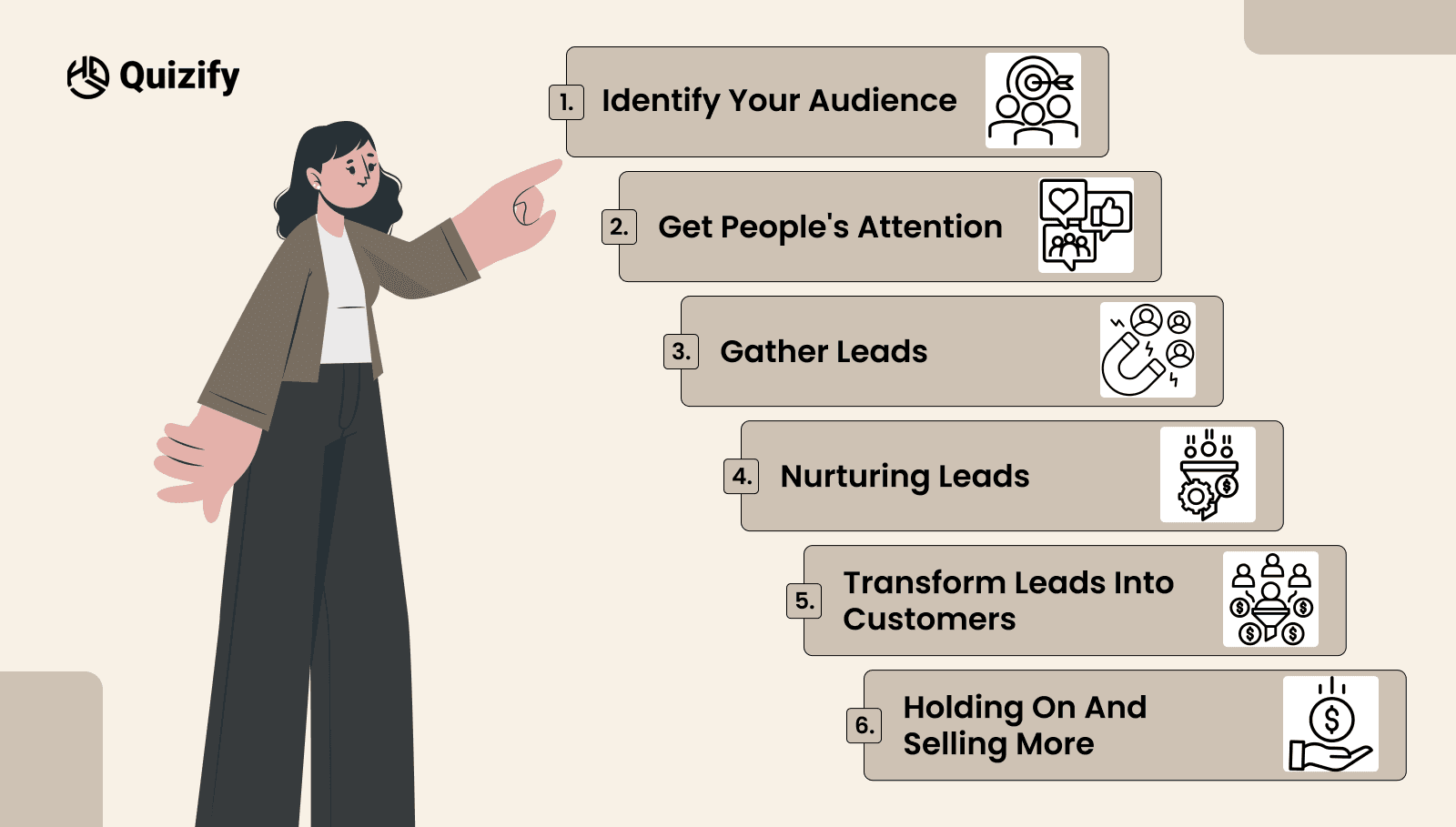
Here's a guide to building a good lead funnel:
1. Know Your Target Audience
Getting a handle on your audience lays the groundwork for a lead funnel that works. Figure out who your dream customer is—their background struggles and what they like. Build detailed profiles of your buyers so your funnel talks to what they need.
2. Get People's Attention
Pull in possible customers by giving them something valuable right off the bat. Here are some ways to do this:
Publishing blog posts or videos, or making podcasts that solve specific issues in your area.
Advertising on Google or Facebook and targeted ad campaigns
Using engaging tools like quizzes that are proven to work.
For instance, Quizify.io makes it so easy to develop engaging quizzes that are great for getting leads and useful information about the leads.
3. Gather leads
To turn visitors into leads, offer an appealing lead magnet like a free eBook, checklist, or webinar to gain their contact information. Use optimized landing pages and forms to maximize conversions.
4. Nurturing Leads
Once you’ve grown your list, nurture them with personalized content to capture their trust and educate. For example:
Email drip campaigns with tips on things that matter to them.
Case studies or testimonials from clients that depict the changes made by your product or service.
5. Transform Leads into Customers
Have a comprehensive guiding plan in place focusing on incredible offers and a smooth buying journey. Some tactics include:
Providing discounts for a set period.
Sending reminders in case of abandoned carts.
Asking for action with CTAs on your site or emails.
6. Holding On and Selling More
Once a transaction is made, a company’s work is not done. They should strengthen their post-purchase engagement by providing support, launching rewards systems, or offering advanced products or services for sale.
Tools to Improve Your Lead Funnel
You can build and improve your lead funnel with a variety of tools, such as
Email Marketing Tools – Nurture campaigns can be automated with tools such as Mailchimp or HubSpot.
CRM Tools: Leverage tools like Salesforce or Zoho CRM to efficiently organize and monitor leads.
Quizzes Creation Tools – Engaging quizzes can be created with tools like Quizify.io that can attract and categorize leads.
Quizzes in Your Lead Funnel
Quizzes are among numerous interactive content types that are very helpful in user engagement and audience research. For example, one of the clothing businesses can design a “Style Personality Quiz” that helps users select suitable items.
With the help of platforms like Quizify.io, you can design entertaining lead-capture quizzes that give you a good return on the investment made. You can use the collected information to improve leads through marketing efforts directed at the specific services offered. This will increase the chances of conversions on the offers made.
Things To Keep In Mind As A Beginner
Lead funnels can be complicated to create, especially for first-timers. Below are some of the common mistakes you should try to steer clear of:
Ignoring Your Audience's Needs: If your content isn’t aiming at their specific challenges, the funnel will not deliver either.
Overcomplicating the Process: Do not forget to keep the funnel focused and straightforward while adding value at every step.
Failing to Measure Performance: Make it a practice to check conversion and abandonment rates, among other metrics, to enhance your funnel.
Conclusion
Lead funnels are core components of any marketing campaign nowadays because they serve as the first step in attracting, nurturing, and converting leads. If you know your audience, you can add value in every step and build an effective lead funnel by using tools like Quizify.io for engaging content.
Read More: How to Automate Lead Nurturing with Quizify and Zapier
If an interested inquiry comes across your business online. They most probably want to know more but are not interested in buying anything yet. You then have to guide them from temporary interest to being a loyal, long-time paying customer. The lead funnel comes in as a strategy for building relationships, developing trust, and converting leads into paying customers.
Lead funnels are no fluff marketing speak; they are tried and true frameworks for building regular connections and turning site visitors into leads and leads into loyal customers. From a startup to an already established business, an ideal lead funnel can change how you account for, entice, and serve your customers.
We're going to explore lead funnels, their stages, and how to build one that truly brings in leads and grows a business over time.
What is a lead funnel?
A lead funnel is a systematic process that helps take potential customers from an early stage through their buying journey. It's like a digital stepping stone that takes someone from just knowing about your brand to becoming an advocate of your product or service.
The funnel metaphor represents that with every advance into the next stage, fewer prospects remain to continue to the finish line. While at the top of the funnel, there will be many interested parties, but only the most qualified and interested leads will go through to the bottom to complete the purchase.
Phases of the Funnel:

Funnel stages can generally be distinguished into three main factors.
Top of the Funnel (ToFu): Awareness
At this stage, large attempts are made to attract many people to your brand. This is where potential customers get to know your business for the first time. Strategies involved are generally content marketing, social media engagement, quizzes, paid advertising, etc.
Middle of the Funnel (MoFu): Consideration
Here, your leads are still deciding whether your product or service is the right choice to help them with their particular needs. This is where you start to build trust and provide value through email campaigns, case studies, webinars, or free trials.
Bottom of the Funnel (BoFu): Decision
Here, the lead is just about ready to purchase. At this stage, you focus on making the conversion process as seamless as possible through personalized offers, clear calls to action (CTAs), and optimized checkout processes.
Why Do Lead Funnels Matter?

Lead funnels play a key role for businesses because they:
Make the Buyer's Path Clearer: By laying out the buying steps, lead funnels help prospects move from interest to action more.
Help Grow Leads Better: Content made for each stage helps grow leads well.
Raise Success Rates: By talking to and sorting leads at each step, you boost the chance of turning them into paying clients.
Give Clear Data: Looking at your funnel helps find ways to make your marketing plans better.
Steps to Create a Lead Funnel That Works Well

Here's a guide to building a good lead funnel:
1. Know Your Target Audience
Getting a handle on your audience lays the groundwork for a lead funnel that works. Figure out who your dream customer is—their background struggles and what they like. Build detailed profiles of your buyers so your funnel talks to what they need.
2. Get People's Attention
Pull in possible customers by giving them something valuable right off the bat. Here are some ways to do this:
Publishing blog posts or videos, or making podcasts that solve specific issues in your area.
Advertising on Google or Facebook and targeted ad campaigns
Using engaging tools like quizzes that are proven to work.
For instance, Quizify.io makes it so easy to develop engaging quizzes that are great for getting leads and useful information about the leads.
3. Gather leads
To turn visitors into leads, offer an appealing lead magnet like a free eBook, checklist, or webinar to gain their contact information. Use optimized landing pages and forms to maximize conversions.
4. Nurturing Leads
Once you’ve grown your list, nurture them with personalized content to capture their trust and educate. For example:
Email drip campaigns with tips on things that matter to them.
Case studies or testimonials from clients that depict the changes made by your product or service.
5. Transform Leads into Customers
Have a comprehensive guiding plan in place focusing on incredible offers and a smooth buying journey. Some tactics include:
Providing discounts for a set period.
Sending reminders in case of abandoned carts.
Asking for action with CTAs on your site or emails.
6. Holding On and Selling More
Once a transaction is made, a company’s work is not done. They should strengthen their post-purchase engagement by providing support, launching rewards systems, or offering advanced products or services for sale.
Tools to Improve Your Lead Funnel
You can build and improve your lead funnel with a variety of tools, such as
Email Marketing Tools – Nurture campaigns can be automated with tools such as Mailchimp or HubSpot.
CRM Tools: Leverage tools like Salesforce or Zoho CRM to efficiently organize and monitor leads.
Quizzes Creation Tools – Engaging quizzes can be created with tools like Quizify.io that can attract and categorize leads.
Quizzes in Your Lead Funnel
Quizzes are among numerous interactive content types that are very helpful in user engagement and audience research. For example, one of the clothing businesses can design a “Style Personality Quiz” that helps users select suitable items.
With the help of platforms like Quizify.io, you can design entertaining lead-capture quizzes that give you a good return on the investment made. You can use the collected information to improve leads through marketing efforts directed at the specific services offered. This will increase the chances of conversions on the offers made.
Things To Keep In Mind As A Beginner
Lead funnels can be complicated to create, especially for first-timers. Below are some of the common mistakes you should try to steer clear of:
Ignoring Your Audience's Needs: If your content isn’t aiming at their specific challenges, the funnel will not deliver either.
Overcomplicating the Process: Do not forget to keep the funnel focused and straightforward while adding value at every step.
Failing to Measure Performance: Make it a practice to check conversion and abandonment rates, among other metrics, to enhance your funnel.
Conclusion
Lead funnels are core components of any marketing campaign nowadays because they serve as the first step in attracting, nurturing, and converting leads. If you know your audience, you can add value in every step and build an effective lead funnel by using tools like Quizify.io for engaging content.
Read More: How to Automate Lead Nurturing with Quizify and Zapier
If an interested inquiry comes across your business online. They most probably want to know more but are not interested in buying anything yet. You then have to guide them from temporary interest to being a loyal, long-time paying customer. The lead funnel comes in as a strategy for building relationships, developing trust, and converting leads into paying customers.
Lead funnels are no fluff marketing speak; they are tried and true frameworks for building regular connections and turning site visitors into leads and leads into loyal customers. From a startup to an already established business, an ideal lead funnel can change how you account for, entice, and serve your customers.
We're going to explore lead funnels, their stages, and how to build one that truly brings in leads and grows a business over time.
What is a lead funnel?
A lead funnel is a systematic process that helps take potential customers from an early stage through their buying journey. It's like a digital stepping stone that takes someone from just knowing about your brand to becoming an advocate of your product or service.
The funnel metaphor represents that with every advance into the next stage, fewer prospects remain to continue to the finish line. While at the top of the funnel, there will be many interested parties, but only the most qualified and interested leads will go through to the bottom to complete the purchase.
Phases of the Funnel:

Funnel stages can generally be distinguished into three main factors.
Top of the Funnel (ToFu): Awareness
At this stage, large attempts are made to attract many people to your brand. This is where potential customers get to know your business for the first time. Strategies involved are generally content marketing, social media engagement, quizzes, paid advertising, etc.
Middle of the Funnel (MoFu): Consideration
Here, your leads are still deciding whether your product or service is the right choice to help them with their particular needs. This is where you start to build trust and provide value through email campaigns, case studies, webinars, or free trials.
Bottom of the Funnel (BoFu): Decision
Here, the lead is just about ready to purchase. At this stage, you focus on making the conversion process as seamless as possible through personalized offers, clear calls to action (CTAs), and optimized checkout processes.
Why Do Lead Funnels Matter?

Lead funnels play a key role for businesses because they:
Make the Buyer's Path Clearer: By laying out the buying steps, lead funnels help prospects move from interest to action more.
Help Grow Leads Better: Content made for each stage helps grow leads well.
Raise Success Rates: By talking to and sorting leads at each step, you boost the chance of turning them into paying clients.
Give Clear Data: Looking at your funnel helps find ways to make your marketing plans better.
Steps to Create a Lead Funnel That Works Well

Here's a guide to building a good lead funnel:
1. Know Your Target Audience
Getting a handle on your audience lays the groundwork for a lead funnel that works. Figure out who your dream customer is—their background struggles and what they like. Build detailed profiles of your buyers so your funnel talks to what they need.
2. Get People's Attention
Pull in possible customers by giving them something valuable right off the bat. Here are some ways to do this:
Publishing blog posts or videos, or making podcasts that solve specific issues in your area.
Advertising on Google or Facebook and targeted ad campaigns
Using engaging tools like quizzes that are proven to work.
For instance, Quizify.io makes it so easy to develop engaging quizzes that are great for getting leads and useful information about the leads.
3. Gather leads
To turn visitors into leads, offer an appealing lead magnet like a free eBook, checklist, or webinar to gain their contact information. Use optimized landing pages and forms to maximize conversions.
4. Nurturing Leads
Once you’ve grown your list, nurture them with personalized content to capture their trust and educate. For example:
Email drip campaigns with tips on things that matter to them.
Case studies or testimonials from clients that depict the changes made by your product or service.
5. Transform Leads into Customers
Have a comprehensive guiding plan in place focusing on incredible offers and a smooth buying journey. Some tactics include:
Providing discounts for a set period.
Sending reminders in case of abandoned carts.
Asking for action with CTAs on your site or emails.
6. Holding On and Selling More
Once a transaction is made, a company’s work is not done. They should strengthen their post-purchase engagement by providing support, launching rewards systems, or offering advanced products or services for sale.
Tools to Improve Your Lead Funnel
You can build and improve your lead funnel with a variety of tools, such as
Email Marketing Tools – Nurture campaigns can be automated with tools such as Mailchimp or HubSpot.
CRM Tools: Leverage tools like Salesforce or Zoho CRM to efficiently organize and monitor leads.
Quizzes Creation Tools – Engaging quizzes can be created with tools like Quizify.io that can attract and categorize leads.
Quizzes in Your Lead Funnel
Quizzes are among numerous interactive content types that are very helpful in user engagement and audience research. For example, one of the clothing businesses can design a “Style Personality Quiz” that helps users select suitable items.
With the help of platforms like Quizify.io, you can design entertaining lead-capture quizzes that give you a good return on the investment made. You can use the collected information to improve leads through marketing efforts directed at the specific services offered. This will increase the chances of conversions on the offers made.
Things To Keep In Mind As A Beginner
Lead funnels can be complicated to create, especially for first-timers. Below are some of the common mistakes you should try to steer clear of:
Ignoring Your Audience's Needs: If your content isn’t aiming at their specific challenges, the funnel will not deliver either.
Overcomplicating the Process: Do not forget to keep the funnel focused and straightforward while adding value at every step.
Failing to Measure Performance: Make it a practice to check conversion and abandonment rates, among other metrics, to enhance your funnel.
Conclusion
Lead funnels are core components of any marketing campaign nowadays because they serve as the first step in attracting, nurturing, and converting leads. If you know your audience, you can add value in every step and build an effective lead funnel by using tools like Quizify.io for engaging content.
Read More: How to Automate Lead Nurturing with Quizify and Zapier
Join our newsletter list
Sign up to get the most recent blog articles in your email every week.
Similar Topic
Related Blogs
Similar Topic
Related Blogs
More Articles
Latest Blogs
More Articles
Latest Blogs
More Articles